Why I Stopped Guessing on Tooling: Lessons from $4,500 in Mistakes with Kennametal and Beyond
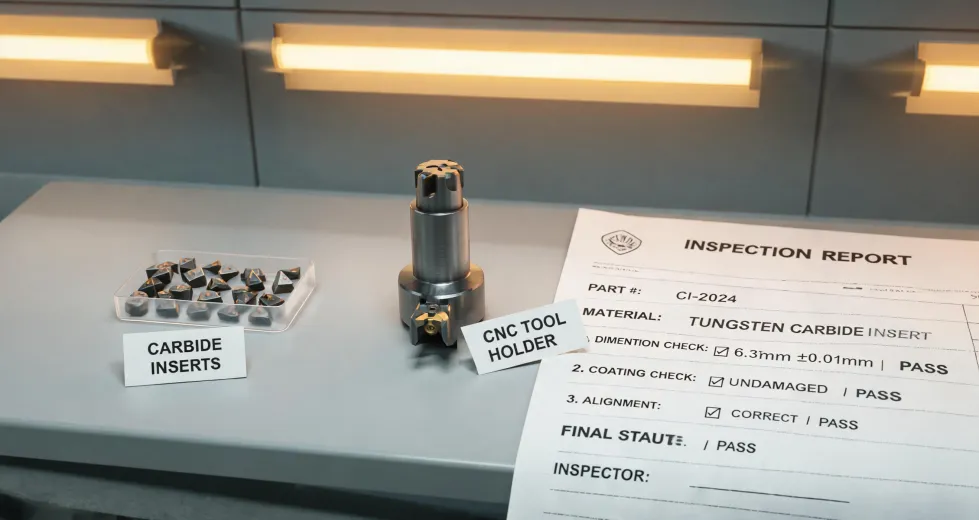
If you're choosing cutting tools for your shop, here's the truth: the cheapest insert isn't the cheapest, and the most expensive toolholder isn't always the best. After wasting over $4,500 on avoidable mistakes, I've learned a simple rule — always calculate total cost per part, not per tool. Ignore that, and you're leaving money on the floor, no matter which brand you pick.
My $4,500 Education
I'm a machining engineer. I've been handling custom machining orders for about 8 years now. I've personally made — and documented — 12 significant mistakes that cost my shop roughly $4,500 in rework, scrap, and lost time. That's not counting the embarrassment of explaining to a client why their parts were late. Now I maintain our team's checklist to prevent others from repeating my errors. I'm the guy who asks 'what's NOT included?' before 'what's the price?'
I only believed in transparent tool cost evaluation after ignoring it and eating a $800 mistake on a single ceramic end mill order. Let me walk you through the worst ones, and how Kennametal's catalog turning data eventually became my lifeline.
The Mistakes I Made
The Ceramic End Mill Disaster
Two years ago I ordered a batch of ceramic end mills from a brand I won't name. The price was about 30% below Kennametal's equivalent. On paper it looked like a no-brainer. I checked the specs, approved the purchase, and set them up for a stainless steel job (316L). Within the first pass, the tool shattered. Not chipped — shattered. Scraped the entire workpiece. That was $450 in material plus the tool cost. We caught the error when the operator called me over. The lesson? The ceramic grade wasn't designed for high-toughness materials. I later switched to Kennametal's ceramic end mill series — the initial price stung, but I've run the same tool through 40 parts without a single failure. The total cost per part dropped by over 60%.
The PVC Pipe Cutting Tool Surprise
A client once asked me for the best pvc pipe cutting tool. I'd always used a standard carbide insert for plastics, but it left burrs and melted edges. I went back and forth between a dedicated PVC tool from Kennametal and a cheap generic option for about a week. Generic was half the price; Kennametal offered a ground edge specifically for polymers. Ultimately I chose Kennametal because the project was a high-volume run — 5,000 pieces. The cheap one would have needed indexing every 200 parts. The Kennametal tool lasted the entire run. That one decision saved about $600 in changeover downtime. Looking back, I should have made that call on the first day.
The CNC Laser Cutter Question
Someone in an online forum asked about a cnc laser cutter for stainless steel. My immediate response was 'why not just mill it?' But they needed thin parts with tight tolerances — a laser was actually the better choice. This taught me a critical boundary: laser cutting works great for thin sheet, but for thicker or 3D features, you need a proper end mill. I've since created a decision flowchart that starts with 'what's the finished part geometry?' rather than 'what tool do I like?' That trick alone has prevented at least 3 misquotes this year.
The VMC 'Sugar' Confusion
I'll never forget the email that made me scratch my head: 'How much sugar does a VMC have?' I thought it was spam. Then a machinist friend explained — 'sugar' is slang for the sweet spot — the RPM and feed combination where tool life and material removal rate peak. Once I started tracking that within Kennametal's catalog turning data, my tooling choices became way more consistent. For example, on a turning job with a carbide insert, the catalog showed a recommended surface speed of 500 SFM for 316L. I'd been running at 350. Bumping it up reduced cycle time by 30% without hurting tool life. That's the 'sugar' — and it's right there in the catalog if you bother to look.
How I Fixed My Process
The turning point came when I switched vendors on a large order. The first quote looked low — but then came tooling setup fees, special coating charges, and expedited shipping. That 'cheap' quote ended up costing 30% more than the competitor who listed everything upfront. I've learned to ask two questions: 'What's NOT included?' and 'Show me the total cost for 100 parts, including all consumables.' Now I insist on transparent pricing, even if the total looks higher initially. It usually costs less in the end.
I also built a simple spreadsheet that compares total cost per part — factoring in tool price, expected life, insert index time, and scrap rate. Kennametal's catalog turning section includes wear-life data for most grades, which makes the math straightforward. I'm not saying they're perfect — but they publish numbers you can actually use.
When This Advice Doesn't Apply
Of course, total cost per part isn't the only metric. If you're prototyping and need a tool tomorrow, you might pay more for a known-quantity brand. If your volume is tiny, the headache of calculating tool life might not be worth it. And if the operator prefers a specific brand for feel or comfort, that's a human factor no spreadsheet can capture. So take my advice with a grain of salt — but do take the habit of asking 'what's the real cost?' It's saved me a ton of money, and it'll probably save you some too.
P.S. — For PVC pipe cutting, I still recommend Kennametal's Kyon 2100 grade. For stainless steel, laser cutting is fine for thin parts but for anything over 6mm, stick with mechanical tools. And if someone asks about VMC sugar — now you know the answer.