Kennametal Reamers, Tool Holders, and When a Cutting Tool Supplier Should Say No
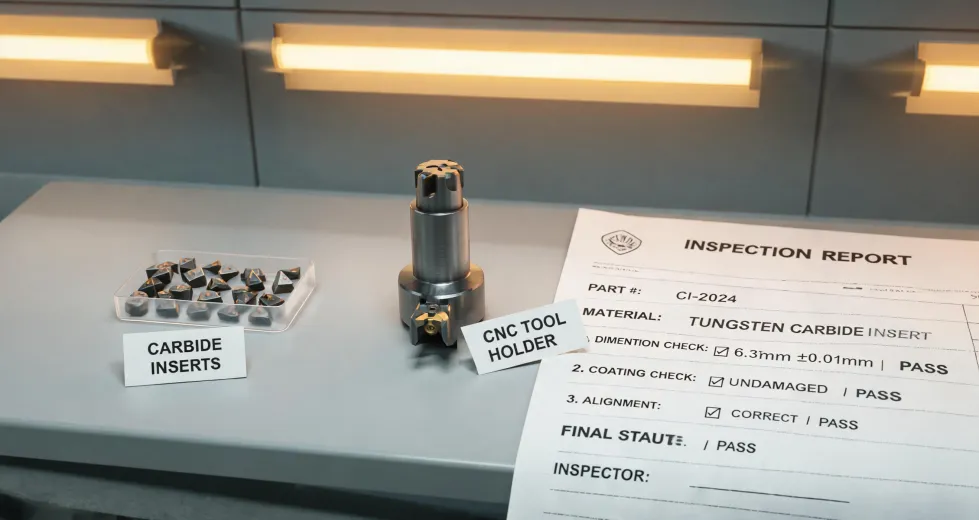
No Such Thing as the One Right Cutting Tool
Ask “Which cutting tool should I order?” and my honest answer starts with another question: What are you actually cutting? A solid carbide reamer made for a CNC spindle and a guarded cardboard cutter made for a classroom are both cutting tools. Neither one replaces the other. That’s why a useful recommendation has to be scenario-based, not a slogan.
My title is office administrator, not machinist. I’ve handled purchasing for a small manufacturing company since 2020, so I’m the one who orders Kennametal reamers, tool holders, and precision boring equipment after the shop lead hands me a parts list. I’ve also made the mistake of assuming one product category could cover every “cutting” request. It can’t.
Here is the decision tree I use.
Scenario 1: You Need Kennametal Reamers or Tool Holders for Real Machining
If your drawing calls for a hole to be reamed to a tight tolerance, you’re in the right place. Kennametal reamers do exactly that job. But before I order, I check four things: shank size, machine spindle taper, coolant-through capability, and whether the operation is finishing or roughing.
The usual advice is to buy the most rigid tool holder you can afford. Everything I’d read about tool holders said that. In practice, I found that a good collet chuck held our finish tolerance for several jobs where a hydraulic holder would have added cost without changing the outcome. The rigid holder paid for itself on heavy roughing and interrupted cuts—not on every finishing pass. Buy for the operation, not for the catalog.
“Kennametal tool holders” is the right product search only if you know your machine interface. A CAT40 holder won’t solve a problem in a BT30 spindle. An HSK holder can be excellent and still useless on a machine without the matching taper. The spindle interface is not a style preference; it’s a specification.
I say that from experience. I ordered a set of holders for a machining center without double-checking the pull stud spec. The holders were fine; the combination was wrong. That mistake cost about $900 and a lot of schedule chaos. Now I verify the interface against the machine builder’s documentation before I place the PO.
For larger or adjustable bores, the Wohlhaupter boring bar is a name worth knowing. It is not automatically the right answer. The decision depends on bore diameter, depth, insert geometry, and how much fine adjustment you need. An honest tooling supplier asks about the workpiece before picking a side.
Scenario 2: The “cardboard cutting tool kids” Search
If your search query is “cardboard cutting tool kids,” the most useful thing a metal-cutting site can do is send you somewhere else. I’m not being dismissive. Industrial carbide is not a craft material.
Industrial tooling is designed for people who understand coolant, chip load, and why you never grab a spinning end mill. A child—or an adult making a cardboard project at the kitchen table—does not have that context. Carbide will cut cardboard easily. It will also cut a finger without hesitating.
What you want is a purpose-built cardboard cutter: rounded tip, guarded blade or spring-loaded blade, and a handle that fits a small hand. Classroom and makerspace products are designed for that risk profile. If something is marketed as safe for kids, the claim should be backed by evidence. Per FTC guidance (ftc.gov), advertising claims need to be truthful, not misleading, and substantiated.
The question everyone asks about a kids’ cardboard cutter is “Is it sharp enough?” The better question is “What happens if a child uses it wrong?” The right answer is a minor scrape, not a cut requiring stitches.
Scenario 3: The “does co2 laser get rid of broken capillaries” Search
Another search phrase that lands on industrial tooling pages is “does co2 laser get rid of broken capillaries.” If that’s why you’re here, you’ve reached the wrong industry—and the right answer is not a cutting tool.
I’m not a doctor, and a tooling supplier is not your dermatologist. Broken capillaries are a medical and skin concern. Treating them with the wrong laser or the wrong provider can cause more harm than the original issue. That question needs a licensed clinician who can look at your skin and your medical history.
A supplier who pretends to answer clinical questions just to capture search traffic is not being helpful. They’re being reckless. Boundary-setting is part of expertise.
How to Tell Which Scenario You Are In
By now, you might be wondering which of these applies to you. Here’s a faster sorting test than reading more paragraphs.
- What does the tool touch? Metal means machining tooling. Cardboard in a classroom means a child-safe cutter. Skin means a medical provider.
- Who is using it? A machinist can manage inserts, coolant, and spindle speeds. A child can’t. A medical patient needs clinical judgment.
- What does failure cost? A reamer that drifts out of tolerance scraps a part. A badly guarded blade causes a cut. An improperly used laser can damage tissue. Match the risk to the expertise.
That is also why I trust suppliers who set boundaries. A salesperson who says “we don’t make that—here’s who does” earns credibility for everything they do sell. A vendor who claims to be the answer to every cutting question is usually not thinking carefully about any of them.
So, when the operation is real metal cutting, order Kennametal reamers and Kennametal tool holders. Spec a Wohlhaupter boring bar when the bore geometry and adjustability require it. For the “cardboard cutting tool kids” search, buy the purpose-built safety cutter. And for “does co2 laser get rid of broken capillaries,” talk to a dermatologist or another licensed practitioner. The right answer begins with knowing which problem you actually have.