Kennametal, Taps, and 3D Printing: A Shop Floor FAQ from Someone Who's Made the Mistakes
-
What should I know before buying Kennametal cutting tools?
-
Are Kennametal taps worth the premium over generic brands?
-
How does Jarvis Cutting Tools compare to Kennametal?
-
What is "bouche de VMC" and why does it matter?
-
Can I use a laser cutter on leather?
-
SLS vs DMLS 3D printing: Which one should I choose?
I've been running custom machining orders for 8 years. In that time, I've made 23 significant mistakes that cost us about $47,000 in wasted budget. Now I keep a checklist to stop others from repeating them. This FAQ covers the questions I get from new hires and colleagues—about Kennametal, taps, VMC setups, laser cutting, and 3D printing. No fluff, just what I wish I'd known earlier.
What should I know before buying Kennametal cutting tools?
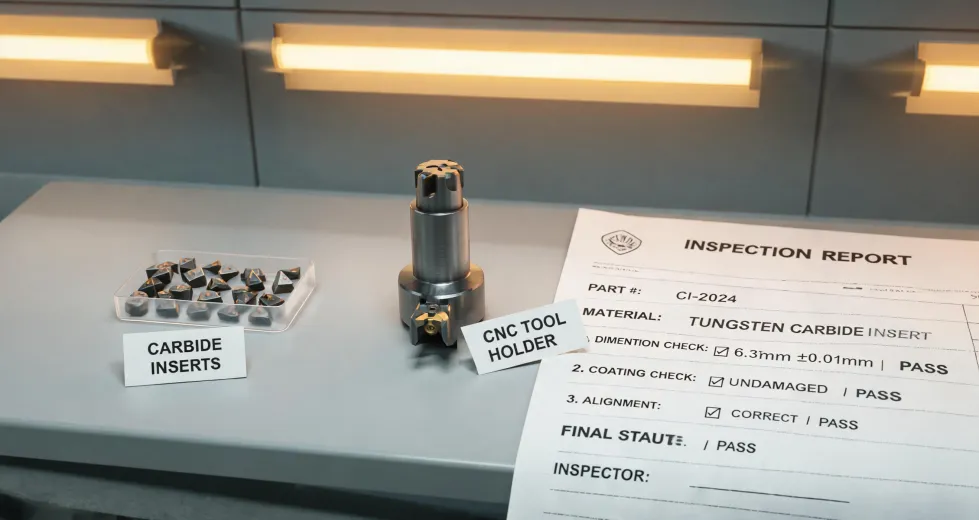
Kennametal is a go-to for many shops, and for good reason. Their carbide inserts and tool holders are known for precision and durability. But don't just buy based on brand name. I made that mistake in 2019—ordered a batch of Kennametal end mills for an aluminum job without checking the coating. They wore out way faster than expected. Bottom line: match the grade and coating to your material. Kennametal's technical reps are super helpful if you ask. Also, their online catalog has detailed specs. I've since standardized on Kennametal for our turning and boring operations, and we've cut tool change downtime by about 30%. Just don't assume one tool fits all. Customers notice the finish—if a tool wears out mid-job, the marks show, and that's a brand hit.
Are Kennametal taps worth the premium over generic brands?
For critical threads, yes. I used to cheap out on taps—until a $300 order of generic taps resulted in 40 scrapped parts because of inconsistent pitch diameter. That's a $2,400 mistake. Kennametal taps, especially their spiral flute and forming taps, hold tolerances much better. They're not cheap, but the cost per good hole is lower when you factor in scrap and rework. That said, for non-critical or low-volume jobs, a mid-range tap might be fine. The key is to track your scrap rate. If you're seeing more than 2% rejects on threading, it's a red flag. I switched to Kennametal for all our aerospace work and haven't looked back. Scrapped parts delay shipments, and clients remember late deliveries—that's a brand image problem you can't afford.
How does Jarvis Cutting Tools compare to Kennametal?
I've used both. Jarvis makes solid tools, especially for custom form tools and broaches. Kennametal has a broader off-the-shelf portfolio and stronger presence in turning and milling. For a Jarvis vs Kennametal comparison, it depends on your application. If you need a specialized form tool with quick turnaround, Jarvis might be your no-brainer. For standard inserts and holders with global availability, Kennametal often wins. I once needed a custom step drill in a hurry—Jarvis delivered in 5 days. But for our daily milling, Kennametal's consistency and technical support are hard to beat. Don't get tribal about brands. Test both on your specific job. The difference in tool life can be 20-30%, which adds up fast. I do not mean just a few percent—I mean consistently across hundreds of parts.
What is "bouche de VMC" and why does it matter?
If you're searching for "bouche de vmc," you're likely dealing with a VMC (vertical machining center) and its coolant or chip evacuation system. In French, "bouche" means mouth or opening. In practice, it refers to the coolant nozzle or chip discharge port on the VMC. Why does it matter? Because a clogged or misaligned bouche de VMC can cause chip recutting, poor surface finish, and premature tool wear. I learned this the hard way in 2021—ignored a partially blocked coolant port, and a $200 Kennametal end mill snapped after 10 minutes. Now I check and clean the bouche de VMC every shift. It's a 2-minute task that saves a ton of headaches. This was true 10 years ago when VMCs had simpler coolant systems, but even today with automated evac, the principle holds.
Can I use a laser cutter on leather?
Yes, you can use a laser cutter on leather, but there are caveats. I've cut leather for custom fixtures and prototypes. The key is ventilation—leather fumes are nasty. Also, not all leathers cut cleanly. Chrome-tanned leather can release toxic fumes and may not cut as well as vegetable-tanned. You'll need to test power and speed. I nearly ruined a $150 hide because I didn't adjust the focus. So glad I did a small test cut first. Almost went straight to the full pattern, which would have wasted the whole hide. For production, consider a dedicated leather laser with proper filtration. And remember, laser cutting is a separate process from machining—but if you're making leather components for a larger assembly, the quality of that cut affects how customers perceive your finished product.
SLS vs DMLS 3D printing: Which one should I choose?
SLS (selective laser sintering) uses a laser to fuse polymer powder, while DMLS (direct metal laser sintering) does the same with metal powder. The choice depends on your part's function. SLS is great for prototypes, jigs, and non-structural parts—cheaper and faster. DMLS is for functional metal parts, like tooling inserts or aerospace components. I've used both. For a DMLS job, I once forgot to account for support removal, and the part came out with a rough surface that needed a ton of finishing. That cost us an extra $800 in labor. Lesson learned: design for additive manufacturing. Also, DMLS parts often need machining afterward—and that's where Kennametal tools shine. We use Kennametal end mills to finish DMLS surfaces. The hard lesson: don't treat 3D printing as a magic bullet. It's one step in a process. This was true 10 years ago when DMLS was limited to a few materials. Today, the material options have expanded, but the post-processing need remains.