Jarvis Cutting Tools vs Kennametal and Other Process Trade-offs a Quality Reviewer Makes
-
Jarvis Cutting Tools vs Kennametal: Four Questions Before You Pick a Brand
-
Kennametal Top Notch Boring Bar: Check the System, Not the Adjective
-
Resin 3D Printer Anycubic vs Machined Fixtures: A Useful Tool, Not a Substitute
-
Injection Molding Shut-Off Nozzle vs Open Nozzle: What I Approve
-
Press Brake vs Finger Brake: It Depends on the Bend Pattern
-
Which Should You Approve? A Practical Summary
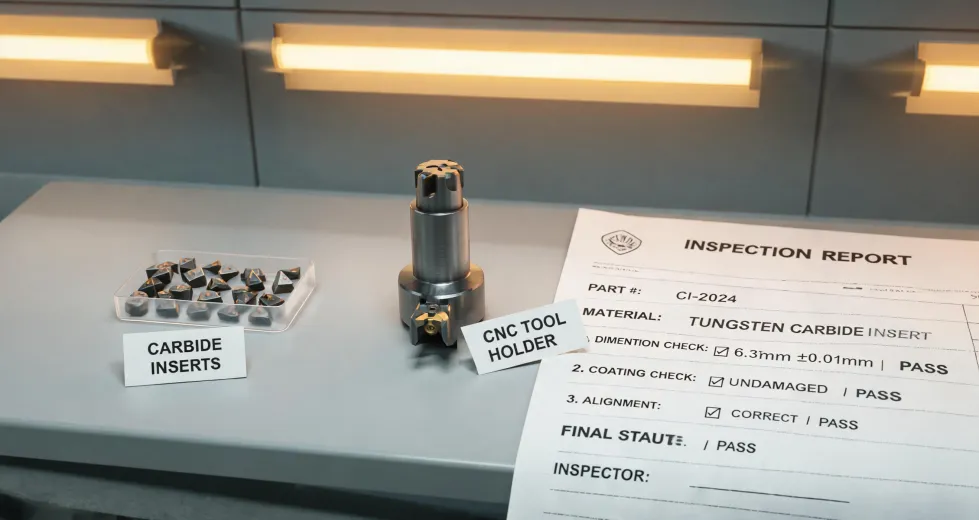
I am the person who signs off on tooling and process changes at a custom machining company. I review first-article reports, supplier certifications, and process changes before they reach a production spindle—roughly 200 items a year. In 2024 I rejected just under 11 percent of first deliveries. Most of those were not broken tools or bad materials; they were assumptions nobody wrote down.
Here's what you need to know: when a purchasing team searches Jarvis Cutting Tools vs Kennametal, I do not treat that as a fan debate. I treat it as a spec review. The same logic applies to several requests that show up next to the Kennametal searches: a Kennametal Top Notch boring bar, a resin 3D printer like Anycubic, an injection molding shut off nozzle, and a press brake vs finger brake comparison. They all look like product choices, but they actually start with criteria.
Jarvis Cutting Tools vs Kennametal: Four Questions Before You Pick a Brand
Honestly, I have no problem specifying Jarvis Cutting Tools on a job, and I use Kennametal on other jobs. The first question is not which logo is stronger. The first question is which product code you are really comparing.
Kennametal has a broad catalog with different insert grades, chip breakers, coatings, and toolholder geometries. Jarvis cutting tools also cover multiple application families. If you ask which is better without naming a material, an operation, a machine, and a tolerance, the question is incomplete. I send that RFQ back for details.
The next thing I check is documentation. On aerospace or medical work, coating traceability matters as much as edge toughness. I need to know coating material, coating method, hardness, and edge prep range. Kennametal product documentation is built around that. A smaller supplier might be able to match it, but if they cannot send a coating certificate with a lot number, I cannot approve that lot for a controlled process. This is not a brand opinion; it is a compliance requirement.
Third, lot-to-lot geometry. I have seen a first order from a secondary tooling source run beautifully, then the next order arrive with a slightly different cutting edge height. We had not put critical dimensions on the PO. Now every tooling order that matters includes the critical dimensions and a first-article inspection requirement. Kennametal is not perfect, but their quality paperwork is consistent enough that my team can trace a bad lot to a specific batch.
Fourth, application support. Kennametal application engineers can give cutting data, recommend insert geometry, and help troubleshoot chatter. Jarvis and similar suppliers may have sharp technical reps too, but not every distributor has that depth. If a job is new and complex, support can be the difference between a two-day runoff and a two-week trial.
My conclusion: for standard, established operations where price and lead time matter, Jarvis Cutting Tools can be a smart candidate if it passes first-article inspection. For documented, long-running, or critical jobs, Kennametal is usually the lower-risk answer. That is not because the metal is magical; it is because the information system around the metal is stronger.
Kennametal Top Notch Boring Bar: Check the System, Not the Adjective
When a request says Kennametal Top Notch boring bar, I treat Top Notch as a product system name, not as a description. I say that from experience. We once ordered what we called a top notch bar; the distributor heard high quality. We were using the same words but meaning different products. The result was an insert clamp that did not match the insert family and a week of returned freight.
What I review on any Kennametal Top Notch boring bar is the pocket and clamp. A boring bar is basically a cantilever. The best steel in the world does not help if the insert moves a couple tenths when the cut engages. I measure insert seat location, check the clamp, and if it is an indexable bar, I run the same insert through several indexes to confirm repeatability.
The reason a Top Notch design matters in boring is simple: boring bars reach into holes where you cannot see the cutting edge. If the insert shifts, the diameter shifts. A seated surface is not a luxury. In 2024, we rejected a batch that a vendor called within industry standard because the insert pocket was cutting oversize by a measurable amount. The supplier redid it. Now every purchase order includes the Kennametal part number, the insert style, and a required pocket check.
Resin 3D Printer Anycubic vs Machined Fixtures: A Useful Tool, Not a Substitute
This one looks out of place in a cutting tool article, but it comes up often enough. An engineer sends a photo of a resin 3D printed part and asks if we can use it as a fixture, a gauge, or a prototype for production. A resin 3D printer, including Anycubic desktop models, is a fast way to get a form-study model. It belongs in the review process early.
I have mixed feelings about this. On one hand, a cheap resin printer saved us from making expensive mistakes. We printed a complex tool body before machining it and discovered a clearance problem at zero cost. That is genuinely useful. On the other hand, people begin to trust the printed material as if it were a production component. Resin parts are not steel. They can warp, creep under clamp load, soften near heat, and they do not have the stiffness needed for a cutting fixture.
Bottom line: use a resin 3D printer like Anycubic for visual checks, clearance checks, and process demonstrations. Do not use a printed resin part as a locator or clamp block without validating its dimensional behavior under the actual clamping load. If you need a repeatable fixture, machine it. You are not wasting work; you are protecting your tolerance.
Injection Molding Shut-Off Nozzle vs Open Nozzle: What I Approve
An injection molding shut off nozzle acts as a valve that stops polymer flow when the screw rotates or when the injection sequence ends. An open nozzle is simpler and has fewer moving parts. But it can drool or string when the barrel decompresses, especially with engineering resins.
A shut-off nozzle solves that, but it is not a free upgrade. It adds pressure drop, potential dead zones, and moving parts that require maintenance. Do not pick it just because a machine comes with one. Pick it when the process needs positive melt control: for example, with high-temperature materials that drool, with molds that require decompression, or with partially filled parts where drool would affect the next cycle.
When I see a shut-off nozzle on a process sheet, I check three things. First, the nozzle tip radius and sprue bushing radius must match. Second, the orifice diameter should not restrict flow below what the mold filling simulation assumed. Third, the nozzle length and actuation sequence must fit the machine cycle. A correct nozzle decision is a process decision, not an accessory purchase.
Press Brake vs Finger Brake: It Depends on the Bend Pattern
Press brake vs finger brake is another comparison that usually gets answered by whichever machine is already on the floor. I look at the bend geometry first. A press brake uses a punch and die, gives higher force, and holds angle well over a long bend. A finger brake, sometimes called a box-and-pan brake, has segmented fingers that allow you to form partial bends and closed shapes like boxes without special tooling.
For a large lot of identical brackets with tight inside dimensions, a press brake is the practical choice. For a one-off enclosure where you need to bend three flanges before the fourth side closes, a finger brake can be faster and more flexible. Operator skill matters more on a finger brake, so if the part has critical bend angles, I want a check fixture and a signed first-article sheet.
A red flag is when a supplier has only one brake type and says every part should run there. That may be true for their shop, but it is not true for the process. Ask what bend pattern the part needs, not what machine looks most impressive.
Which Should You Approve? A Practical Summary
- Kennametal for critical or documented jobs; Jarvis Cutting Tools for standard tools that pass first-article inspection.
- A Kennametal Top Notch boring bar when insert retention and repeatability matter; verify the insert system and pocket before production.
- A resin 3D printer like Anycubic for form, fit, and fixture prototyping, not for production tooling.
- An injection molding shut off nozzle when melt control demands it; an open nozzle when simplicity is more valuable.
- A press brake for long, high-volume bends with tight angles; a finger brake for low-volume boxes and partial-bend shapes.
Trust me on this one: most quality problems are created by fuzzy terms, not by bad steel. If a product label says top notch but has no dimension, it is not a specification. If a supplier calls a tool equivalent but offers no test report, it is not equivalent. The goal is not avoiding new brands or new methods. It is measuring the risk before you commit. Kennametal, Jarvis, Anycubic, nozzle suppliers, and brake shops all do better when customers ask better questions.