Tool life variance
Track worn-edge patterns and standardize grades or coatings before operators compensate with undocumented changes.
8-14% review rangeFor Kennametal buyers, sustainability is practical: less scrap, fewer emergency shipments, better tool life data and a cleaner path for regrind or recycling decisions. The program compares the current state against a controlled supply model so the impact is visible before a buyer commits.
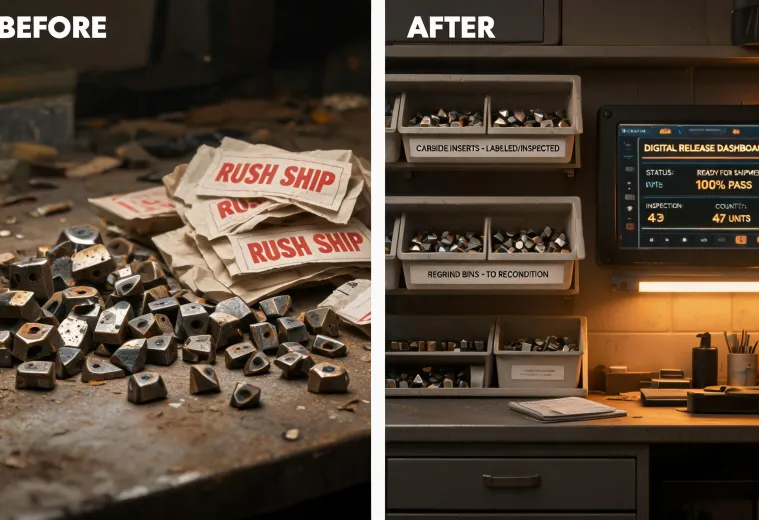
The model is not a marketing score. It asks the buyer to compare tool life, scrap rate, rush shipments and downtime events before and after controlled release planning.
Track worn-edge patterns and standardize grades or coatings before operators compensate with undocumented changes.
8-14% review rangeConnect inserts and holder setup to Cpk signals so tooling changes do not silently push defects downstream.
Lot-level trackingUse reorder points and backup lanes to reduce premium freight that appears when commodity tooling runs short.
48 lanesSeparate regrind-ready tooling families from single-use items so recycling and refurbishment choices are visible.
37 document checksA machining cell reduced duplicate insert families by connecting material groups, wear patterns and approved alternates in one release file. The buyer gained a clearer stocking plan and fewer emergency substitutions.
High-volume end mills were separated into regrind-ready and replace-only groups. That allowed purchasing to plan service loops without creating hidden quality risk.
A multi-site buyer used reorder points and backup sourcing rules to reduce rush shipments on high-consumption boring bar families during a production ramp.
Send scrap drivers, tool life notes, emergency shipment history and regrind goals. Kennametal will help compare the current state with a documented release model.