Choosing Between Hot Forging, CNC Turning, and Ring Forgings: A Quality Manager's Decision Guide
-
Scenario A: High-Volume, High-Stress Parts → Hot Forging + Machining
-
Scenario B: Complex Geometry, Tight Tolerances, Low-to-Mid Volume → CNC Turned Components
-
Scenario C: Large Diameter Rings or Flanges → Ring Forgings
-
Scenario D: Small, High-Precision Electrical Components → Switching Connector Precision Machining
-
How to Figure Out Which Scenario You're In
I'm a Quality/Brand compliance manager at a power connector manufacturing company. I review every incoming batch of forged and machined components before they reach our assembly lines—roughly 300 lots per quarter. I've rejected 12% of first deliveries in 2024 due to dimensional or material inconsistencies. So when someone asks me 'what's the best process for this part?' I tell them: there's no best. There's only what fits your part, your volume, and your quality tolerance.
Here's the thing: most buyers focus on per-unit price and completely miss the total cost of quality—inspection, rework, downtime, and the engineering time spent chasing deviations. That's a red flag. What you should ask is: 'What's included in that price, and what happens when something goes out of spec?'
I've spent four years reviewing components from forging factories, CNC shops, and everything in between. The scenarios below cover about 90% of the parts we source. Find the one that matches your situation, and you'll know where to focus your quality requirements.
Scenario A: High-Volume, High-Stress Parts → Hot Forging + Machining
If your part needs to withstand fatigue, impact, or heavy loads—think crane hooks, engine components, or large switching connector housings—you're in hot forging territory. A good forging factory will control grain flow direction during the hot forging steel process. That grain flow is what gives you strength. Without it, you're just buying a shaped piece of metal.
What to demand: material certifications per ASTM A29/A29M (as of January 2025, the current standard for hot wrought carbon and alloy steel bars—verify at ASTM.org), mechanical property test reports, and a documented heat treat procedure. I still kick myself for not specifying grain flow direction on a critical ring forging order back in 2022. The part passed dimensional inspection perfectly. But it failed fatigue testing at 60% of the expected cycles. We had to scrap the entire batch—$18,000 in rework and a two-week delay. Now every contract includes a grain flow diagram and a first article inspection that includes macro-etch testing.
Plus, don't assume that a forging factory that does great hot forging steel also does great machining. Many forges outsource the finishing. That's a potential quality gap. I've seen burrs left on critical surfaces because the forge didn't have a deburring spec. Simple. Ask who does the machining, and inspect their process separately.
Scenario B: Complex Geometry, Tight Tolerances, Low-to-Mid Volume → CNC Turned Components
Not every precision machining part needs a forge. If you're making something with complex internal features, tight tolerances (±0.001 in or better), or you're only running 200 to 2,000 pieces per year, CNC turned components are usually the no-brainer. The setup cost is lower, the lead time is shorter, and you can iterate quickly.
But here's where I see buyers get lazy. They send a drawing with general tolerances per ISO 2768 and expect everything to be fine. ISO 2768 is a baseline—it's not a precision specification. For any dimension that actually matters to function, you need to call it out explicitly, and reference ASME Y14.5-2018 for geometric dimensioning and tolerancing. Otherwise, you'll get parts that 'meet the drawing' but don't assemble.
I ran a blind test with our assembly team: same precision machining part from two suppliers. Supplier A had tighter tolerances and a clean surface finish. Supplier B was 15% cheaper but had visible tool marks. 80% of the team identified Supplier A's part as 'more professional' without knowing the difference. The cost increase was $1.20 per piece. On our 50,000-unit annual run, that's $60,000 for measurably better perception and fewer assembly issues. Sometimes the cheaper option is a false economy.
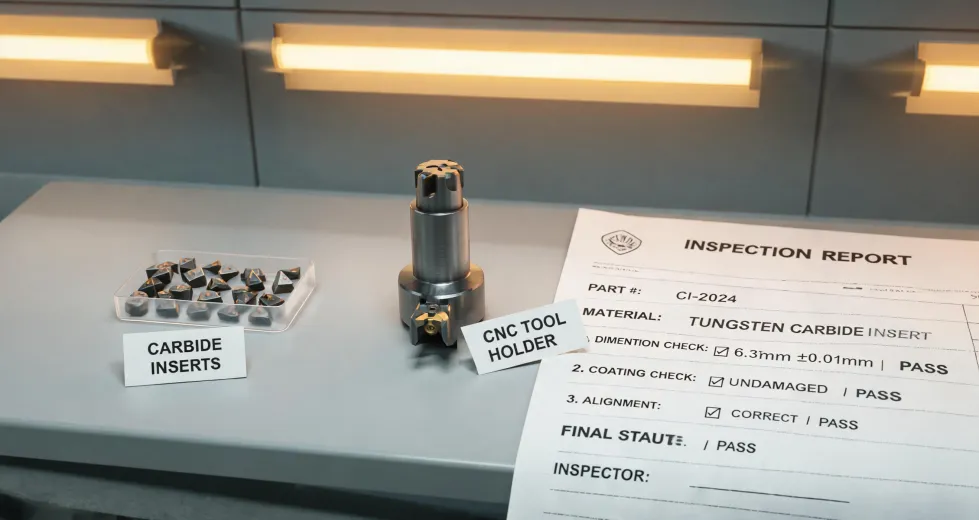
When you audit a CNC shop, ask for their Cpk on critical dimensions. Anything below 1.33 is a red flag. And demand a first article inspection report that includes every dimension, not just the ones you think are critical.
Scenario C: Large Diameter Rings or Flanges → Ring Forgings
Ring forgings are their own animal. If your part is a flange, a bearing race, or a large switching connector base, you need a seamless rolled ring. The continuous grain flow around the circumference is what gives you uniform strength. A forging factory that specializes in ring forgings will have a ring mill and the ability to provide ultrasonic testing (UT) to detect internal defects.
I learned this the hard way. The numbers said go with a cheaper ring forging supplier—15% less per piece, similar specs on paper. My gut said stick with the vendor that had in-house UT and a metallurgist on staff. I went with my gut. Six months later, I heard through the grapevine that the cheaper supplier had shipped rings with internal porosity to another company. That would have been a deal-breaker for our pressure-tight application. Every spreadsheet analysis pointed to the budget option. Something felt off about their lack of transparency on test reports. Turns out that 'slow to reply' was a preview of 'slow to deliver' and 'impossible to get quality data.'
For ring forgings, specify the UT standard (e.g., ASTM A388/A388M) and require a test report with every lot. Also, check the wall thickness tolerance. Ring rolling can produce ovality if the process isn't controlled. As of January 2025, typical lead times for custom ring forgings are 10-14 weeks, so plan ahead.
Scenario D: Small, High-Precision Electrical Components → Switching Connector Precision Machining
Switching connectors are a different beast. They're small, they need excellent surface finish, and any burr can cause a short or an intermittent connection. You're often dealing with brass, copper alloys, or plated materials. Here, a dedicated precision machining part supplier that focuses on small turned components is usually better than a general machine shop.
What to look for: optical inspection capability, a documented deburring process, and cleanliness standards. I've rejected entire lots because of microscopic burrs that would have caused field failures. The vendor claimed they were 'within industry standard.' We rejected the batch, and they redid it at their cost. Now every contract for switching connectors includes a burr-free requirement and a 100% optical inspection for critical surfaces.
Don't assume that a shop that makes great CNC turned components for hydraulic fittings can also handle tiny electrical connectors. The tooling, the fixturing, and the cleanliness requirements are different. I'd rather spend 10 minutes explaining our specifications than deal with mismatched expectations later. An informed supplier asks better questions and makes faster decisions.
How to Figure Out Which Scenario You're In
If you're still on the fence, ask yourself these four questions:
- What's your annual volume? Under 500 pieces? Lean toward CNC turned components. Over 5,000? Hot forging steel becomes more cost-effective.
- What's the primary failure mode you're worried about? Fatigue or impact? You need a forging factory with grain flow control. Wear or dimensional drift? Focus on CNC precision.
- What's the geometry? Ring-shaped with a large diameter? Ring forgings. Small and complex? Precision machining part.
- What's your tolerance? ±0.001 in or tighter? CNC. ±0.01 in? Hot forging plus machining can work, but you'll need a finishing op.
One more thing: don't let a supplier talk you into a process they happen to offer. I've seen a forging factory bid on a job that should have been CNC turned, just because they wanted the work. The result was a part that needed three secondary operations and still didn't hold tolerance. That's not a partnership; that's a quality risk.
Bottom line: there's no universal answer. But if you ask the right questions upfront—and demand the right documentation—you'll avoid the 12% rejection rate I see. There's something satisfying about a perfectly executed first article inspection. After weeks of back and forth, finally seeing every dimension and material cert in spec. That's the payoff. And the best part of finally getting your vendor process systematized: no more 3am worry sessions about whether the forging will arrive with the right heat treat certs.
So figure out your scenario, set clear quality requirements, and verify. Done.