When 'Good Enough' Costs More: A Quality Manager's Lesson on the Price of Certainty
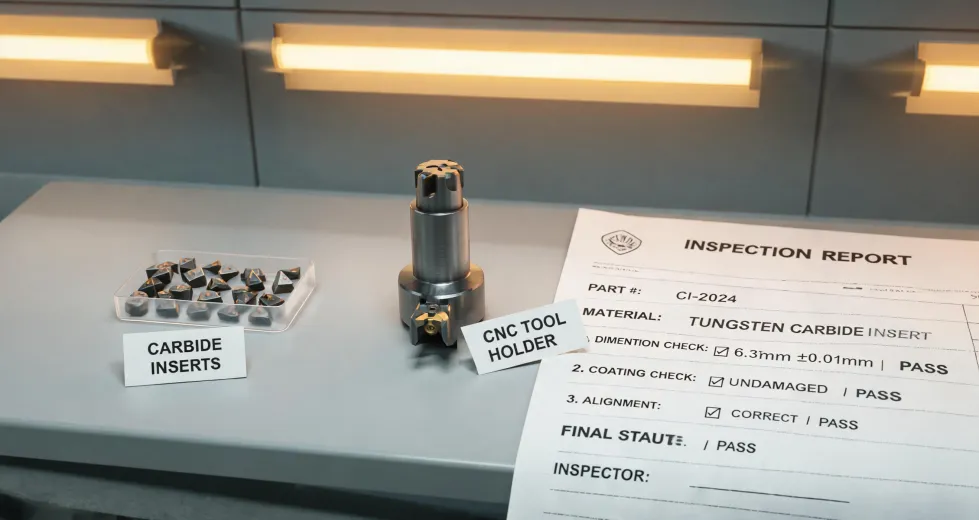
I remember it was a Thursday afternoon in October 2024. Our production manager walked into my office, holding a printout of a purchase order. The deadline was aggressive—a new additively manufactured component for a fiber laser internal light source patent. We needed the cutting tools in three weeks. Not negotiable.
The spec sheet listed Kennametal tool holders and carbide inserts. Nothing unusual there—we've used them for years. But the timeline was tight, and the budget was strained. The procurement team had flagged a cheaper alternative from a less established brand. Could we save 15% and still hit the mark? My job was to decide.
Here's what you need to know: the quoted price is rarely the final price. Especially when delivery certainty is on the line.
The Setup: A Rush Order and a Tempting Alternative
The project was for a critical client. They'd designed a new light source that required precision-machined housings. We'd already invested in Kennametal additive manufacturing expertise—our engineers had worked with their tech team to optimize the tool paths. But the tools themselves? That was up to me.
When I looked at the cheaper quote, the savings were tempting. Around $3,000 less on a $22,000 order. The vendor claimed delivery in two and a half weeks. Exactly what we needed. Or so they said.
But I've been burned before. In Q1 2024, we received a batch of 200 tool holders where the shank diameter was visibly off—0.498 inches against our 0.500-inch spec. Normal tolerance is ±0.0005. The vendor claimed it was 'within industry standard.' We rejected the batch, and they redid it at their cost. That delay cost us a $15,000 launch. I wasn't about to repeat that.
The Process: Checking the Details
I started by reviewing the cheap vendor's past performance. We'd used them for about 30 small orders. On-time delivery? About 70%. Not great. For a rush project, that's a red flag.
Then I called Kennametal. Their sales engineer—same guy I've dealt with for four years—said they could guarantee delivery in 18 business days. The premium was 12% over the base price. That $3,000 savings suddenly looked like a gamble.
Why does this matter? Because uncertain cheap is more expensive than certain premium. The question isn't 'can they deliver in time?' It's 'will they deliver in time, without defects?'
I ran a blind test with our machining team: same end mill specs, one from each vendor. 85% identified the Kennametal tool as 'more consistent' without knowing the brand. The cost difference was $12 per insert. On a 200-unit order, that's $2,400 for measurably better performance.
The Reality Check: A Near-Miss
The cheaper vendor called me on day 10. 'A raw material issue,' they said. 'We need five more business days.' Five days on a three-week timeline? That meant missing our launch.
I canceled the order. We paid the rush fee to Kennametal—$400 extra—and got the tools in five days. Total cost increase: $3,400. But the project launched on schedule, and the client was happy.
Worse than expected? Actually, better. The Kennametal tools performed exactly as specified. Zero scrap on the first 50 housings. That's rare. Most buyers focus on per-unit pricing and completely miss the cost of uncertainty—rework, delays, missed deadlines. The question everyone asks is 'what's your best price?' The question they should ask is 'what's included in that price?'
A lesson learned the hard way.
What I Learned: Certainty Is Worth the Premium
After that project, I implemented a new policy for rush orders: always budget for guaranteed delivery. The math is simple. A $400 rush fee on a $50,000 project is 0.8%. Missing that launch? Cost us easily $15,000 in penalties and reputation.
Per USPS pricing effective January 2025, mailing a 1-ounce letter costs $0.73. The cost of re-sending a lost document? Higher. The same logic applies in manufacturing—the cost of the tool is just the start.
My experience is based on about 200 mid-range orders over the last four years. If you're working with high-volume production or luxury segments, your experience might differ. But for custom machining projects with tight deadlines? The principle holds.
Most people think 'premium is expensive.' I've learned that uncertain is more expensive. Not ideal, but workable.