The 48-Hour Rush: How Kennametal Lathe Tools and a 3D-Printed Fixture Saved a $15,000 Deadline
At 3:47 PM on a Friday in March 2025, our best customer called with a number I'll never forget: $15,000. That was the penalty clause in their contract if they missed a Monday-morning installation. Their usual supplier had failed final inspection, and they needed 12 flanged shafts in 4140 steel—turned, bored, cross-drilled, with a keyway—at our dock by Sunday night.
Normal turnaround for this part is five working days. We had about 60 hours. This is the kind of call I exist to absorb. I coordinate production and rush triage at a contract machine shop in the Midwest, and in eight years I've processed 214 rush orders. Last year, we shipped 95% of them on time. The other 5% taught me everything.
I'll be honest: the story that follows isn't about heroics. It's about a Kennametal tooling decision, a CNC milling drawing I almost skimmed past, and a 3D printer we bought in 2023 as a workshop toy—which ended up carrying half the job.
The Phone Call That Started It
The client is an agricultural equipment OEM we've worked with since 2014. They're good people, and they pay on time. When the call came in, I was actually about to leave for the weekend.
Spoiler: I did not leave.
The part looked ordinary: 12 flanged shafts, 4140 heat-treated steel, with a 1.5000″ shaft diameter held to ±0.0005″ and a 32 Ra finish. Cross-drilled holes and a 3/16″ keyway came later, in a separate operation. The client emailed three PDFs: the turning drawing, the milling detail, and—this matters—several pages of CNC milling drawing examples they use to communicate tolerances with their suppliers.
Everything looked standard. That was the first mistake.
The Kennametal Lathe Tools Were Ready. Almost.
When I'm triaging a rush order, I think in a fixed order: tool availability, drawing errors, clamping strategy. Tooling first, because in a 60-hour window, the longest lead time decides whether you sleep at all.
The external turning was not the problem. Our standard setup for 4140 steel is a Kennametal PCLNL 2525 M 12 tool holder fitted with CNMG 120408 inserts in the KCP25 grade. Those Kennametal lathe tools have been with us for years—nothing flashy, just consistent. We had two full racks of inserts. Good.
The internal bore was where things got interesting. The drawing called for an internal shoulder with a maximum corner radius of 0.3 mm. Our boring bar—a Kennametal A16Q-SCLPR2—is a good bar, but it was loaded with CCGT 09T304 inserts. Those have a 0.4 mm nose radius.
Why is nose radius such a big deal? Because a cutting tool cannot cut a corner smaller than its own insert radius. If you need a 0.3 mm corner and your insert has a 0.4 mm radius, you'll leave a 0.4 mm radius—out of spec by 0.1 mm, about four thousandths of an inch.
Some shops would ship it anyway. The client's inspector wouldn't, and their customer would catch it at installation. That's how you trigger a $15,000 penalty.
This is the part I still cringe about. When I first started coordinating rush work, I assumed tooling was tooling: pick a holder, grab any coated insert, run it. Three scrapped setups taught me the difference between a 0.4 mm and a 0.2 mm nose radius is the difference between shipping and shutting down.
At 4:12 PM I pulled out my phone and checked the Kennametal website for a cross-reference—looking for a CCGT 09T302 insert with a 0.2 mm nose radius in a suitable grade. The Kennametal website showed a distributor 40 minutes from the shop with four in stock. My colleague made the drive at 4:26 PM on a Friday (which, honestly, felt like winning a small lottery). Cost: $96 for four inserts. Against a $15,000 exposure, that's the best money we spent all quarter.
The CNC Milling Drawing Examples Had an Answer I Nearly Missed
With insert geometry handled, I told the shop lead to start prepping the machine. That's when I made the second mistake.
In the client's CNC milling drawing examples, the keyway was tied to the bore with a 0.005″ true position callout—datum A being the bore axis. To hold that, the keyway had to be cut from a part located by the bore, not the outside diameter. Standard soft jaws would grip the O.D., the way we'd done on a dozen similar flanges.
“It's basically the same as last time. Use the standard fixture,” I said.
That was the one time it mattered.
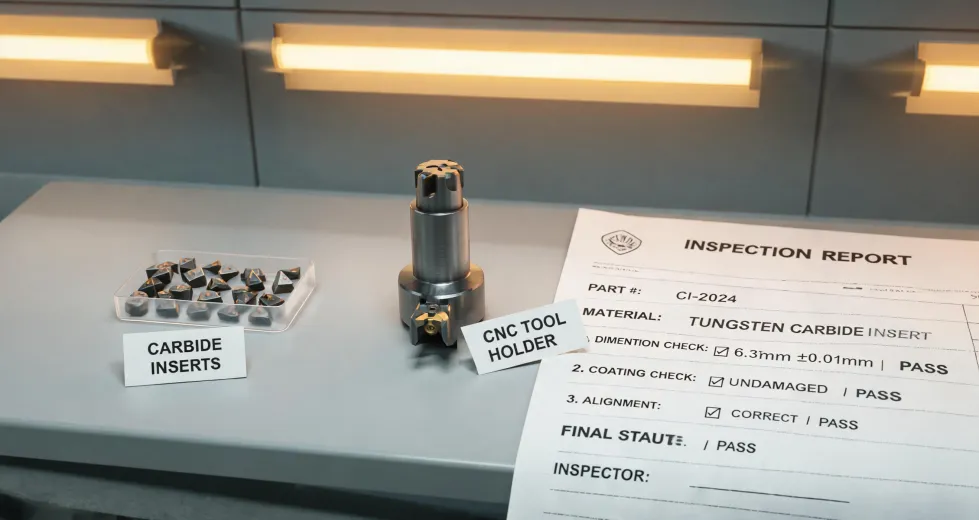
After the first three parts, our inspection tech measured the keyway position: off by 0.011″, more than double the allowance. The soft jaw was flexing because the flange's back face had a raised boss that made the seating asymmetric. We had three parts that would have to be reworked, maybe scrapped, and an entire Saturday evening bleeding away. Skipping the fixture audit because it “never matters” is exactly how you lose a $15,000 deadline. (I keep that inspection report pinned in my office. It works better than any motivational poster.)
The FDM 3D Printer Nozzle Temperature Range, and a Fixture That Fought Back
Here's where the story turns. Our shop added 3D printing two years ago, and if anyone asks me how to offer 3D printing services in a machining business, my first answer is: start with fixtures, not customer parts. You'll make mistakes, and it's far cheaper to make them on shop aids than on deliverables.
My plan was a contoured soft-jaw insert—a pocket matching the flange's back face so the clamping load seated evenly. Material: PETG. It resists cutting fluid, handles shop temperatures, and has enough impact strength for clamping duty. We set the nozzle to 245°C (near the top of the FDM 3D printer nozzle temperature range for PETG, roughly 220–250°C) and the bed at 80°C. Two hours later, the printed insert fit like a glove.
The next three parts passed true position. Then, on part seven, the indicator jumped again. The PETG had crept under sustained clamp pressure; the screw bosses relaxed and let the insert shift. Not a catastrophic failure—just plastic being plastic.
The fix was to machine the same pocket out of 6061-T6 aluminum on the CNC mill, using the same model we'd imported for the print. The printed version became the verification master. It worked.
That hybrid loop—FDM for the concept, CNC for the production fixture—is exactly where the industry is going. What was best practice in 2020 may not apply in 2025. Five years ago, a 3D printer on a machine shop floor was a novelty. Today, it's the fastest fixture maker in the building.
Saturday Night, 1:12 AM
At 1:12 AM, with seven parts done, the lathe began to chatter on the finish pass. The CNMG insert was wearing faster than I liked—no surprise, since we were pushing speed in a way I wouldn't normally recommend. I swapped in a Kennametal insert with wiper geometry, which let us keep the feed rate up while holding the 32 Ra finish. The fundamentals of cutting don't change: correct grade, correct speed, correct edge. But the execution has transformed, and having the right tool on the rack is what makes the transformation feel routine.
We finished the last part at 2:47 AM Sunday. The truck left at 4:00 AM. The client's installation crew had all 12 shafts seated by 9:00 AM Monday.
What the Rush Order Taught Me
Three lessons, in no particular order:
Tooling is a specification, not a commodity. The Kennametal website's product data was the difference between a perfect internal radius and a rejected part. The CCGT 09T302 inserts cost $96. Rejection would have cost the client $15,000 and us a relationship that goes back eleven years.
Drawings deserve suspicion. The CNC milling drawing examples contained the answer the whole time—the true position callout was right there. I assumed “similar” meant “same,” and assumptions have no place in a 60-hour countdown.
Printing services are a capability, not a product line. If you're wondering how to offer 3D printing services to your customers, don't lead with pretty prints. Lead with fixtures, soft jaws, and prototypes. Respect the FDM 3D printer nozzle temperature range, choose your filament for the environment it'll live in, and never trust a plastic fixture for a long run without verifying it.
Our company now builds a 48-hour buffer into every rush commitment—a policy we adopted after a bad week in 2023. It sounds like a small thing, but it changes how we quote, how we schedule, and how we sleep.
The fundamentals haven't changed. But the execution has transformed.
The industry is evolving, and the shops that survive are the ones that pair proven basics like good Kennametal lathe tools with new capabilities that turn impossible deadlines into ordinary ones.
That's what saved us that weekend. Well, that and one very patient colleague who drove 40 minutes for four inserts on a Friday afternoon.