Choosing a Kennametal Supplier for Aerospace: TCO, ISO/ASTM 52900, and Multi-Color 3D Printing
-
Where this opinion comes from
-
What I learned from comparing Kennametal suppliers
-
Kennametal aerospace: what actually matters
-
The 'VMC Wacky' week: tooling was not the problem
-
Learn ISO/ASTM 52900 additive manufacturing terminology first
-
How do multi color 3D printers work—and why it matters
-
When the cheapest Kennametal supplier is fine
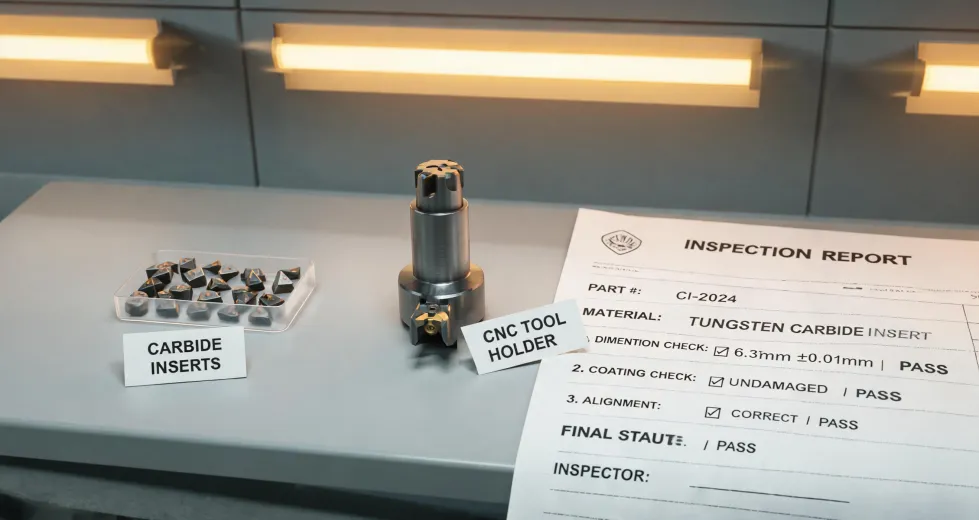
If you need Kennametal aerospace tooling, the cheapest quote is rarely the cheapest tool. Over six years of managing a $160,000 annual tooling budget, I've learned that a supplier's application support, stock position, and willingness to ask hard questions affect total cost more than the line item price. I'd rather pay 8% more to an authorized Kennametal supplier and avoid a three-day shutdown than save $40 today and guess on the tool geometry.
I should also say this now: if you're looking at 3D printing for aerospace parts, learn the ISO/ASTM 52900 additive manufacturing terminology before you approve a quote. And if someone asks 'how do multi color 3D printers work?', that's polymer material extrusion or material jetting, not metal additive manufacturing. Different process, different cost model, different risk.
Where this opinion comes from
I'm a procurement manager at a 210-person contract manufacturing shop. For the last six years, I've managed cutting tools, toolholders, and shop consumables—roughly $160,000 a year in my cost center. I track every order in our ERP, and every quarter I reconcile actual spend to the tooling budget.
I don't have hard data on how many gray-market Kennametal tools are floating around. But based on two inserts I received in 2024 that didn't match the certified packages, my sense is that the problem is more common than most shops admit.
What I learned from comparing Kennametal suppliers
In 2023, I compared eight suppliers for a Kennametal aerospace end mill package. One reseller quoted 14% below our incumbent. I almost switched. Then I added the minimum order, freight, a two-day lead time for replacement tools, and the fact that their support line went to voicemail. The 14% discount became a 2% savings on paper, and the operational risk wasn't worth it.
That's the total cost of ownership conversation (i.e., not just the sticker price). A low quote doesn't mean much if the supplier can't answer 'which grade do you run for titanium?', doesn't stock the tool, or won't help when a toolpath sounds wrong.
As of February 2025, a typical Kennametal solid carbide end mill for aerospace aluminum is a $45-85 line item in the distributor quotes I've seen this quarter. Verify current pricing at kennametal.com or your preferred supplier.
Kennametal aerospace: what actually matters
Kennametal's aerospace product line includes solid carbide end mills, PCD-tipped tools for aluminum, and heavy-duty tool holders for titanium and nickel alloys. According to kennametal.com (accessed February 2025), the aerospace program covers airframe and engine component manufacturing.
For a shop like ours, what matters is traceability and application knowledge. An authorized supplier can pull up Kennametal's recommended cutting data, get an application engineer involved, and flag when a tool is being used outside its design envelope. A random reseller can't do that.
The 'VMC Wacky' week: tooling was not the problem
Here's a concrete example of why supplier support matters. In Q2 2024, one of our vertical machining centers started cutting 'wacky'—uneven surface finish, a bore that kept running 0.0015 inch oversize, random chatter. I still call that week 'VMC Wacky.'
My first reaction was to order new Kennametal end mills. We ordered them. They were sitting on the bench, still wrapped, when the application engineer from our authorized Kennametal supplier asked a simple question: did you check the toolholder taper and spindle runout?
We hadn't. There was a chip under the holder's taper. The machine was fine, and so were the original end mills. That mistake cost us about $1,200 in tooling we didn't need and two days of downtime. I knew I should have checked the holder first, but we were behind on a rush job. I thought 'what are the odds?' That was the one time it mattered.
Learn ISO/ASTM 52900 additive manufacturing terminology first
If you're in procurement, don't let the phrase 'additive manufacturing' become a vague buzzword. ISO/ASTM 52900 splits AM into seven process categories: binder jetting, directed energy deposition, material extrusion, material jetting, powder bed fusion, sheet lamination, and vat photopolymerization.
According to ISO/ASTM 52900:2021 (iso.org), additive manufacturing is 'the process of joining materials to make parts from 3D model data, usually layer upon layer.'
For aerospace metal parts, you'll usually see powder bed fusion or directed energy deposition. That's a very different cost center than a desktop plastic printer.
How do multi color 3D printers work—and why it matters
The short answer: most multi-color 3D printers use either multiple extruder heads on a material extrusion machine, or a material jetting system that deposits tiny colored droplets and cures them with UV light. Some use a single nozzle with a color mixer. None of these are the same as a metal powder bed fusion system.
When someone asks me 'how do multi color 3D printers work?', I say they build colored plastic prototypes layer by layer, not structural metal parts. In procurement, that distinction matters because a quote for a '3D printed' aerospace bracket should specify the process category. If it doesn't, ask.
When the cheapest Kennametal supplier is fine
I'm not saying every purchase needs an authorized aerospace supplier. For standard inserts and common carbide end mills used on non-critical parts, we still buy from a local distributor based on price and fast delivery. I'm not anti-discount. I'm anti-'discount without a risk check.'
Use the cheaper route when you know exactly what you need, the part isn't flight-critical or a first article, and you don't need application support. For Kennametal aerospace tooling—or any tooling tied to a certified process—total cost of ownership is the metric that matters.
One more thing: adding a digital tool crib and standardizing on Kennametal inserts cut our tooling-related downtime from roughly two days per month in 2023 to four hours in 2024. The tools aren't magic. We removed the guesswork from the process.
Here's what I'd do if I were setting up a new shop: pick an authorized Kennametal supplier, ask which process categories they support, check their stock, and test their engineering help before you need it. Because the next time your VMC goes wacky, the right supplier will help you fix the actual problem instead of sending you a box of new end mills.