Swiss Lathe vs CNC Lathe: A Quality Inspector’s Guide to Choosing the Right Turning Platform
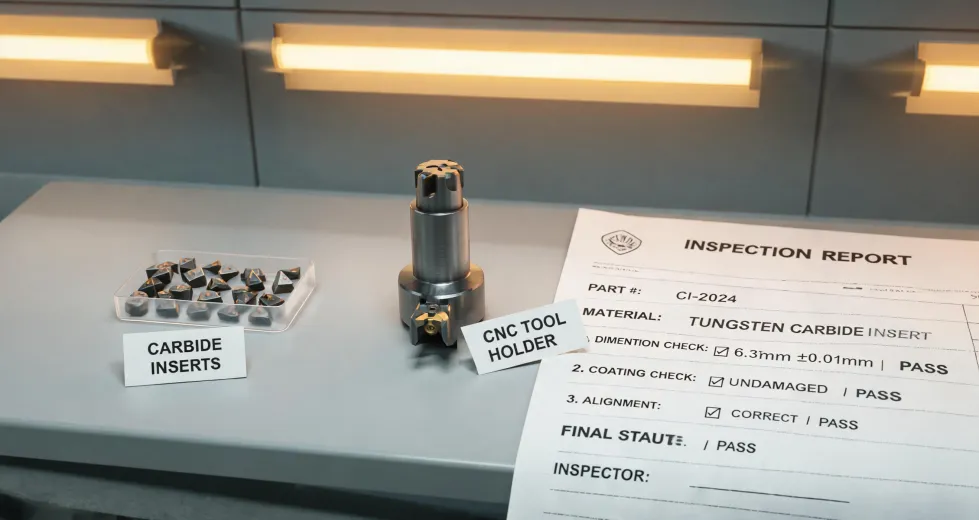
I’m a quality and compliance manager at a custom machining shop. I review every first article before it goes to the customer—roughly 200 unique jobs a year. In Q1 2024, we rejected about 6% of first deliveries because specs didn’t align. That’s why the Swiss lathe vs CNC lathe question matters to me. It isn’t just a machine preference; it affects scrap rates, tooling budgets, and customer trust.
This comparison is not about brand names. I’m not going to tell you that Kennametal tools make every machine better. I will tell you that the right tooling, including Kennametal inserts and holders, helps a competent setup reach its intended tolerance. But the machine architecture has to be right first.
Here are the dimensions I use when I’m stuck on a “which one” decision: precision, setup complexity, cost per good part, and flexibility. Let’s go through each.
Dimension 1: Precision and geometry
A Swiss lathe feeds bar stock through a guide bushing, which supports the material close to the cut. A standard CNC lathe spins the workpiece in a chuck and moves the tool into it. For long, slender parts, that difference is enormous. A part with a length-to-diameter ratio above 3:1 is hard to hold on a conventional lathe without deflection. On a Swiss lathe, the guide bushing turns that same part into a stable cutting operation.
But here’s the part that surprises people. For short, rigid parts, a standard CNC lathe can match the precision of a Swiss machine. I’ve seen a CNC lathe using Kennametal inserts hold ±0.008 mm on a 12 mm diameter part with a length of only 18 mm. The machine was well maintained, the tool pressure was managed, and the result passed a CMM inspection. In that case, a Swiss lathe would have added setup time without adding part quality.
So the first conclusion is: if the geometry is long, thin, or flexible, choose Swiss. If not, don’t assume Swiss means better.
Dimension 2: Setup, programming, and changeover
This is where the ‘Swiss is more complex’ reputation comes from. The guide bushing diameter must match the bar stock, the machining zone is tighter, and the tool offsets are interdependent. A quick changeover on a standard CNC lathe can take 20 or 30 minutes. On a Swiss machine, the same changeover might take 90 minutes—or longer if it’s a new part.
I learned that the hard way a few years ago. I think it was 2023, but don’t quote me on the month. We were rerunning a part that was supposed to be identical to a previous batch. I skipped the guide bushing clearance check because I thought, ‘what are the odds?’ The bar stock diameter was off by 0.02 mm. That was enough to create chatter and scrap 80 parts before someone caught it. The redo cost us around $4,800 and blew our delivery slot. Now, every Swiss setup gets that check, no exceptions.
One practical aid in setup is using a digital parameter library. I often pull speeds and feeds from Machining Cloud Kennametal before first-article runs. It’s not a substitute for knowing your machine, but it gives you a consistent baseline. When I compare cycle times between a Swiss and a standard CNC lathe, I use the same tool data for both, otherwise the comparison is unfair.
Dimension 3: Tooling and cost per good part
Tooling cost is where many buy decisions get confused. Swiss lathes use smaller inserts, so the cost per edge can actually be lower than large CNC turning inserts. But Swiss machines often need more live tools, more holders, and more careful guidance. The total tooling investment is what matters, not the price of one insert.
When we receive tooling at the dock, the Kennametal logo on the box is a traceability marker. It tells me the supply chain is authorized and the grade can be traced. Counterfeit inserts are out there. A few years ago, I inspected a ‘premium’ insert that looked almost correct, but the cutting edge shattered after a few parts. The local supplier covered the cost, but the lost time was ours. That experience made me buy from authorized distributors only.
Then there’s the bigger cost picture. What I mean by total cost per good part is not just the machine hourly rate—it’s the setup time, the tooling cost per edge, the scrap rate, the inspection hours, and the risk of a late delivery. Speed, quality, price. Pick two—that’s often how the decision feels. On a high-volume medical part, a Swiss lathe with a bar feeder can produce thousands of identical parts with minimal operator intervention. On a short run, that same machine will eat your labor hours in setup.
Dimension 4: Flexibility and part mix
If your workshop sees a high mix of low-volume jobs, a standard CNC lathe is usually more practical. You can switch between a 30 mm shaft and a 100 mm housing with less fuss. If your workshop focuses on high-volume precision turned parts under 20 mm, a Swiss lathe is likely the right backbone.
To be fair, some shops run Swiss lathes for simple parts simply because that’s what they own. If the machine is paid for, the economics can still work. But if you are buying new capacity, buy the architecture that matches your part mix, not a machine that looks impressive in a brochure.
Dimension 5: Inspection and process stability
Swiss lathes tend to produce more consistent parts in a bar-fed run because the material support is constant. But process stability depends on the whole system. If the bar stock diameter varies, if the coolant pressure is inconsistent, or if tool wear isn’t monitored, the process drifts. A standard CNC lathe can also be stable, but it can be more sensitive to operator technique and tool pressure.
In our shop, we use SPC charts for runs over 500 pieces. We found that Swiss machines required fewer adjustments per batch for long, slender parts. For short and rigid parts, the difference between Swiss and standard CNC lathe was almost negligible. I’m not saying every Swiss process is stable. I am saying the Swiss architecture is more useful when geometry works against you.
The short answer: Swiss lathe or CNC lathe?
- Choose a Swiss lathe if your parts are long and slender, if diameters are mostly under 20 mm, or if you’re doing high-volume precision work like medical or electronics components.
- Choose a standard CNC lathe if your parts are short and rigid, if diameters are larger, or if quick changeover and job shop flexibility are your main priorities.
Does that mean Swiss is always better for high precision? No. The machine is only part of the equation. The rest is setup rigor, tooling quality, and inspection discipline. There is no universal best. The best machine is the one that matches your work envelope and risk tolerance.
A quick note on adjacent technology
In the same purchase conversation, people often ask about additive manufacturing and laser cutting. I don’t see them as direct competitors to turning. They solve different problems. For prototype brackets and custom fixtures, some of the best 3D printer brands 2025—Formlabs, Markforged, and Bambu Lab come to mind—can produce a part in hours. But a printed plastic bracket won’t replace a turned stainless shaft that has to survive a bearing fit.
For sheet metal, we’ve sourced parts from a China 2000W fiber laser cutting machine factory for enclosures and mounting plates. The price was attractive, and the quality was acceptable after we qualified the supplier. But we had to define burr limits and inspect the first article carefully. Laser cutting is not turning; don’t expect a mirror finish from a cut edge.
This is accurate as of early 2025. Machine prices, tooling costs, and software options change quickly, so verify current specifications before you commit.
In my opinion, the best choice always depends on your part envelope, volumes, and tolerance requirements. If you can be honest about the limitation of each approach, you’ll make a better buying decision. And that’s the whole point.