Need Kennametal Tools in a Rush? 3 Mistakes That Will Cost You More Than Expedited Shipping
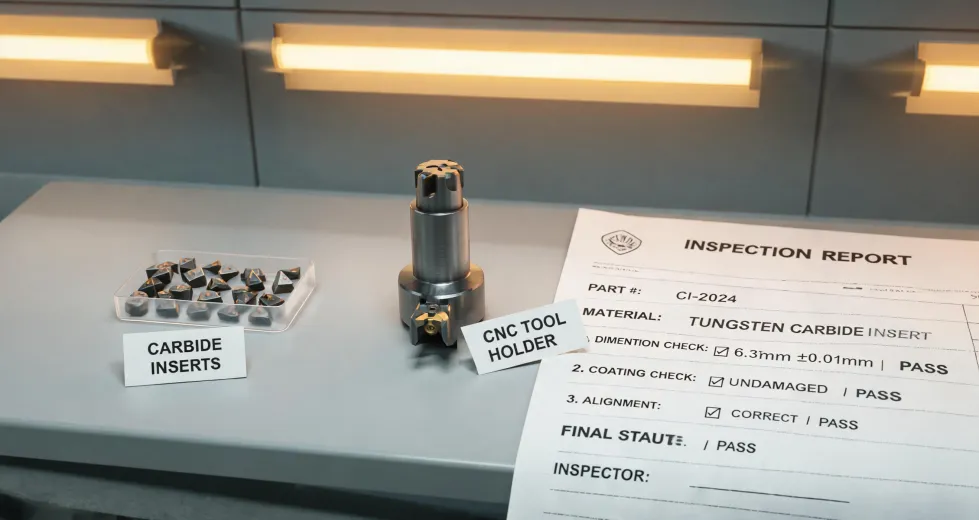
Fast shipping doesn't fix the wrong part. I've handled 200+ rush orders in eight years, and the biggest failures were never delivery delays—they were fast deliveries of the wrong item. Here are the three mistakes that will cost you more than expedited shipping: skipping verification, believing 'interchangeable,' and buying from unverified suppliers. Avoid these, and you'll save time, money, and your own sanity.
Why I'm Qualified to Say This
In my role coordinating emergency procurement for a custom machining shop, I've triaged dozens of urgent requests: a broken carbide insert at 3 PM, a top notch boring bar that snapped two days before a deadline, and a sudden need for ball mill end seal supply when a customer's line went down. Last quarter alone, we pushed through 47 rush orders with a 95% on-time rate. The 5% that failed? Every one was a preventable error—not a shipping problem.
In March 2024, 36 hours before a client's deadline, we discovered the kennametal top notch boring bar we'd ordered had the wrong shank size. The vendor said 'close enough' (it wasn't). We paid $300 for overnight shipping on the correct one and an extra $500 in overtime setup. The client's alternative was triggering a $50,000 penalty clause. That's when I built my 12-point rush-order checklist.
The Three Mistakes That Cost You More Than the Shipping Fee
Mistake #1: Skipping Verification
Here's the counterintuitive thing: faster shipping actually makes the wrong-item problem worse. When you pay for expedited delivery, you create pressure to ship immediately—which means the warehouse grabs the closest matching SKU instead of the exact one. I've seen 'same-day dispatch' turn into a $2,000 mistake because someone didn't check the insert size. The person who reconciles the order before paying for rush shipping comes out ahead.
Once, we ordered Kennametal carbide inserts for a titanium job. The part number looked right, but we didn't check the grade—we got a steel-cutting grade instead of a titanium-capable one. It failed in the first pass. The $80 insert wasn't the problem; the $2,000 in damaged workpieces was. If we'd spent two minutes reading the grade code, we'd have caught it.
For Kennametal orders, verification means:
- Verify the catalog number against the original RFQ. Read it aloud. Seriously.
- Check insert seat geometry. Top notch boring bars use a specific clamp system—don't trust 'universal' adapters.
- Confirm the shank style. There are multiple variations; the word 'interchangeable' is a red flag.
- Ask for a photo of the actual product before shipment, especially if the seller isn't an authorized Kennametal distributor.
Mistake #2: Believing 'Interchangeable'
Top notch boring bars are a special pain point because they have a removable blade or tool bit, and the insert geometry is specific to that system. You can't just swap in a standard turning insert. If the client sends you a part number from an old drawing, double-check it against the current Kennametal catalog—they've updated some designs. I've seen a client order 'the same one as last year' and get a different tool because the insert shape changed.
The same logic applies to ball mill end seal supply. Seals have dozens of dimensions: shaft diameter, bore size, seal face material, and whether you need a split seal. In a panic, it's tempting to order the same part number you used last time. But what if the pump was rebuilt since then? I've learned never to assume 'same specifications' means identical results across vendors. Verify with the actual mill model and serial number.
For ball mill end seals, the situation gets even more archaeological. A cement plant might have a mill that's been running for decades, and the original manufacturer may have changed suppliers. Tracking down the original seal drawing is like archaeology. In one case, we had to pull the old seal and measure it ourselves because the customer's paperwork was wrong. We now ask for a physical sample or high-resolution photos with a ruler in the frame before we quote.
Mistake #3: Buying from Unverified Suppliers
In 2022, a batch of counterfeit Kennametal inserts came through our shop. They had the same orange packaging and similar logo, but they chipped after 10 minutes of cutting. The real ones lasted an hour. We couldn't tell visually—the chip had to run a test. Since then, we only buy from authorized distributors or direct from Kennametal. If a quote seems 30% cheaper than market, ask yourself why.
Check the kennametal logo on the packaging and on the tool itself. Counterfeiters have gotten good, but the logo is often slightly off in color or spacing. Request a photo of the actual product before shipment, especially if the seller isn't an authorized distributor. That photo request has saved us twice: once, the seller sent a picture of a tool with a different coating; another time, the packaging said 'Kennametal compatible' instead of 'Kennametal' (i.e., not genuine).
How do you verify a supplier? Start with Kennametal's official distributor locator. If they're not on the list, ask for proof of their supply chain. A legitimate reseller should be able to provide an invoice from an authorized distributor. If they hesitate, that's your answer. Also, beware of 'compatible' products marketed as direct replacements. They might work, but they're not Kennametal—and the performance difference is exactly what you can't afford on a deadline.
Beyond Machining: What I Don't Know
This gets into mechanical engineering territory, which isn't my official background. I'm not a metallurgist, so I can't explain the exact composition of Kennametal's carbide grades. What I can tell you from a procurement perspective is that a tool you've used successfully before is a safer bet than an untested 'equivalent' when you're on a deadline.
On a side note, I've had customers ask me questions that have nothing to do with machining—like whether vmc jamaica calories 700 ml fits a keto diet, or can you wear makeup after co2 laser treatment. I'm not a nutritionist or a dermatologist, so I can't speak to those (and I'd be nervous to guess). But the pattern is telling: when people are under time pressure, they'll ask anyone who picks up the phone. That's why you need a system, not just a contact.
How to Prevent the Next Rush Order Disaster
The prevention-over-cure mindset changed our entire workflow. We now have a 48-hour buffer policy for all critical tooling. For custom Kennametal tooling, we verify drawings twice and get written confirmation on lead time—even from vendors we've used for years. Get written confirmation of the lead time. Not a verbal 'should be there by Friday.' Ask for the carrier and tracking number, and confirm the ship date. If the vendor won't commit in writing, don't commit your project to them.
That policy has already saved us twice. Once, the manufacturer caught a typo in the drawing; another time, the courier lost the package. The buffer absorbed both. We once paid $800 extra in rush fees for a single order, but it saved a $12,000 project. That's cheap insurance.
I went back and forth for months about keeping a backup inventory of Kennametal boring bars. On paper, the carrying cost was wasted money. But my gut said downtime risk was worse. After a near-miss in January—when a client's spindle failure ate our entire backup stock—we now keep the top three sizes we sell in a locked cabinet. The finance guy hates the dead capital; the production manager loves not having to sweat.
Checklists are the cheapest insurance you can buy. The 12-point checklist I made after that March mistake has saved us an estimated $8,000 in potential rework. Five minutes of verification beats five days of correction—and that's not a slogan, it's arithmetic.
When Prevention Isn't Enough
Prevention has limits. A machine breakdown at 2 AM doesn't care about your buffer. If you need a tool in hand within four hours, online ordering isn't the answer—call your local Kennametal distributor and check stock. If you're ordering quantities under 25, sometimes a local shop is more economical than shipping from a national supplier. And there's a point where paying for rush shipping is actually the right call: when the cost of downtime exceeds the premium. The trick is knowing that number before you order. Calculate your cost of downtime. If a disabled machine costs $200/hour in lost production, then paying $100 for overnight shipping is obvious. If it costs $20/hour, maybe standard shipping is fine. Do that math before you call—not after.
Bottom line: the most expensive rush order is the one that fails. Verify the part, the supplier, and the lead time before you submit. You can thank me when your line stays running.