Kennametal Tool Holders, CNC Machining, and Questions I Learned From the Shop Floor
-
1. What is CNC machining definition?
-
2. How do I choose Kennametal tool holders without guessing?
-
3. Is the Kennametal catalog turning section actually useful?
-
4. What can a 3D CO2 laser cutting machine do that a CNC machine can't?
-
5. What does an injection molding process diagram have to do with machining?
-
6. Why does my machined part cost more than the quote?
I've been handling machining orders for eight years—or rather, eight years and some months, if we're counting the mistakes. In that time, I've personally made enough errors to fill a checklist. Several were expensive. I'm sharing them here because the questions you're searching for about Kennametal tool holders, CNC machining, and manufacturing processes usually have practical answers that no one writes down.
This is not a perfect guide. It's a set of questions I wish someone had answered before I ordered the wrong tool holder, misread a catalog, or ignored a process diagram. If you're searching for "Kennametal tool holders" or trying to understand what "CNC machining definition" really means, start here.
Here's what we're covering:
- What is CNC machining definition?
- How do I choose Kennametal tool holders?
- Is the Kennametal catalog turning section useful?
- What can a 3D CO2 laser cutting machine do that a CNC machine can't?
- What does an injection molding process diagram have to do with machining?
- Why does my final quote keep going up?
1. What is CNC machining definition?
CNC stands for Computer Numerical Control. The definition, in plain English: CNC machining is a subtractive manufacturing process where pre-programmed software controls machine tools like mills, lathes, and routers. The machine follows a toolpath and removes material from a solid block until the part matches the CAD model.
I used to think CNC was just pressing a button. Actually—or rather, after the first crash—I realized the machine is the least flexible part of the process. Setup, tooling, feeds, and speeds decide whether you make a good part or a pile of scrap. I remember spending a whole weekend reprogramming a simple bracket because I didn't understand the difference between climb milling and conventional milling. Climb was the right choice for that aluminum part, and I got it backwards.
If you're new, keep this in mind: CNC machining is not additive like 3D printing, and it's not thermal like a 3D CO2 laser cutting machine. It's mechanical and subtractive. That distinction matters more than you might think when you're comparing processes and trying to justify a new machine.
2. How do I choose Kennametal tool holders without guessing?
I remember calling our distributor after ordering "tool holders" with no other details. The silence on the phone should have been a clue. There are dozens of tool holder styles, and the one you need depends on the machine, the spindle taper, the cutting tool, and the operation.
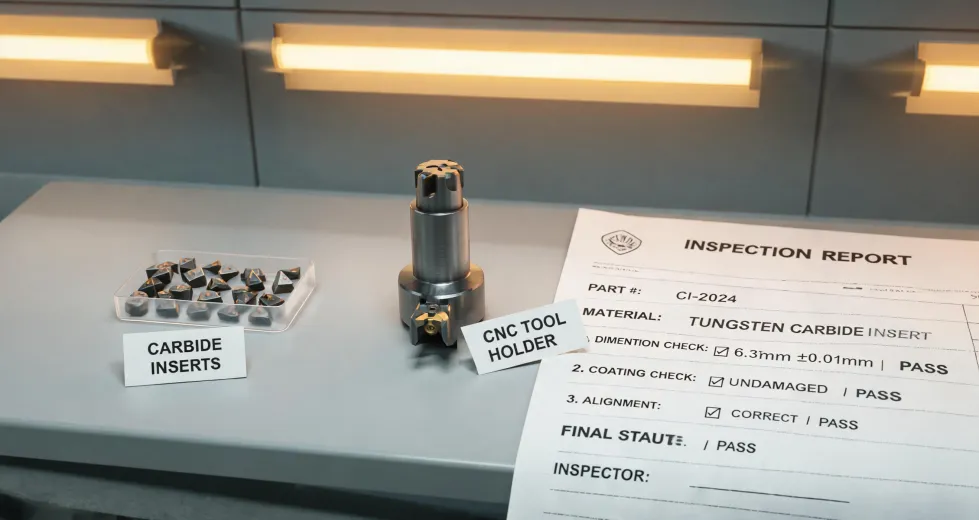
Kennametal tool holders come in different types for different jobs: collet chucks, hydraulic chucks, shrink-fit holders, end mill holders, and multiple taper systems like CAT, BT, HSK, and KM. The holder has to match the machine taper and the cutting tool shank. If I'm setting up a turning center, I need a boring bar holder or a square shank block, not an end mill holder. It sounds basic, but I once ordered a CAT40 hydraulic holder when our mill had a BT40 spindle. They have the same shank drawbar taper? No, actually—they look similar but the flange dimensions and pull studs are different. The order didn't fit.
My rule now: write down the operation, the tool shank diameter, and the machine interface before opening any catalog. Also confirm the pull stud or retention knob. That's the kind of detail that turns a $500 tool holder into a paperweight.
3. Is the Kennametal catalog turning section actually useful?
The Kennametal catalog turning section is useful, but it's not a search engine. I learned that after spending an afternoon looking for "the insert that works for everything." There isn't one. Turning inserts are selected by workpiece material, operation type, depth of cut, and required surface finish.
For turning, the catalog groups inserts by geometry, grade, and workpiece material. You'll see designations like CNMG, DNMG, VNMG. They look like random letters, but they tell you shape, clearance angle, tolerance, and hole type. I skipped those charts once. Then I ordered CCMT inserts for a steel job that needed CNMG. The inserts arrived, looked fine on screen, and did not fit the tool holder. The result: $450 in inserts with no use, plus a 3-day delay while we waited for the right ones.
What worked: using the Kennametal catalog turning "start with the material" chart. Match the material group—P for steel, K for cast iron, N for aluminum—to a grade. Then match the geometry to roughing or finishing. Or rather, that's what I should have done from the beginning. If I remember correctly, their online catalog also includes a "find your grade" tool, but I didn't use it until after the mistake.
4. What can a 3D CO2 laser cutting machine do that a CNC machine can't?
A 3D CO2 laser cutting machine uses a focused laser beam to melt or vaporize material. It's excellent for flat sheet cutting, engraving, and many non-metals. Because there's no mechanical cutting force, thin parts don't distort the way they can under a milling cutter. The cut is fast, and there's no tool wear in the conventional sense.
But it is not a replacement for CNC machining. For thick steel, tight tolerances, and square corners, machining still wins. Lasers cut from one side and can leave slight taper near the bottom of the cut. I priced a CO2 laser for our shop because the promise was tempting. The upside was faster turnaround on sheet metal brackets. The risk was that our customers need tolerances below ±0.005", and the laser we could justify financially didn't meet that. I kept second-guessing after sending the request for quote. Didn't relax until the vendor confirmed their demo part hit 0.008"—which confirmed my doubt.
A 3D CO2 laser cutting machine and a CNC machine are complementary, not interchangeable. One thermal, one mechanical. If you're doing high-mix, low-volume work like ours, adding a laser without a clear niche is hard to justify. (Should mention: our local job shop with a laser still sends us parts that need milling after cutting.)
5. What does an injection molding process diagram have to do with machining?
Honest answer: nothing, until you have to cut mold inserts. I had a job where we machined a cavity for a customer's injection mold. I didn't pay attention to draft angles. The engineer sent an injection molding process diagram showing clamping, injection, cooling, and ejection. At ejection, the part stuck because the mold walls had no draft.
The diagram wasn't a formality. It explained why the mold needed a taper. Without draft, the plastic part stays in the cavity or gets scratched on the way out. We had to re-cut the insert, lost about a week, and the customer had to explain the delay to their production line. I still kick myself for not asking "what happens after this part leaves my machine?"
If you're a machinist, learn to read an injection molding process diagram. You don't need to be a mold designer, but you need to understand the next step in the process. The diagram shows the whole cycle: mold closes, plastic injects, part cools, mold opens, part ejects. Each stage affects what you machine. Cooling, for example, affects shrinkage and therefore your tolerance strategy. I've had good results when I design the machining around the molding process, not just around the part geometry.
6. Why does my machined part cost more than the quote?
I've learned to ask "what's NOT included?" before "what's the price?" The vendor who lists all fees upfront—even if the total looks higher—usually costs less in the end. This is one of those lessons I only believed after ignoring it once.
Hidden costs I've seen: tool holders, inserts, special coatings, setup, programming, material handling, and rush fees. I used to choose the lowest quote because the spreadsheet said so. Then a "cheap" quote came back 30% higher after the supplier added a setup charge and a tooling adjustment. A transparent quote from another vendor, with every line item shown, was only 5% higher upfront—and ended up being the cheaper option. The math was obvious after the fact.
Now I work with suppliers who show the math. Kennametal tool holders and inserts are in the catalog with published specs, so I can see what I'm paying for. That doesn't mean they're the cheapest option. But transparent pricing builds trust. I'll take "here's the total and what it includes" over "we'll make it up in volume" every time. If a quote doesn't list the cost of tool holders or setup separately, I ask why. If the answer is vague, I treat it as a red flag.