Kennametal Shoulder Milling Under a 72-Hour Deadline: What Actually Protects Your Brand
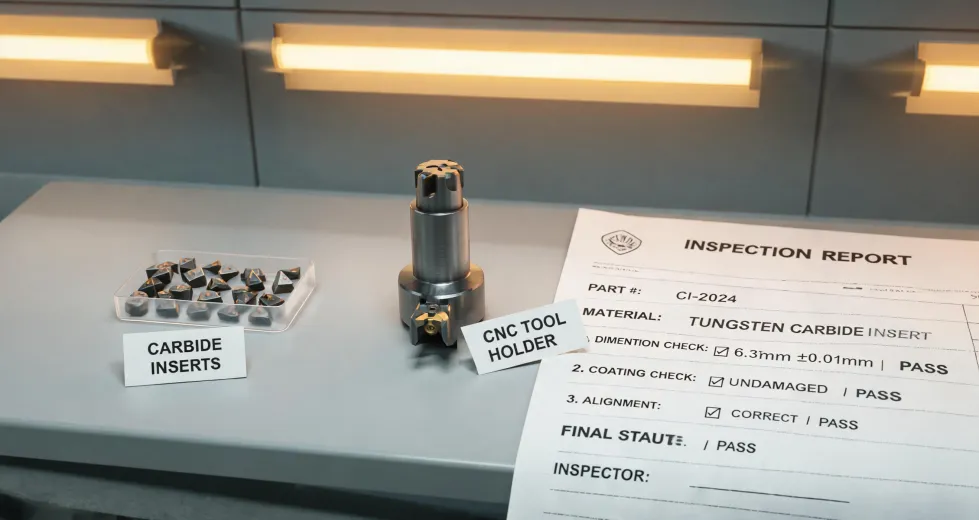
Pick the metal process that protects your customer’s trust, not the one that wins the technology argument. That’s the conclusion I use now when a normal lead time collapses. When I first started managing rush machining, I assumed the fastest route was either the newest metal 3D printer technology or the lowest quote in my inbox. Three fire drills later, I realized process choice is a quality-perception decision before it is a speed decision.
Here is a recent example. In March 2025, a customer called with 120 aluminum camera brackets due in 72 hours. The normal lead time for us was eight working days. We had three credible candidates: CNC milling with Kennametal shoulder milling cutters, a metal 3D printer run, and an injection molding cost analysis. I chose the boring option: a CNC mill loaded with Kennametal milling cutters. The parts were ready in under 60 hours, and the client reordered two weeks later.
For context, I’ve spent 11 years coordinating custom machining and rapid-turn prototyping for B2B clients. I’ve worked on more than 80 rush orders, from $500 single prototypes to $40,000 production assists. When I triage an urgent order, I ask three questions: How much time is real? Can the process hold the print? And what will the part feel like when someone receives it?
Why Kennametal shoulder milling was the right call
Shoulder milling creates a square shoulder: a flat surface that meets a vertical wall at 90 degrees. In an aluminum bracket, that geometry happens at mounting faces, locating ledges, and pocket walls. If the shoulder is not square, the mating part doesn’t align, and the assembler stops production to ask questions. A measurement report can say the dimension is within tolerance, but the part still feels wrong if the corner, finish, and edge condition don’t look right.
Kennametal shoulder milling is one of my first choices for this kind of feature. The insert geometry on the tool can produce a clean 90-degree corner in a single pass. I should mention: the tool alone doesn’t do the job. It needs a rigid setup, the right speeds and feeds, and coolant directed at the cutting edge. But with the right setup, I get a shoulder I can trust without measuring every piece.
Kennametal milling cutters cover a wide range of face mills, shoulder mills, end mills, and high-feed cutters, so I don’t have to force one geometry to do something it wasn’t designed for. If I need a different lead angle or a smaller corner radius, I change the cutter instead of hoping the CAM post will save me.
Metal 3D printer technology: useful but not a cure-all
Here is my confession. I used to think metal 3D printer technology would erase all short-lead-time part problems. Print the file, take it off the plate, ship it. The surprise was not the build time. It was what happened before and after the print: powder handling, build setup, support removal, stress relief, and finish machining. Those hidden steps can turn an eight-hour print into a five-day project.
The aluminum camera bracket didn’t need internal cooling channels, lattice, or organic topology. It needed flat datum surfaces, tight holes, and a clean shoulder. Metal 3D printer technology is a specialist tool for complex geometry, not a universal replacement for machining. For this part, printing would have added risk and removed precision.
Aluminum injection molding cost: read the phrase carefully
Aluminum injection molding cost often gets used loosely. Aluminum parts are not typically injection molded; they are machined or die cast. In practice, a phrase like aluminum injection molding cost usually refers to an aluminum mold used for plastic injection molding. That approach can make sense for lower-volume plastic parts before you commit to steel tooling.
But for a 120-piece aluminum bracket that had to ship in three days, even a fast aluminum mold wasn’t viable. The cost model only works with enough volume to spread the mold investment. Machining with Kennametal shoulder milling tools had no mold waiting period, no minimum order arithmetic, and no geometric ambiguity. It was simply the honest process.
Quality perception: the part in your customer’s hands
I know that the search why does my brake pedal hiss when i press it is not a machining question. But it is a useful quality lesson. When a driver presses the brake pedal and hears a hiss, confidence drops immediately, whether or not the noise is serious. The same is true with a machined component. If the surface isn’t clean, if the edge looks torn, or if the part doesn’t seat smoothly, the customer starts to question hidden quality. No tool maker or machine shop can hide from that first impression.
Perception isn’t separate from quality. A bracket with burrs or visible tool marks suggests that the supplier didn’t care about the details. That perceived lack of care outweighs a clean dimensional report when the customer decides who gets the next order. This is why we deburr, break edges, and control finish on visible surfaces: to protect the brand, not just the print.
Where I would choose something else
To be clear, milling isn’t always the answer. If the part needs an internal curved channel that cannot be drilled or milled, metal 3D printer technology wins. If you need 10,000 plastic parts with a stable design and enough lead time, then an aluminum mold’s lower aluminum injection molding cost becomes attractive. If the part is purely decorative and strength is not critical, maybe casting or another process makes sense. The point is not to declare one process king. The point is to start from customer perception, work backward to the process, and keep the deadline honest.
So if a brake pedal hiss shows up during a vehicle inspection, don’t wave it off. Check the brake booster, hoses, seals, and any machined surfaces involved, because small symptoms become brand problems when they are ignored.
In that 72-hour job, Kennametal shoulder milling was the right tool because it produced square shoulders, clean edges, and a predictable schedule. The reason I’d repeat that decision is simpler: it protected the client’s perception of quality from the moment the parts arrived.