CNC Machining vs. Resin 3D Printing vs. Injection Molding: A Procurement Manager’s Total-Cost Comparison
-
A quick framework before the numbers
-
Dimension 1: upfront cost is not the real number
-
Dimension 2: cost per part at volume
-
What about lead time and design changes?
-
Dimension 3: material reality beats marketing
-
Dimension 4: should 3D printers be vented? Yes—and it costs money
-
So which one should you choose?
“Should we buy a resin 3D printer, a plastic crate injection molding machine, or keep investing in our CNC work?”
That question landed on my desk in Q3 2024. I’m a procurement manager at a 160-person contract manufacturing shop, and I’ve managed our machining and tooling budget—about $410,000 a year—for the last seven years. The pitch deck said “all three.” The budget said pick one.
So I compared them the way I compare every vendor: on total cost of ownership. Not the machine sticker price, not the per-part quote, but the full cost of getting good parts out the door.
A quick framework before the numbers
The three processes overlap less than people assume. Resin 3D printing is strong for small, complex parts and prototypes. Injection molding with a plastic crate injection molding machine is a high-volume play. CNC machining with Kennametal tooling is the workhorse for precise metal parts—and for the molds that make injection molding possible. Yet they compete for the same budget dollars, so I compared them on upfront money, unit cost at volume, material reality, hidden costs, and lead time.
Dimension 1: upfront cost is not the real number
On paper, resin 3D printing wins the entry-price game. A desktop resin printer runs from a few hundred dollars to about $3,500, and the resolution is genuinely good. But the resin 3D printer uses that make sense—small fixtures, master patterns, prototype brackets—only work when you budget for the ecosystem around the printer. We bought a wash-and-cure station, an IPA bath, nitrile gloves, and a spill kit before the first successful print. That added roughly $900.
Injection molding sat at the other end. The lowest quote for a modest plastic crate injection molding machine was $168,000. The two-cavity crate mold added $38,000. Rigging, electrical work, and a compressor upgrade came to another $19,000. The surprise wasn’t the machine price; it was the $57,000 of mold and installation costs that had to sit next to it.
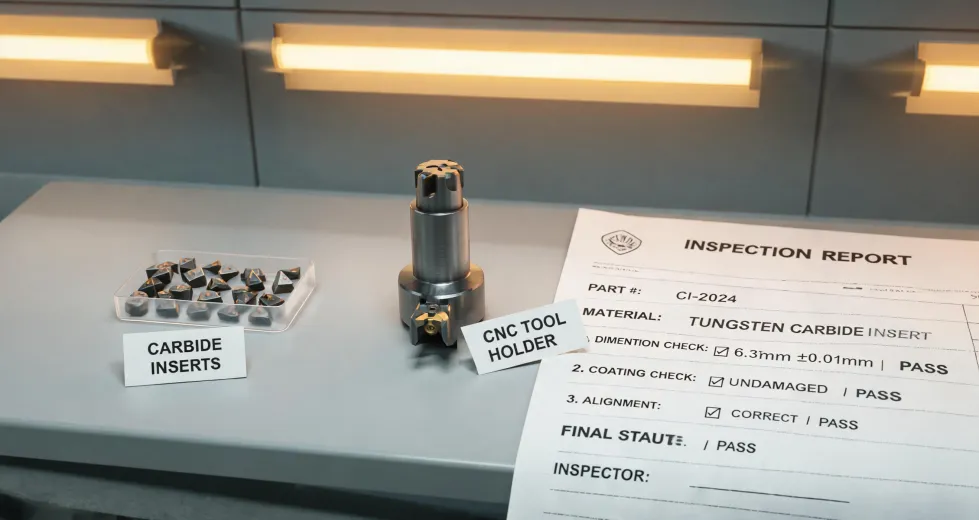
CNC machining surprised me in the opposite direction. We already own the CNC mills, and our tooling crib already stocks Kennametal inserts, end mills, and holders. For the job that triggered this comparison, we ordered Kennametal solid carbide boring bars for precision bores and Kennametal milling teeth for the face mill. Total tooling spend: under $900.
Conclusion: the machine you already own changes the math before you even get to production.
Dimension 2: cost per part at volume
For one-off parts, resin printing is hard to beat. No mold, no setup, no toolpath. But the economics don’t scale. Resin material is expensive, prints are slow, and early failures are normal. Useful if you need 5 parts. Painful if you need 500.
Take the plastic crates we were quoting: 3,600 crates per year for five years, 18,000 total. Outsourcing to a contract molder—one that already runs machines around the clock—came to $4.72 per crate all in. Machining the same crate from HDPE plate would have cost $140 or more per crate; nobody serious suggested that. And buying the injection machine? If it was dedicated to this one product, even the full $225,000 machine-and-mold investment added $12.50 per crate before material, labor, and electricity.
That’s the part that never makes it into a marketing slide: volume decides the winner. Resin printing for single digits, machining for low-to-medium precision runs, injection molding for thousands of identical plastic parts.
What about lead time and design changes?
If engineering changes a feature on Friday afternoon, resin printing is the only option that can put a revised part in your hand by Monday. That’s a real advantage, not a hobbyist luxury. Machining is close behind if the right tool is already in the crib. Injection molding is the least flexible: once the steel is cut, a simple wall-thickness change can mean welding, EDM work, or a brand-new cavity insert.
For us, this was another reason to avoid buying the injection machine before the crate design was truly frozen. The contract molder carried the risk of revisions; we did not.
Dimension 3: material reality beats marketing
Standard resin prints are brittle. They creep under load and degrade in sunlight, which makes them a poor choice for a crate that will sit in a warehouse or truck. Plastic crates are usually HDPE or polypropylene—materials that are practical to injection mold and impractical to print at that size.
Here is where the comparison gets less obvious. To injection mold a crate, someone has to cut the steel mold first. In our toolroom, that meant roughing P20 blocks with Kennametal milling teeth, then finishing bores and dowel holes with Kennametal solid carbide boring bars. Machining wasn’t competing with molding; it was the step that made molding possible.
If your part is metal, needs tight tolerances, or has to survive real loads, CNC machining is the answer. If it’s a large plastic part in high volume, injection molding wins. If it’s a small, complex, low-load prototype, resin printing earns its place.
Dimension 4: should 3D printers be vented? Yes—and it costs money
Anyone who dismisses this question hasn’t run a resin printer indoors. Resin contains acrylates and photoinitiators that release VOCs while printing and during post-processing. If someone asks whether 3D printers should be vented and the printer is resin-based, the answer is yes. We built an enclosure with an exhaust blower and ducting: $485 for the blower and duct, plus $140 for a carbon filter. Skip that step and you’re putting fumes into the same air your machinists breathe.
Hidden costs showed up on the machining side too. The inserts that sit in those Kennametal milling teeth are consumables; they wear, and worn tooling hurts finish long before it breaks. Tracking that cost is boring but necessary. And if your product carries a label like “recyclable,” don’t trust a verbal claim—per FTC Green Guides (ftc.gov), environmental claims need evidence. That’s true for plastic crates as much as for any other product.
One final small-cost example: postage. Per USPS pricing effective January 2025 (usps.com/stamps), a First-Class Mail large envelope starts at $1.50. We ship 40 to 60 sample parts a month, and sample postage topped $1,100 last year. It didn’t change our process decision, but it’s the kind of line item that separates a real TCO model from a brochure.
So which one should you choose?
Part of me still wants that plastic crate injection molding machine. Another part knows it would have sat idle while the contract molder runs similar jobs 24/7. We outsourced the crates, spent the tooling budget on Kennametal, and kept the resin printer for prototype fixtures.
Choose resin 3D printing if your part is small, complex, low-volume, and non-structural. Budget for ventilation, washing, curing, and a learning curve.
Choose injection molding—or an injection molder—if your part is plastic, your design is frozen, and you need thousands of identical pieces. Before buying a plastic crate injection molding machine, compare utilization.
Choose CNC machining if your part is metal, tolerance is tight, or you need molds and tooling. For us, the most efficient move was not a new machine; it was a better cutting-tool strategy.
Bottom line? Efficiency is not about owning the newest equipment. It’s about making the right cuts in the right process—and counting every cost before you cut.