Kennametal Milling Cutter Catalog PDF: What It Can—and Can't—Do for Your Shop
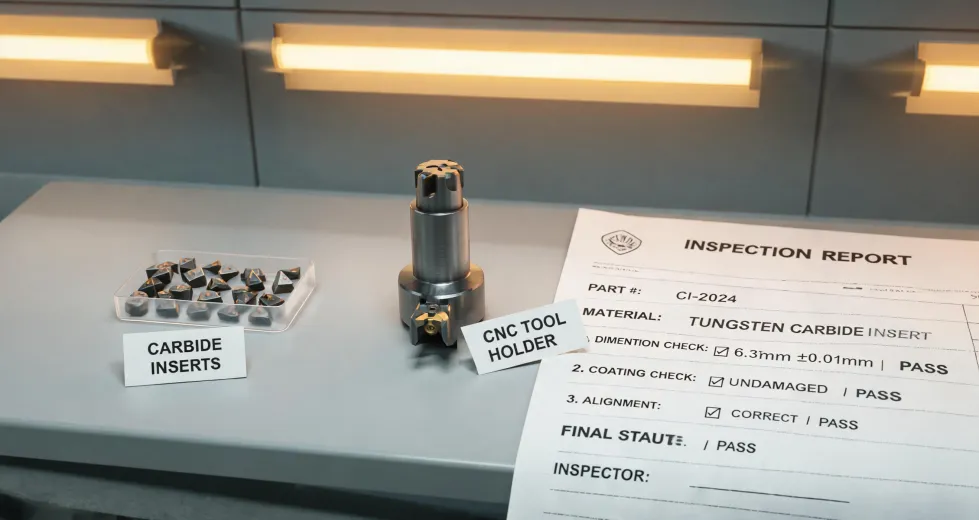
A Kennametal milling cutter catalog PDF is the fastest way to get a part number, a grade, and a starting point for speeds and feeds—but it won't tell you whether that tool is right for your VMC. I've been ordering cutting tools for our shop for five years, and I can get a basic Kennametal end mill selected in about ten minutes using the catalog. The bigger decision, the one the PDF can't make for you, is how the tool fits your machine, your setup, and the actual job.
Why I use the Kennametal milling catalog PDF
I'm not a machinist and I do not pretend to be one. I'm the office administrator who handles purchasing for a 12-person contract machining shop. I manage roughly 60 to 80 orders a year across tooling, workholding, and shop supplies. When I took over purchasing in 2020, we had no central tooling list. Tool lists lived in a handful of drawers and in one machinist's email. That was fine until that machinist went on vacation.
Using the Kennametal milling catalog PDF as our baseline changed things. It's the source we check first when an engineer says they need a 3/8-inch end mill. The PDF has the product family, the insert grades, the dimensions, and the spare parts. I can confirm a part number without calling a distributor. That may sound small, but it cut our tooling identification time from a day or two to under an hour.
What's actually in the catalog
The catalog is not organized by machine brand. It's organized by product family and operation. That's a good thing. If you're looking for a shoulder mill for a VMC, you go directly to the milling section and narrow by tool type. Here's what I use most from it:
- Product families – end mills, face mills, shoulder mills, high-feed cutters, and modular milling systems.
- Insert grade charts – the same insert shape can come in multiple grades. The chart tells you which grade works for steel, stainless, aluminum, or high-temp alloys.
- Dimensions and compatibility – shank diameter, reach length, insert size, and compatible cutter bodies or tool holders.
- Starting parameters – speed and feed recommendations that get you close on the first run.
The key is to search, not browse. The PDF is large. Use Ctrl+F and search by operation, material, or part number.
What the catalog won't tell you
A premium carbide grade can look great on paper and still fail in a low-rigidity setup. The catalog doesn't know whether your VMC is a solid 50-taper machine or a 40-taper machine with worn spindle bearings. It doesn't know what tool holder you're using, whether you have through-coolant, or whether your fixture is rigid. Those things matter.
The catalog is a starting point. It does not replace experience. I say that because I once approved a rush order for a "better" insert that a machinist had spotted in the catalog. The insert wasn't bad. It just wasn't right for the job. We ended up going back to the original grade after half a day of testing.
Is VMC good? It depends.
The short version for the search query "is VMC good" is yes, for the right kind of work. In machining, VMC stands for vertical machining center. For most small-to-medium parts, a VMC is a solid, versatile choice. It's easier to load, easier to fixture, and usually less expensive than a horizontal machining center. For long, thin parts or very heavy workpieces, a different machine might be better.
If you searched for "VMC Redline Series tungsten swimbait jighead," that's a fishing product, not a machining center. I'm not the person to ask about fishing tackle. The VMC I'm talking about here is the vertical machining center, and the tooling that makes it work.
What about a 5 axis fiber laser?
If your shop is considering a 5-axis fiber laser, put the milling catalog away. A fiber laser cuts with light, not with a rotating cutter. We added a 5-axis fiber laser in 2024 for thin sheet metal work, and it brought a completely separate set of consumables: lenses, nozzles, protective windows, and alignment parts. The Kennametal milling catalog does not cover that, and I wouldn't expect it to.
The choice between a VMC and a 5-axis fiber laser is a process decision. If you're cutting prismatic parts, a VMC with good tooling is often the better investment. If you're cutting thin sheet with complex profiles, the laser wins. We ended up with both, because neither one does everything.
How I use the catalog in our ordering workflow
I keep the current Kennametal milling catalog PDF in the same folder as our tooling spreadsheets. I always download the current PDF from kennametal.com and check the revision date before ordering; old versions can have obsolete part numbers. When a machinist needs a tool, I ask three questions: material, operation, and machine. Then I search the PDF, confirm the part number, check stock with our distributor, and place the order. That process cut our order entry errors more than anything else we've done.
It also reduced duplicate ordering. Part numbers in the catalog and in our spreadsheet match. If a part number is not in either one, we do not buy it until we know why.
Mistakes I made so you don't have to
I've made two expensive mistakes in tooling buying. The first was ordering a Kennametal end mill based on the photo in the catalog. I assumed the shank size was the same as the old one. It was not. The $140 tool sat in a drawer for six months until we could use it on a different machine. I now verify shank diameter, reach length, and insert type before clicking order.
The second mistake was approving a budget insert to save money. I saved about $15 per insert. It chipped on the first operation. Between replacement cost and machine downtime, that $15 turned into a roughly $400 loss. The catalog shows you the specs, but it can't show you the total cost of a bad decision.
When you should put the catalog away
This workflow works for us because we're a small shop with a fairly predictable mix of steels, aluminum, and stainless jobs. If you're doing high-mix, low-volume work or exotic alloys, you'll need more than a catalog PDF. I'm not a machinist, so I can't speak to cutting parameters in depth. What I can tell you as a buyer is this: if a part is critical, talk to someone who actually runs the tools. Kennametal's application engineers have been helpful when we needed to verify a grade or a tool path.
A catalog also can't manage your inventory. It won't tell you what's on the shelf or when to reorder. That's a system problem, not a data problem. But a good catalog gives you the one thing you can't reliably keep in your head: a clean, current part number. In my book, that's worth a lot.