The 36-Hour Rush That Made Me Stop Buying Cheap End Mills: A Kennametal Indexable End Mill Lesson
It Started With a 9:17 AM Call
In March 2024, I got a call that starts with the words every manufacturing coordinator dreads: 'We have a problem.' A client needed 50 anodized aluminum parts on a truck to an aerospace assembler by 11:59 PM Tuesday. Their regular machine shop had lost the tooling, and the job had already been rerouted once. If they missed that deadline, their contract had a $15,000 penalty clause.
I've been coordinating custom machining for manufacturers for about five years, and I've handled somewhere north of 200 rush orders. That doesn't make me immune to bad calls. This one was a masterclass in why the cheapest option is almost never the cheapest option.
Step One: Pull Up the Kennametal End Mill Catalog PDF
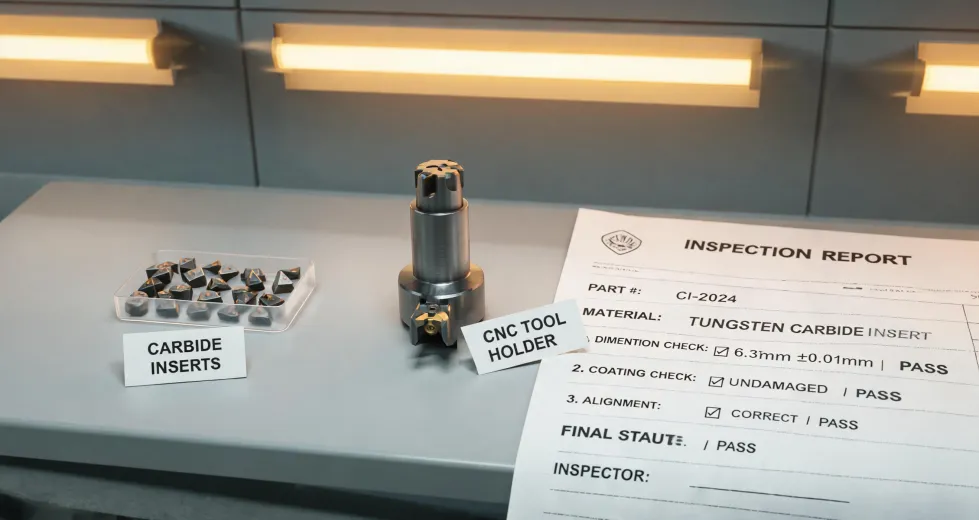
My first move was to open the Kennametal end mill catalog PDF on my phone while I walked to the tool crib. I knew the geometry we needed: a 3/4-inch indexable end mill for an interrupted cut in 6061-T6. The part had a slot that crossed a pair of weld beads, so a solid carbide end mill would have chipped. I needed an insert-style cutter, and I wanted something with replaceable inserts in case a corner loaded up.
The catalog PDF isn't just a list of part numbers. It has starting speeds, feeds, and insert geometries. According to the Kennametal end mill catalog PDF I pulled from Kennametal.com that morning, the recommended starting parameters were right in the range of what our machine could hold. I didn't memorize it. I just needed to confirm before quoting a cycle time to a customer who was already watching the clock.
For this job, the right tool was a Kennametal indexable end mill. I'd used their solid carbide end mills before, and I knew the insert edge would survive the interrupted cut better than a cheap brazed cutter. What I didn't know was how hard procurement would fight me on price.
The Budget End Mill Experiment That Almost Cost Everything
Here's where I have to be honest: I almost didn't order the Kennametal. Our purchasing lead found an off-brand indexable end mill in local stock for $63. The Kennametal version was $214. 'Why are we paying triple?' she asked. To be fair, she was doing her job. There was a line item in the client's PO for tooling, and it didn't look great to blow it on one cutter.
I should have held firm. Instead, I said we could try the $63 tool as a backup and use it only for the first couple of parts. In my experience, that kind of compromise never stays clean.
The first part ran okay. I remember thinking maybe I'd overreacted. Then, on the second part, the insert chipped. It didn't just chip; it dug a groove into the part and left a raised burr that made the part scrap. We had to stop, reset, and face a $400 piece of aluminum that had already eaten a blank and four hours of spindle time.
Put another way: we saved $151 on the tool and burned through at least $900 in material, labor, and goodwill before the chip settled on the floor. The 'budget' end mill was not a bargain. It was a tax.
I ordered the Kennametal indexable end mill that afternoon and paid for overnight freight. The tool showed up at 7:14 Tuesday morning, and the machine ran clean from the first pass to the last. One insert, no chipping, no chatter, no scrap. That's not a magic claim. It's what the engineered tool was supposed to do. I'm not saying Kennametal is always the answer. But it was the answer for this application, and the $214 price tag was the cheapest part of the job.
We were lucky. That first scrap part wasn't a critical serialized piece; it was an early ops sample. We dodged a bullet. If that had been a part with a hard serial number, we would have been in real trouble.
The CO2 Laser in Honolulu Couldn't Do the Job
With machining back on track, we hit the second problem: part marking. The final anodized parts needed a part number and a date code etched into the surface. The client's regular laser vendor was a week out. I started calling local shops. One near the airport advertised 'CO2 laser Honolulu.' I asked if they could do aluminum.
To the owner's credit, he stopped me mid-sentence. 'A CO2 laser is great for wood, acrylic, and leather. It's the wrong tool for anodized aluminum. You need a fiber laser or at least a marking laser with the right wavelength.' I remember saying, 'But you're a laser shop.' And he said, 'That doesn't mean we can magically make metal work.'
That was the first honest quote I got that day, and it didn't cost us anything.
We ended up finding a shop that could do the marking overnight. We needed laser etching and cutting Austin suppliers could handle, because the parts were already late. I want to say the rush charge was around $380, but don't quote me on the exact figure. What I remember clearly is the FedEx bill that came after it.
Still, it was the right call. The mark from the fiber laser passed the tape adhesion test, and the parts were ready for the truck. A CO2 laser would have either burned the coating or produced a mark that flaked off. The 'cheaper and closer' option wasn't actually an option for this spec.
Are Resin 3D Printers Faster? In This Case, Yes.
On Tuesday night, we had another problem. The parts needed a small go/no-go gauge to verify a chamfer at incoming inspection. Normally we'd CNC machine it, but every mill was tied up and the gauge was needed before the truck left. The client's engineer asked: are resin 3d printers faster than milling this gauge?
The honest answer: for this specific gauge, yes.
We had a desktop resin printer in the back room, mainly for prototyping holders and fixtures. We designed the gauge in about 40 minutes, printed it in four hours, washed and cured it, and checked it against the first good part at 10:30 PM. It worked. It wouldn't survive a production environment, but it didn't need to. It needed to survive 50 parts on one loading dock.
But I don't want to oversell it. Are resin 3d printers faster for everything? No. If we needed 500 aluminum brackets, the resin printer wouldn't even be in the conversation. The right question is: faster compared to what, and for how many parts? For a one-off fixture with internal geometry that would have taken all day to set up on a mill, resin printing won. For anything structural or production-grade, give me a spindle and a Kennametal end mill every time.
I didn't fully understand that until that night. Speed isn't a machine spec. It's a decision about where the bottleneck is.
What I'd Do Differently
The parts were loaded on the truck at 11:22 PM Tuesday, about 37 minutes before the deadline. The client passed inspection the next morning. But I don't want to pretend the rush was smooth. We made it harder than it needed to be.
Here's the lesson, and it's the one I keep coming back to:
The cheapest option is rarely the fastest option, and the fastest option is rarely the option with the lowest total cost. The number on the quote is not the bill.
What I'd do differently:
- Order the right tool first. The $63 experiment cost more than the $214 Kennametal indexable end mill in scrap and rework. I knew the application needed an insert-style cutter with a proven edge. I should have trusted that.
- Ask about wavelength before asking about price. A shop with a CO2 laser in Honolulu can be great and still be wrong for anodized aluminum. If you're okay with a mark that wipes off, fine. If not, ask for fiber.
- Use the catalog PDF before the crisis. The Kennametal end mill catalog PDF has the speeds and feeds you need. Pull it up before you buy, not after the insert chips. I downloaded a copy to my phone after that job. Strange how a 200-page PDF becomes urgent at 9 PM.
- Consider resin 3D printing for the right bottleneck. Are resin 3d printers faster than CNC? Sometimes, yes. For a temporary fixture, a resin printer saved our night. But it didn't make the parts, and it wouldn't make the next 500.
If I had to summarize the whole job, I'd say this: the expensive decisions are the ones that look cheap and then fail. The Kennametal end mill cost $214. The honest laser shop in Honolulu cost nothing. The resin-printed gauge cost maybe $12 in resin. The project stayed alive because we finally stopped asking 'what's the price?' and started asking 'what's the risk?'
That's worth a lot more than any catalog number, whether you're buying an end mill or a laser job. The March 2024 job changed how I think about tooling purchases. I still open the same Kennametal end mill catalog PDF, but now I check it before the panic, not during.