Kennametal Boring Bars: A Procurement Manager's Guide to Total Cost
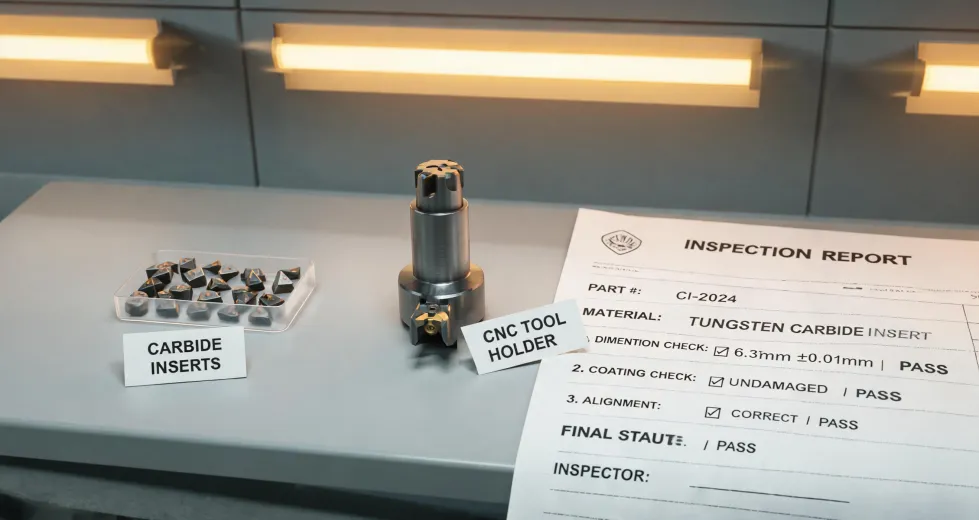
If you're hoping for a straight yes-or-no answer on Kennametal boring bars, I'm going to disappoint you. The truth is a lot less satisfying: it depends on your shop's mix, your tolerances, and what an hour of downtime actually costs. I've spent six years as the procurement manager at a mid-size custom machining company, managing roughly $120,000 a year in tooling spend. In 2023, I audited every line item and found that a surprising share of our budget overruns didn't come from the high price of premium tools. It came from the low price of tools that weren't predictable.
The question everyone asks is 'Is the premium worth it?' The better question is: 'What does the boring bar have to do in your application?' Let's break it down by scenario.
Kennametal Manufacturing, Boring Bars, and the Cost-Controller Lens
Before we get into specific recommendations, a quick note. Kennametal manufacturing operates across multiple segments, but the boring bar purchase is usually what makes it into a tooling budget. Boring bars are not glamorous. They just have to remove metal without chatter, hold size through a batch, and not break when a setup is slightly off.
What I've noticed is that most buyers focus on the sticker price of a boring bar kit and completely miss the costs that follow: insert consistency, repeatability between tool positions, availability of replacement inserts, and how many test cuts your machinist needs to dial it in. Those are the costs that show up on your labor and scrap reports, not on the quote.
Scenario A: High-Mix Job Shop
If you're cutting a different material every week—steel, stainless, aluminum, maybe some cast iron—you need boring bars that are versatile and predictable. In my experience, Kennametal boring bars earn their keep here because their insert geometries and chip control are documented well. I can hand a tool to a machinist, give them a starting speed and feed from the catalog, and get a usable first cut. That is not true of every brand, believe me. Trust me on this one: I've compared quotes from eight different suppliers over three years, and the cheapest bar often required a second phone call to get setup recommendations.
For this scenario, I'd look at a starter set of Kennametal boring bars for common boring ranges and choose inserts from a coated carbide grade that covers both steel and stainless. You won't get the absolute lowest cost per edge, but you'll get fewer 'let's try another insert' delays. In Q2 2024, when we standardized our most common job on Kennametal boring bars, setup time on that job dropped by 18%.
Scenario B: High-Volume Production
When you're running the same part for weeks on end, the calculus changes. Setup time matters less because you're amortizing it over thousands of parts. Tool life and consistency matter more. This is where Kennametal's manufacturing expertise and premium tool holder systems become worth it. I've seen a hydraulic tool holder on a boring bar reduce insert chipping by almost 30% in a production turning application. That's not a discount on the holder; that's a reduction in replacement inserts, rework, and machine stoppages.
In a production environment, model the decision as a total-cost-per-part comparison. Don't just ask what a Kennametal boring bar costs. Ask what it costs per bore, including inserts, changeovers, and quality checks. In our shop, the answer changed once we added those variables. A $42 insert that ran 300 parts beat a $28 insert that ran 140 parts. I'll be honest: the numbers initially pushed me toward the cheaper insert. My gut said the difference in finishes would come back to bite us. It did. We logged a rework order that wiped out the savings twice over.
Scenario C: Maintenance, Repair, and One-Offs
If you're repairing a worn bore or making a one-off fixture, you may not need a full Kennametal boring bar system. But here's the catch: the word 'fine' has a range. I've made the mistake of buying the cheap option and then watching a machinist spend forty minutes fighting chatter on a single bore. That 'savings' evaporated.
For one-offs, I'd still choose a name-brand boring bar—maybe used or from an authorized distributor—because boring bars are one of those tools where rigidity really does matter. Chatter in a bore is not something you solve with a different feed rate after the fact.
What Is a Reamer For? And Why You Might Need One
If you're new to this, you've probably searched 'what is a reamer for' and got a vague definition about enlarging holes. Here's the practical answer: a reamer is for finishing a hole to a precise diameter and improving its surface finish after a drill or boring operation has already removed most of the material. Reamers remove only a small amount of stock—typically a few thousandths of an inch. They don't fix a badly positioned hole. They fix the size and finish.
In your purchasing logic, a reamer is often the cheaper alternative to a boring bar if the hole diameter is standard and the depth-to-diameter ratio isn't crazy. But if you need to adjust the location, minimize runout, or handle non-standard diameters, a boring bar gives you more control. 'Better' is not universal; it's about what you're trying to achieve.
The Same Framework Applies to Industrial Laser Welder Reviews
I want to make a detour here, because I see the same thinking errors in capital equipment decisions. If you've been reading industrial laser welder reviews, you know that reviews run from 'best machine ever' to 'complete scrap.' Per FTC guidelines (ftc.gov), reviews are supposed to be honest and, ideally, disclose any material connection to the manufacturer. That sounds obvious, but many review sites don't make it clear which posts are paid or sponsored.
Instead of asking 'is this laser welder good?' ask 'is this laser welder good for my most common job, my material, and my skill level?' A machine that works perfectly for a shop doing thin stainless sheet metal might be a disaster for a shop doing heavy structural repairs. The same applies in tooling: Kennametal boring bars are not the best choice for every single bore, but they are predictable enough to model in a total cost calculation.
Search Intent, Local Choices, and the Sandy Springs Lesson
One more thing before the bottom line. Every now and then, someone lands on this page after searching for something oddly specific—for example, 'co2 laser skin resurfacing sandy springs.' I know that has nothing to do with boring bars. But it's a useful example of why context matters. If you search that phrase, you want a provider near Sandy Springs, with the right equipment and real credentials. You don't want a random national directory listing. The same is true when you search for a local tooling distributor: stock availability, technical support, and proximity are part of the decision. Don't let the search engine show you one answer and assume it's the right one.
How to Decide: A Short Checklist
Here's the advice I give every engineer who asks me whether to buy Kennametal boring bars.
- What do you cut? Mixed materials? Job shop route. Same material in long runs? Production route.
- What tolerance do you need? ±0.005 doesn't stress a boring bar. ±0.0005 will make you appreciate rigidity.
- What happens when a tool fails? If failure costs you a rush order, you can justify more upfront spend.
- Are you asking the right question? If you're still searching 'what is a reamer for,' start there before you buy anything.
And then do the math. Not the 'unit price' math. The math that includes setup time, inserts, scrap, and the occasional 40-minute chat with a machinist about chatter. That's the math that, in our shop, has saved far more than any 'cheap' quote ever did.