Kennametal Boring Bar: 7 Questions a Quality Inspector Actually Gets Asked
-
1. What does a 'Kennametal boring bar' actually mean?
-
2. How do I choose between a solid carbide and indexable Kennametal boring bar?
-
3. Is buying from a high quality milling cutter factory in China a bad idea?
-
4. What tolerances can I actually hold with a Kennametal boring bar?
-
5. Why do people search 'hight 40w co2 laser' and 'erbium laser vs co2 price' when they're shopping for boring bars?
-
6. Has a Kennametal boring bar ever failed your incoming inspection?
-
7. Should I buy all my tooling from one supplier?
I'm a quality compliance manager at a mid-size custom machining shop. I review every finished lot before it goes to the customer—roughly 200+ unique items annually, across about 300 lots. In 2024, I rejected 7% of first deliveries because the boring tolerance didn't match the drawing. That doesn't mean the tools were always at fault. But when I trace it back, Kennametal boring bars show up in the batches that don't come back.
This isn't a sales pitch. It's a list of questions I keep getting from engineers and buyers, answered the way I'd answer them on the shop floor. If you're asking about a kennametal boring bar or sourcing from a high quality milling cutter factory in China, this is a useful starting point. If you're here because of a laser price comparison, stick around—it's relevant to how people buy machine tools.
1. What does a 'Kennametal boring bar' actually mean?
A kennametal boring bar is a toolholder designed for internal machining. You put it in a lathe or boring head, and it enlarges or finishes a hole. Kennametal makes steel bars, solid carbide bars, and indexable bars with replaceable inserts. The name matters because the bar's stiffness, insert seat geometry, and repeatability show up in the final bore.
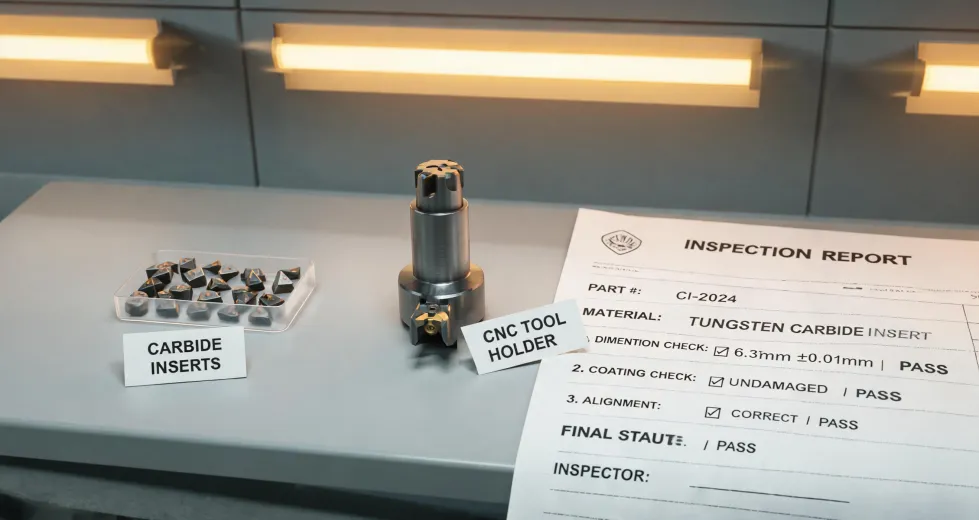
I'm not a metallurgist, so I won't lecture you on cobalt percentage. I can tell you what I see in inspection: a bored hole is only as good as the bar's vibration resistance. If the bar flexes, you get taper or chatter marks. Kennametal boring bars are engineered to be rigid, and that makes my job easier. When I compared our old economy bars to Kennametal bars side by side under the same feeds and speeds, I finally understood why spec sheets don't tell the whole story. The difference showed up in the roundness data, not in the marketing.
2. How do I choose between a solid carbide and indexable Kennametal boring bar?
For smaller holes, solid carbide is usually my go-to because it's stiffer. For bigger holes, indexable bars let you change inserts without pulling the whole bar. It's not a superiority thing—it's a diameter and depth thing. A 20mm bore with a long overhang demands carbide. A 50mm bore with a stable setup can run indexable all day. Plus, if you're comparing price per hole, the insert cost matters way more than the bar cost.
Don't hold me to exact numbers because the right answer depends on your machine and extension ratio. But if you're comparing options, look at the bar's minimum bore diameter and maximum depth. Those numbers are usually in Kennametal's published catalog. I've seen engineers buy an indexable bar for a 12mm hole and then wonder why the insert won't fit. Check the spec first—that's a seriously common mistake.
Per Kennametal's published boring bar specifications (online catalog, accessed March 2025), verify the minimum bore diameter, maximum depth of cut, and insert seat torque for the exact part number. Revisions happen. I won't quote a torque value from memory because I'd rather not be the reason someone strips a pocket.
3. Is buying from a high quality milling cutter factory in China a bad idea?
No—not automatically. I've audited a high quality milling cutter factory in China that ran better process control than some domestic suppliers I've visited. The problem isn't geography. The problem is whether the supplier can document consistency. I've seen the phrase 'high quality milling cutter factory in china' in RFQs, and it always makes me ask the same follow-up: which quality system, which inspection equipment, which traceability?
I've had a high quality milling cutter factory in China send a beautiful first article, then change the coating supplier on the second PO without telling me. That's when quality got weird. If you source cutting tools from any factory—China, Taiwan, Germany, Ohio—you need to verify the lot number, coating cert, and geometry. The phrase 'high quality milling cutter factory in China' is not a guarantee; it's a category you still have to audit. To be fair, the same thing happens with domestic suppliers. The difference is how quickly they respond when you reject a batch. I'd rather work with a specialist who knows their limits than a generalist who overpromises.
4. What tolerances can I actually hold with a Kennametal boring bar?
I'm not going to give you a fake tolerance because it depends on the setup, workpiece material, and depth. What I can tell you: in our shop, we've held 0.0005 inch (13 microns) on a 1 inch deep bore with a solid carbide Kennametal bar in a hydraulic holder. That's on a good day with a rigid lathe. On a steel bar with a long overhang, you'll be luckier to hold 0.002 inch. And I've had vendors claim 'within industry standard' when the print called for a tighter tolerance. That's not a quality escape hatch.
The most frustrating part of tolerance discussions is that people treat the bar like a magic wand. You'd think a premium tool would fix everything, but the tool is only one part of the loop. If the spindle is tired or the workpiece isn't clamped right, no boring bar will save you. I've rejected 40-part lots where the bar was fine but the tool pressure was pushing the part. That's an application failure, not a tool failure. The same Kennametal boring bar on a different setup made the print.
5. Why do people search 'hight 40w co2 laser' and 'erbium laser vs co2 price' when they're shopping for boring bars?
Honestly? I'm not sure. But I see a ton of mixed keyword searches: kennametal boring bars, high quality milling cutter factory in china, hight 40w co2 laser, erbium laser vs co2 price. My guess is that someone is comparing manufacturing options for a new product and trying to figure out whether to machine it, laser-cut it, or outsource it.
I'm not a laser expert, so I won't pretend to know whether erbium laser vs co2 price leads to a better choice. That decision depends on material, thermal damage, and production volume. What I do know is this: if your part needs a precise internal bore, a high 40W CO2 laser is not the right tool. And a boring bar is not the right tool for engraving. They're different processes, and the supplier that tells you otherwise is overpromising. If you're comparing erbium laser vs co2 price, separate the laser decision from your cutting tool decision. Otherwise you'll optimize the wrong number.
6. Has a Kennametal boring bar ever failed your incoming inspection?
Yes. Once, a Kennametal boring bar arrived with a damaged insert seat. It was a shipping issue, not a design flaw, but it reminded me to never skip incoming inspection. We caught it before it hit the machine. Dodged a bullet there—that bar was part of a 500-piece order with a tight bore callout.
So glad I checked. If that damaged seat had gone to the floor, we would have produced chatter on the first 50 parts before anyone looked. By then, we'd be arguing about who pays for the redo. Now every contract includes a requirement for visual inspection and seat geometry verification. That quality issue cost us nothing because we caught it early. A few years earlier, a similar problem cost us a $22,000 redo and delayed a launch by three weeks. You learn to check.
7. Should I buy all my tooling from one supplier?
No, and I'd argue the opposite. Specialists are usually better at their specific area than a supplier who claims to do everything. When I implemented our verification protocol in 2022, I learned to ask: 'What don't you do well?' The vendor who said this isn't our strength—here's who does it better earned my trust for everything else.
That applies to cutting tools too. If a company tells you they can make your Kennametal boring bars, your high quality milling cutter factory in China order, your 40W CO2 laser engraver, and your erbium laser system all at the same level, be careful. I'd rather work with three specialists than one generalist who overpromises. That's not a polite marketing line—it's how you protect your schedule and your budget.
One more thing: when I compare Q1 and Q4 quality reports, the biggest improvements came after we stopped trying to consolidate everything. Same parts, better vendors, fewer surprises. That's the closest thing to a conclusion I have.