Kennametal Drill Bits Cost More. My Tooling Budget Says They're Cheaper.
I'll say it straight: I buy Kennametal drill bits because they are cheaper than the cheap ones. Not by the sticker price. By the only number that matters in my shop—cost per good part. If you search for 'Jarvis cutting tools vs Kennametal' expecting a simple winner, you're already asking the wrong question.
I've been handling custom machining orders for 11 years. In that time, I've made and documented 37 significant buying mistakes, totaling roughly $47,000 in wasted budget. That number makes me wince, but it's useful. It's why our team now uses a pre-purchase checklist that starts with one sentence: never compare tool prices; compare the cost of the finished part.
Why I Started Tracking Total Cost
It took me about six years and 200-plus tooling orders to understand what 'expensive' actually means. I used to think a $20 drill bit was always worse than a $35 drill bit. Then I ran a batch of 500 parts with both, side by side, and the 'cheap' bit produced a ton of scrap. The $15 difference per tool disappeared against $14 per scrapped part, plus the time to re-run them.
That's the oversimplified advice I followed early on: 'just buy the same geometry from the lowest seller.' It's tempting. But identical spec numbers from different vendors do not behave identically on real machines. Material grain, coating adhesion, edge prep—those things don't show up in the catalog PDF. The tool might measure within tolerance, but the edge micro-geometry changes everything.
The Expensive Mistake That Changed My Checklist
In my first year (2014), I bought 200 carbide drill bits from a brand I won't name because the price was way below Kennametal. The prints were fine. The steel was 4140. The set-up was normal. And then 11.4% of the holes came out oversize. It looked okay on the first inspection? Actually no—we caught it after the first 60 parts went to deburr. Total loss: about $2,100 in material and labor, plus a one-week delay to re-run the order. That's not a hypothetical; I still have the spreadsheet.
Here's the lesson: a drill bit is a small line item, but the total cost includes the part it ruins, the spindle time it wastes, the coolant it degrades, and the overtime you pay to fix the mess. Once you start tracking that, 'budget' tooling becomes a red flag.
What Consistency Really Buys You
I've learned that consistency is more important than maximum tool life. Some brands quote an average life that sounds impressive, but the variance is huge. The first insert lasts 50 minutes; the next one dies after 12. Kennametal tooling, in my experience, is not always the absolute longest-lasting in every material. But it's super consistent. That predictability makes planning easier and setup mistakes rarer.
When someone asks me about Jarvis cutting tools vs Kennametal, I usually say this: I haven't run a controlled lab test, and anyone who claims a universal winner is probably selling something. What I do have is a job log. In that log, Kennametal drill bits win on cost per hole in high-volume production because the failure rate is low. Does that mean Jarvis is bad? No. It means my evidence points a certain direction.
The surprise wasn't that the premium bit lasted longer. It was how many other costs moved when scrap went down. Inspection time dropped. Rework dropped. The operator's frustration dropped. And when the machine didn't stop for unexpected tool changes, we actually hit the production schedule. The contrast was so clear that our next four purchase orders were Kennametal tool holders, inserts, and, yes, more drill bits.
Let's Do the Math That Changed My Mind
Say a Kennametal drill bit lists for $38 and makes 2,000 holes in your material. A budget bit costs $18 and makes 1,200 holes. At first glance, the budget bit saves $20. But if the budget bit also creates 2% scrap on a $4 part, that's 24 scrapped parts times $4—$96—plus the time to reset the machine. Add in inspection and the risk of shipping bad parts, and the 'budget' choice is more expensive.
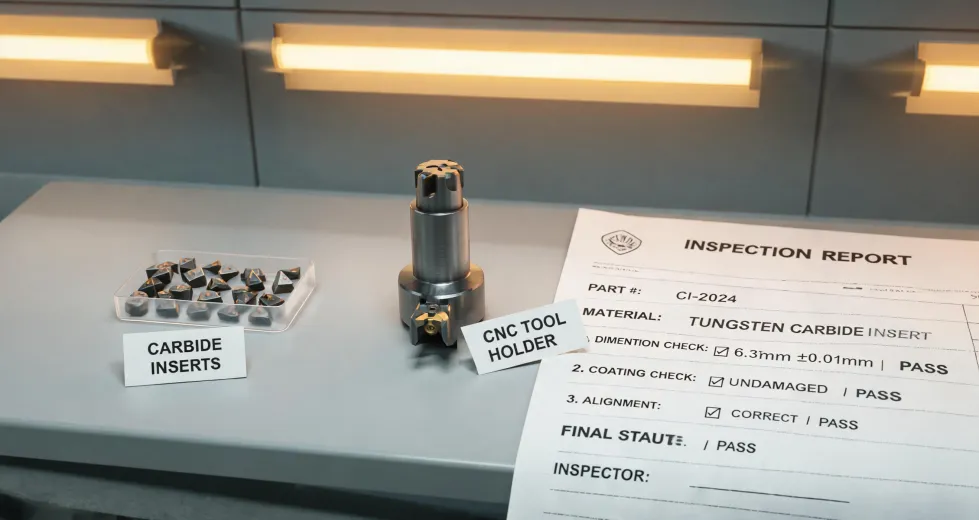
I should add that Kennametal isn't just drill bits for us. Their catalog includes carbide inserts, end mills, reamers, boring bars, turning tools, and hydraulic tool holders. We use them for the parts that need repeatability: 6061 aluminum brackets, 4140 steel shafts, stainless components. Standardizing on one brand also shortens the learning curve for our setup team. When a new guy asks why we don't buy the cheaper mystery-brand insert, I show him the job log. That usually settles it.
This is where the total cost mindset gets personal. We now calculate cost per good part before we approve any new tool. It's not complicated. We track tool price, tool life, cycle time, scrap rate, and setup time. It's a pain in the neck at first, but it turned tool buying from guesswork into engineering.
The Same Logic Applies to Laser Cutting and Additive
This isn't just about drill bits. We added a 10,000 watt laser cutting machine last year, and I watched half the shop shop for consumables the same wrong way—by unit price. A cheaper focus lens lasted maybe half as long, and edge quality fell off before the end of its useful life. The 'cheap' lens was more expensive after the scrap and downtime.
If you follow 3D printing business news, you've seen the same debate in the EBM vs SLM 3D printing conversation. People argue about which additive process has a better machine price. The smart operators compare build success rates, powder costs, and post-processing time. It's the same total cost mistake at a different scale. The machine is just the beginning; the process is where the money goes.
Yes, Kennametal Costs More. So What?
I have mixed feelings about paying a premium. On one hand, I still flinch when I type Kennametal part numbers into the ordering system. On the other, I have 11 years of receipts that show the premium paid for itself. Part of me wants to consolidate everything to one budget supplier for simplicity. Another part remembers the supply chain chaos in 2022, when the budget supplier couldn't deliver consistent quality. I solve the ambivalence with a simple rule:
- Calculate cost per good part, not cost per tool.
- Track scrap, rework, and unplanned tool changes.
- Keep records long enough to see patterns.
- If a cheap tool works for your specific job, use it. No shame in that.
I'm not saying 'always buy Kennametal.' That would be an unsubstantiated claim, and per FTC advertising guidelines, I need evidence for claims like that. My evidence covers my shop, my materials, and my machines. For our core production, Kennametal drill bits win. For a one-off job in soft material with no tolerance issue, maybe the budget bit is fine. The goal is to know the difference before you order 200 of anything.
My Bottom Line
The 'Jarvis cutting tools vs Kennametal' debate will keep going on forums. That's fine. But the real debate is what kind of cost you're actually comparing. If you only look at list price, you'll stay confused. If you track total cost per good part, Kennametal drill bits frequently win—not because the brand is magical, but because the process behind the tool makes your process predictable.
I still make mistakes. Last month I misordered a batch of insert grades and ate $900. But the checklist stays: total cost, not sticker price. It took me years, a spreadsheet of failures, and one very expensive laser head to get here. Hopefully you won't need the same tuition.