Kennametal vs. Budget Tooling: A Quality Inspector's Honest Comparison
-
The Comparison That Started This Article
-
What We're Actually Comparing
-
Dimension 1: Kennametal Drill Bits vs. "Budget" Drill Bits
-
Dimension 2: Kennametal Tool Holders and Rigidity
-
Dimension 3: End Mill Bits for Hardened Steel
-
Dimension 4: Knives: Laser Cutting vs. Milling
-
Do Pawn Shops Take 3D Printers? (And What That Has to Do With Tooling)
- So Which One Should You Buy?
-
Bottom Line
The Comparison That Started This Article
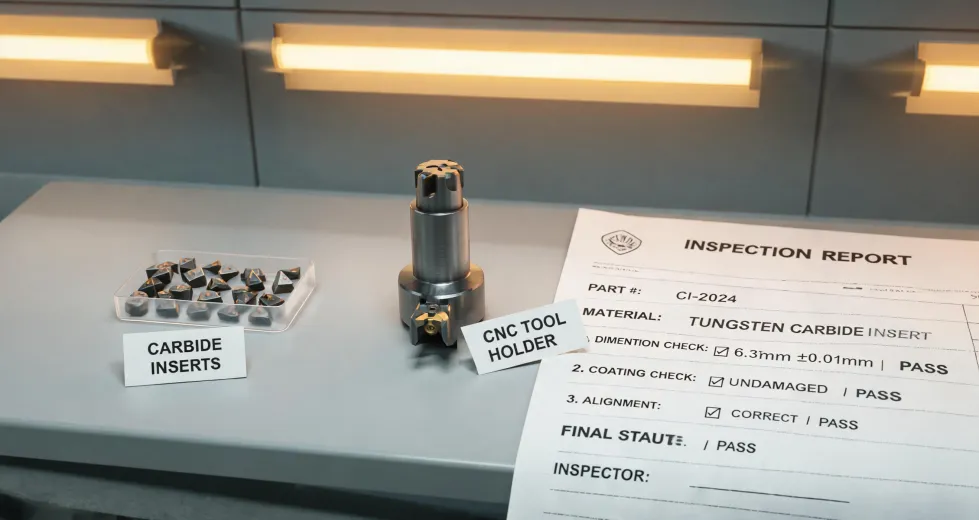
I'm a quality/brand compliance manager at a custom machining company. I review every tool order before it reaches the shop floor—roughly 200 unique items a year. Over the last four years, I've sent back more first deliveries than I can count. In Q1 2025 alone, 12% of our first deliveries from budget tooling suppliers failed inspection. That doesn't mean all budget tooling is bad. But it does mean you need a comparison, not a slogan.
This is a comparison of two ways to buy tooling: going with brand names like Kennametal, or chasing lower prices with no-name suppliers. I'm using Kennametal drill bits, Kennametal tool holders, and end mill bits for hardened steel as the reference. Why Kennametal? Because that's what we spec for high-volume work when tolerances matter. But I'm not here to sell you Kennametal. I'm here to help you choose.
Look, no one buys tooling out of brand loyalty. They buy it because inconsistent tools are expensive. That's the whole game.
What We're Actually Comparing
If you want a clean answer, leave now. Tooling decisions are about context. A $40 end mill is a waste if a $12 one can do the job. A $12 one is a disaster if it fails at 400 parts instead of 4,000.
Before we get into numbers, full disclosure: I don't buy based on marketing claims. FTC advertising guidelines (ftc.gov) require claims to be truthful and substantiated. But "premium tool steel" on a box is not a measured result. So I measure it.
Here's what I compare on every tool order:
- Spec compliance: Does the tool have the claimed coating, tolerance, and substrate?
- Consistency: Will the next insert behave like the last?
- Cost per part: Not price per tool. Per part.
- Failure mode: Does it wear out gradually, or snap without warning?
If you've ever had a run scrapped because a "new" batch of end mills was ground slightly off, you know why consistency beats price.
Dimension 1: Kennametal Drill Bits vs. "Budget" Drill Bits
Kennametal drill bits are solid. I'll say that plainly. The carbide grades, point geometry, and coating adhesion are repeatable. We use them when drilling steel where hole position tolerance is under 0.005" (i.e., tighter than a typical drill press job). Budget drill bits? Sometimes they're fine. The problem is you can't tell by looking.
We did a simple test last year. Same diameter, same coating type, same cutting parameters. Twenty budget drill bits and twenty Kennametal drill bits, all new. Eighteen of the Kennametal drills held tolerance for the full test. Eleven of the budget drills did. Those eleven would be fine for a garage drill press. For a CNC production run, that's a 45% failure rate.
Why does this matter? Because the tool failing mid-hole usually ruins the workpiece, not just the drill. And a ruined workpiece costs more than the drill. I'd rather buy nine okay drills with one guaranteed good one than ten maybes.
Dimension 2: Kennametal Tool Holders and Rigidity
Tool holders are not sexy. But a Kennametal tool holder is where I start when we're building a new fixture or setting up a long run. The shank tolerance, drawbar interface, and runout are consistent. A budget holder might have the same numbers on paper. In practice, runout can drift after a few hundred cycles.
Here's the thing: a holder that allows 0.0002" more runout doesn't matter on a 1/4" tool in aluminum. It matters a lot on end mill bits for hardened steel. Hardened steel has no give. The tool sees every bit of vibration as heat, then chips.
So when a machinist says a brand feels "tight," what they've learned is that the holder keeps the tool stable under interrupted cuts. That's not marketing. That's physics.
Dimension 3: End Mill Bits for Hardened Steel
This is the category where I have the least patience for budget buying. End mill bits for hardened steel are not ordinary end mills. They need a specific substrate, a specific coating, and a geometry that resists deflection. If any of those are off, you get chatter marks, micro-chipping, and short tool life.
In 2023, we had a batch of off-spec "hardened steel" end mills from an online discounter. The coating looked right—dark gold, like TiAlN. But after 15 minutes of cutting 48 HRC tool steel, one end mill broke. Then another. The vendor said we "pushed too hard." No. The tool was ground with a relief angle that was too weak for the material.
That incident cost us a $22,000 redo and delayed a launch by two weeks. We ended up re-specifying with Kennametal. It hurt my pride because I'd approved the budget order. But I still recommend budget end mills to people running 6061 aluminum or mild steel. Just don't pretend hardened steel is the place to save.
Dimension 4: Knives: Laser Cutting vs. Milling
One question that comes up a lot is about knives. Laser cutting is a legitimate way to profile a knife blank from sheet steel. It's fast, cheap per part, and doesn't use end mills at all. But the moment you need a flat bevel, a hole pattern, or a contoured handle, you're back to machining.
So "knives laser cutting" as a search query gets half the story. Laser cutting handles the silhouette. End mill bits for hardened steel handle the surfaces that actually do the cutting.
Do Pawn Shops Take 3D Printers? (And What That Has to Do With Tooling)
You might be wondering why a tooling article suddenly asks: do pawn shops take 3D printers? Because people treat used tooling and used 3D printers the same way. They think "someone else's unwanted item can be my discount." Sometimes yes. Often no.
Some pawn shops do take 3D printers. But they offer maybe 25-30% of what the original owner paid. They have to test it, hold it, and hope the right buyer walks in. That risk is why pawn shop prices look low. It's the same reason I don't buy mystery-box used Kennametal tool holders from random auctions. The risk is priced into the deal, and you can't inspect the runout through a zip-lock bag.
If you're trying to fund a 3D printer by selling old tools, sell online or at a machine tool dealer. Don't expect a pawn shop to know the difference between a carbide end mill and a drill bit. It's not their fault. It's just a mismatch.
So Which One Should You Buy?
Here's where I use a word I don't often say: it depends. There's no universal winner. There are only situations.
Buy Kennametal or similar premium tooling if:
- You run production jobs with tight tolerances under 0.005"
- You're cutting hardened steel or other difficult materials
- Downtime or scrap costs more than the tool premium
- You need traceable, repeatable tool performance for customer audits
Budget tooling can be fine if:
- You're prototyping in aluminum or plastic
- You're a hobbyist making one-off parts
- You can afford to test out of the batch before committing a job
- Your worst-case failure is a tool change, not a scrapped part
If you're making knives with laser cutting, put your money into the finishing tools. A laser can cut the blank. It can't make the bevel straight when the end mill is bending.
And if you're still asking do pawn shops take 3D printers: yes. But don't build your business case around a pawn shop offer. Build it around what the tool can make. That's true for a 3D printer, a laser cutter, or a Kennametal tool holder.
Bottom Line
I'll finish with a rule: inspect everything, trust nothing, and verify the tool's performance in your own process. Kennametal is a safe starting point for high-precision work. Budget tooling is a calculated risk. Both can be right. Just know which one you're actually taking.
Prices change. Tool lines change. I wrote this in March 2025—verify current specs before ordering. That's it. Buy the best tool you can justify, not the best tool you can dream about. Your scrap bin will thank you.