How a 5-Day Rush Order Led Me to Kennametal and a VMCA vs VMC Reality Check
It started with a phone call on a Tuesday in March. A customer who runs a 3D printing denture base service had a failed batch and a deadline that wasn't going to move. They needed 12 aluminum fixtures for their post-processing line in five days. Five. Days.
Our normal lead time for custom fixtures is three to four weeks. I told my shop lead there was no way. Then the customer explained the math: if they missed this delivery, they'd lose a $45,000 annual contract. That changed my answer.
I'm the procurement manager at a 45-person precision machining shop. I've tracked every tooling dollar for the past six years—about $180,000 in cumulative spend. My job is to find the cheapest way to get a job done right. But 'cheapest' and 'right' don't always live in the same universe.
The rush fixture had two complications. First, we didn't have a formal rush-order approval process. Second, we were in the middle of the VMCA vs VMC machine decision, and this job was going to force it.
For those curious, we use VMCA as shorthand for a vertical machining center with an automatic pallet changer. The premium over a basic VMC was around $60,000. I had argued we didn't need it.
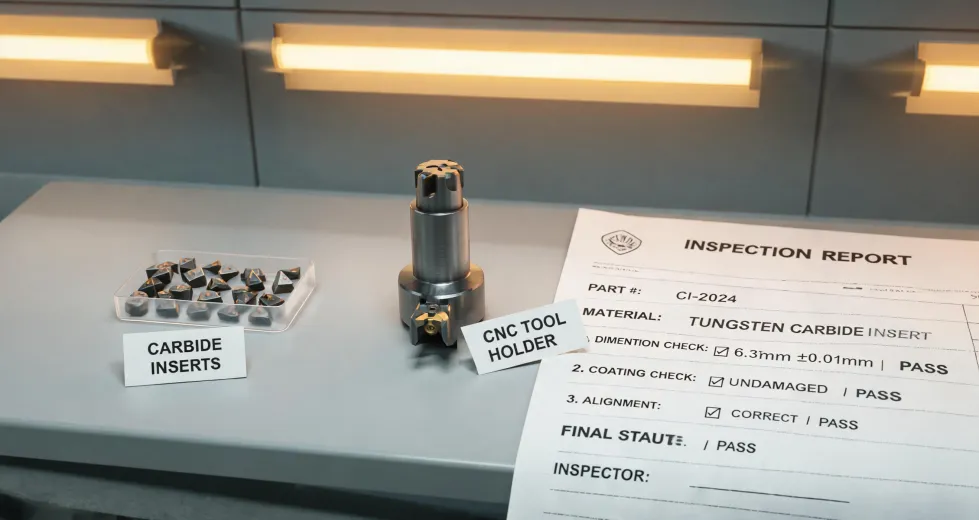
I started with the tooling. We needed a long-reach carbide end mill for the fixture's deep pocket and a clamping system that could hold two parts at once. I was about to order a generic brand from our usual discount supplier. Then I remembered last year's 'budget' insert failure—two parts scrapped, one angry customer, a $1,200 redo. I stopped.
I opened the Kennametal catalog on my phone. Honestly, the printed version is too heavy for my bag. I used the Kennametal app instead. The app let me filter by material, operation, and reach in about thirty seconds. The catalog showed the end mill I needed was in stock, and the app gave me a documented starting point for speeds and feeds. No guessing.
Now, a lesson I've learned the hard way: saying 'we need it by Friday' to a supplier can mean 'sometime Friday is fine' to them. That happened to us two years ago with a different rush order. We called Thursday afternoon. They said, 'Shipped this morning, should arrive Tuesday.' I almost lost the job. This time, I made them put the carrier, tracking number, and a late-delivery penalty on the purchase order.
We also didn't have a formal rush-order process. The last time that hurt us, a vendor added a 25% expedite fee to an invoice and nobody remembered approving it. So this time I wrote a one-page rush checklist: quote, confirmed delivery date, late penalty, and sign-off from the shop lead. Took an hour. Probably saved us a few thousand in hidden fees.
Meanwhile, the customer's partner lab offered a shortcut. They had a 3D printing material jetting system that could produce the fixture's alignment block in a high-temperature resin overnight. The resin part would cost about $80, versus $350 for machined aluminum. Tempting. But resin wouldn't survive production use. I almost said yes because of the price. Good thing I didn't.
Then came the real decision. We could keep the job in-house on our existing VMC. The machine was booked solid, so we'd have to bump two other jobs. Direct machining cost: $2,100. The other option: send it to a job shop with a VMCA that could run the fixtures unattended overnight. Their quote: $4,200, guaranteed delivery in three days.
$2,100 is real money, especially when I'm the one who has to explain budget overruns. I argued for the in-house path for most of Monday. Then I made myself answer one question: what is the cost of missing Friday?
Missing Friday means losing a $45,000 contract. It means an unhappy customer who might write about the experience. It means our reputation as a place that says 'yes' but delivers 'maybe.' The in-house path had maybe an 80% chance of making it. The VMCA shop path had 98%. That extra 18 points was worth far more than $2,100.
Here's the thing that still surprises me about procurement: most buyers focus on the per-unit or per-hour price and completely miss the cost of uncertainty. The question everyone asks is 'what's your best price?' The better question is 'what happens if you're late?' The answer to that question is the real price.
I have mixed feelings about paying extra for guaranteed delivery. Part of me still thinks it's a racket—why should the same machine time cost double because I asked nicely? But after this job, I get it. You're not paying for speed. You're paying for certainty. You're paying for the contract that says the machine will be available, the tooling will be in stock, and somebody else owns the penalty if it's late.
The job landed Wednesday. The fixtures worked. The dental customer kept their contract, and we got a 'thank you' email that made the whole week feel different. (Note to self: don't underestimate the cost of a calm customer.)
The Kennametal end mill also performed well. I'd used the app to set the starting feeds and speeds, so the tool ran without chatter or breakage. No redo. The cost of that one tool was maybe $90 more than the generic equivalent. The cost of a redo would have been one dead deadline and a $45,000 contract.
Did we buy the VMCA? Not right away. But the VMCA vs VMC conversation changed. We're now pricing the pallet changer as a risk-reduction tool, not a production tool. If it can turn a 75% on-time rate into a 95% on-time rate for rush jobs, the premium might pay for itself in one missed deadline.
So, a few lessons I'd share with anyone who manages a shop budget:
- Time certainty is a line item. It's not a mood. Put it in the quote.
- The cheap tool is only cheap if it doesn't fail. (surprise, surprise)
- Use reliable sources for tooling specs. I used the Kennametal catalog and app because they gave me answers in minutes, not after-hours phone tag.
- Write down your rush process before you need it. You don't think clearly when the deadline is ticking.
That's it. The job framed itself as a cost question, but it was actually a risk question. In the end, we paid for certainty. I'd do it again.