Kennametal Products, Shoulder Milling & CNC Turning Quotes: 6 FAQs from a Procurement Manager
-
What actually makes Kennametal products different?
-
What is Kennametal shoulder milling, and when should we use it?
-
How do I get a CNC turning parts quotation that doesn't hide costs?
-
Do small shops really need cranes for injection molding work?
-
Do I need to press brake when starting car? (Yeah, this is a real question)
-
How much does prevention cost vs. rework?
I've managed tooling and equipment purchasing for a 120-person contract manufacturing shop for six years. That's roughly $180,000 in tracked orders, 40+ vendor negotiations, and more than a few expensive lessons about what's actually worth paying for.
These are the questions I keep answering—from our machinists, from sales engineers, and on machining forums. If you're in this industry, you've probably wondered about at least one of them.
What actually makes Kennametal products different?
Straight answer: Kennametal products aren't the cheapest tools in the catalog. I've had that discussion with our CFO twice. But after tracking six years of tooling spend, I've noticed that Kennametal earns the premium where failures hurt most—tool life consistency and dimensional stability.
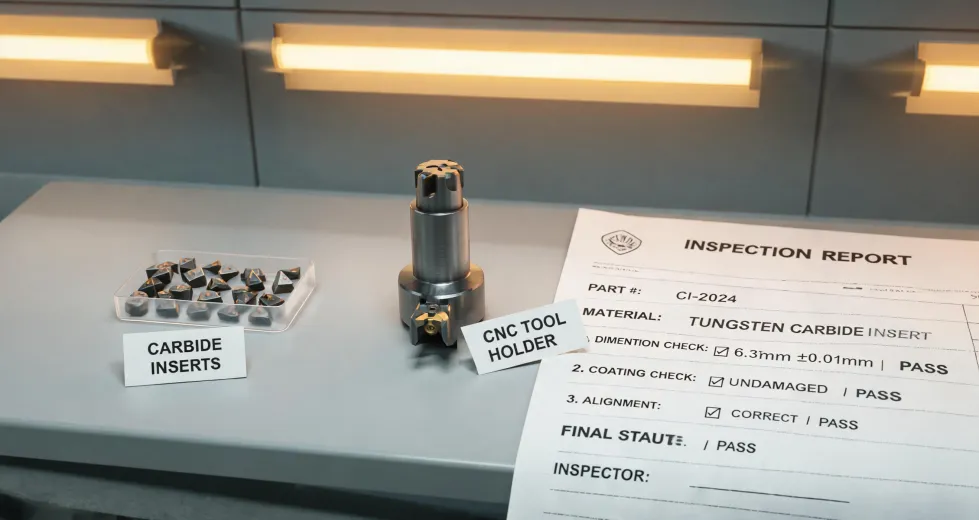
We run a mix of tooling brands. On paper, a generic carbide insert at $7 looks basically identical to a Kennametal insert at $12. The reality? The generic inserts started producing out-of-tolerance parts at unpredictable intervals. On a long production run, that meant scrapping a $400 workpiece to save $5 per insert. Penny wise, pound foolish as hell.
(Should mention: this wasn't a one-off. It happened three times before I stopped approving the cheap option. The third time, the insert broke mid-cut and damaged a $900 tool holder.)
People assume the lowest tool price means the vendor is more efficient. What they don't see is the cost of the scrap bin. At least, that's been my experience with our work—mostly aerospace and medical parts with tight tolerances.
What is Kennametal shoulder milling, and when should we use it?
Shoulder milling is a 90-degree milling operation that creates a square shoulder—vertical wall plus flat floor—in a single pass. Kennametal has a strong lineup here, including the Mill 1 series and the HARVI Ultra 8X. We've run both.
When does it make sense? If you're cutting square shoulders, steps, or pockets with 90-degree walls, a dedicated shoulder mill gives you better squareness and finish than a general-purpose end mill doing multiple passes. We standardized on Kennametal shoulder mills for stainless and titanium jobs because the insert geometry holds up better than coated HSS and, in our testing, better than some indexable competitors.
The surprise wasn't the surface finish—I expected that to be good. It was tool life. We ran 80 titanium parts at 85% spindle load, and the Kennametal inserts showed roughly 20% less flank wear than the comparable alternative. That data's sitting in our test report.
Caveat: if you're cutting aluminum at light depths, a standard end mill is probably fine. Don't buy a shoulder mill just for the sake of it. Buy it when the geometry demands it.
Pricing note: Kennametal indexable shoulder mill inserts have ranged roughly $15–25 per insert in early 2025 depending on grade, with cutter bodies from $200–450 (based on distributor quotes, March 2025; verify current pricing).
How do I get a CNC turning parts quotation that doesn't hide costs?
You'd think a quote is a quote. Not even close. When comparing quotes for a $4,200 annual contract, I've seen identical parts quoted with a 40% spread across 8 vendors. The lowest quote isn't the cheapest job—it's just the lowest number.
Four things I check in every CNC turning parts quotation:
- Setup fees. Some vendors bury setup in the unit price; others list it separately. A cheap per-piece price can hide $150–300 in setup per order.
- Material surcharges. Does the quote include sourcing raw stock? Is there a minimum quantity before the material price changes?
- Inspection cost. "Free inspection" usually means visual checks. First-article inspection with CMM reports is often an extra line item.
- Shipping terms. One vendor quoted standard ground and then shipped air freight without asking. That $130 surprise is now a standard question on our RFQ template.
Why do these hidden costs matter? Because the TCO spreadsheet doesn't lie. I built one after getting burned on hidden fees twice. Our procurement policy now requires quotes from 3 vendors minimum, but I've learned that the "complete quote" at 15% higher per piece is often the cheaper order overall.
Do small shops really need cranes for injection molding work?
This one comes up because overhead cranes are expensive. A 5-ton bridge crane with installation runs $50,000 or more (based on quotes we collected in 2024). For a small molding shop, that's painful.
But when I audited our 2023 spending, the number that stood out wasn't lifting equipment—it was downtime. Manual mold changes using forklifts and muscle were costing us about $8,400 per year in press-side waiting. The question wasn't "can we afford a crane?" It was "can we afford the process that's making us wait?"
The good news: you don't necessarily need a full bridge crane. For molds under 2 tons, a jib crane or portable gantry handles 80% of the lifting at a fraction of the cost. The checklist: mold weight, press layout, ceiling height, aisle clearance. In that order.
Five minutes of planning beats five shifts of re-rigging. The muscle-and-forklift option looked smart until the first time we nearly dropped an $8,000 mold. We didn't drop it. Barely. The repair bill was still $2,300 for new guide pins and alignment.
Do I need to press brake when starting car? (Yeah, this is a real question)
I'll explain, because it sounds like a typo. A new operator asked this during our safety meeting—he'd just bought a car with push-button start, and someone told him he'd damage it by not pressing the brake before starting. Meanwhile, we were doing press brake refresher training the same week. The two got mixed up in his head.
So, two answers:
Car with push-button start: Yes, most modern vehicles require you to press the brake pedal before the engine will crank. It's a safety interlock. The car won't start unless conditions are safe—your foot's on the brake so it can't lurch forward.
Press brake (the machine): Same principle, different scale. Before cycling a press brake, you verify the guards are in place, the tooling is set correctly, and no hands are in the die area. The machine's light curtains and dual-palm controls exist for the same reason the car has that interlock—to prevent starting something that isn't ready.
The question got a laugh, but it stuck. "Press brake rule" is now our shorthand for checking safety interlocks before any startup—CNC, hydraulic, or otherwise.
How much does prevention cost vs. rework?
This is my favorite question because I have the invoice to prove the answer.
In Q2 2024, we switched tooling vendors on a high-volume job because the quote was 18% lower. The insert failed mid-run on a critical part, ruining the workpiece and scoring the tool holder. Between replacement material, new tooling, and the rework shift, that one failure cost $1,200. We'd saved maybe $300 on that order. Net: a $900 lesson in "cheaper isn't cheaper."
That's when I implemented a 12-point pre-production checklist—tooling inspection, first-article verification, machine offsets confirmed, coolant concentration checked. The checklist has saved us an estimated $8,000 in potential rework since. I do not say that lightly. I have the scanned invoices to back it up.
Five minutes of verification beats five days of correction.
And am I ever tempted to skip the checklist? Every month, when we're behind schedule. Then I remember the $1,200 part. Cost control isn't about never spending—it's about spending where it prevents loss.