Choosing Kennametal: A Procurement Manager's Guide to 3 Common Scenarios
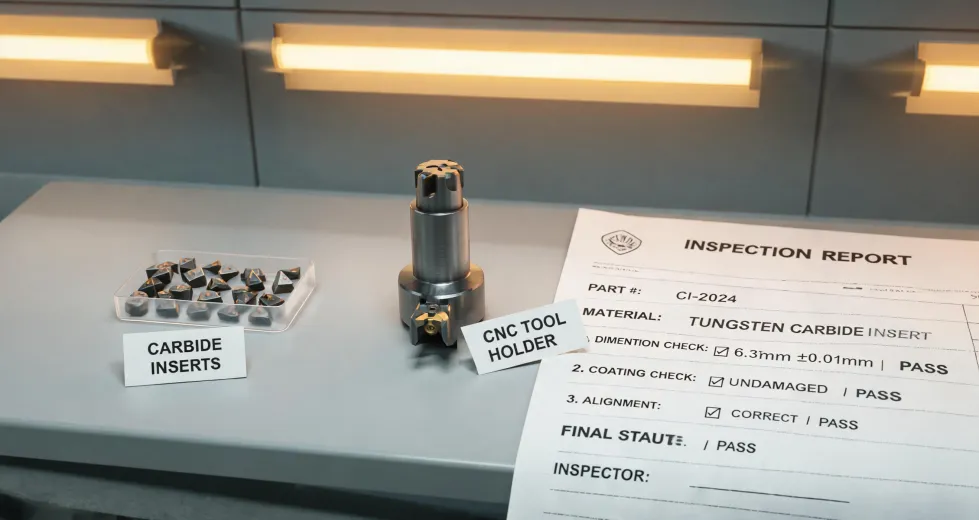
There’s no one-size-fits-all answer to whether Kennametal is the right choice for your shop. I’ve managed a machining tooling budget (roughly $180,000 annually) for a mid-size contract manufacturer over the past six years. We order from a mix of suppliers, and Kennametal is in our rotation—but not for everything. Over time, I’ve learned that the right call depends entirely on what you're trying to make, and how fast you need to make it.
Here’s how I break it down. This isn't a general review; it's a scenario-based guide based on actual purchasing data, a few wins, and a couple of mistakes I’m still paying for.
Scenario 1: High-Volume, Repetitive Production
Your situation: You’re running a dedicated line for a single part. Runs are long—thousands of parts, often the same cycle. Downtime is your enemy, and tool life is a direct line item on your P&L.
This is where Kennametal shines, particularly their Beyond™ series for milling and turning. When we locked in a multi-year contract for an automotive bracket, we tested a half-dozen equivalent grades. Kennametal’s KCU25 grade (for roughing) consistently came in 15-20% better on tool life compared to our previous go-to from a competitor. The per-insert cost was higher, but the total cost of ownership (TCO) was lower because we weren't changing inserts every shift.
(I should note: this was in 2023. We ran a controlled test with 500 parts. The Kennametal inserts averaged 47 parts per edge; the alternative averaged 38. The savings in downtime alone covered the higher insert price.)
My advice: If you have predictable, high-volume work, Kennametal’s premium grades (especially the coated carbides) are a strong TCO win. Ask your distributor for a guaranteed cost-per-part trial. If they can’t commit, walk away.
Scenario 2: Small-Batch, High-Mix Work
Your situation: Your shop floor runs 20 different jobs a week. You're changing tools constantly. Setup time is your bottleneck, not cycle time. You’re looking for versatility and reliability, not necessarily the absolute longest tool life.
I’ve found that Kennametal’s KM™ quick-change tooling system is a hidden gem here that most buyers overlook. We switched to KM adapters for our turning center (a Vision VMC, if that matters), and we cut our changeover time by about 40%—from around 25 minutes to 15 minutes per job. That saved us roughly $8,000 annually in setup labor alone.
However, I also made a classic rookie mistake: I assumed the 'starter kit' would cover our full range of parts. It didn't. We had to order a specialized collet for a thin-walled part two months later, and it was backordered for 12 weeks. The savings on setup were partially eaten by the panic buy of an aftermarket solution.
My advice: Kennametal is excellent for standardization in a mixed environment, but don’t go all-in on their quick-change system unless you can commit to the full ecosystem. Map your full part family first, then buy the adapters. The modularity is a benefit, but only if you buy the right modules upfront.
Scenario 3: Rush Orders & Emergency Tooling
Your situation: A customer calls on a Thursday morning with a broken machine. They need 50 parts by Friday. There's no room for error. You need a tool that works, and you need it now.
This is the scenario where I’ve learned to pay the time-certainty premium. In March 2024, we had a rush for a reamer job. Our usual supplier quoted 3-day rush, but couldn't guarantee delivery until Monday. Kennametal, through a local distributor, had a standard tool in stock and promised delivery by noon the next day. I paid $400 extra for that guarantee. The alternative was missing a $15,000 order (and likely the client’s trust).
Honestly, I'm not sure why some vendors consistently beat their quoted timelines while others consistently miss. My best guess is it comes down to internal buffer practices. But for Kennametal, the distribution network is genuinely robust. If you need a standard tool in a hurry, they've usually got it.
My advice: Never make an emergency decision based on base price alone. For rush orders, calculate the cost of a missed deadline first. If that number is high (say, over $5,000), buy from the source that offers a written, non-negotiable lead time. Leave the cheaper, “probably on time” option for less critical jobs.
How to Decide Which Scenario You’re In
If you're staring at a new quote and trying to decide if Kennametal's premium is worth it, ask yourself these three questions:
- What's my tolerance for risk? If the job can't fail, lean toward Kennametal. If you have buffer time, shop around.
- What's my volume? Predictable, high volume? Kennametal’s TCO is often better. High-mix, low-volume? Look at their KM system, but only if you can standardize.
- What's my timeline? If you need it yesterday, pay for the certainty. If you can wait 4-6 weeks, a smaller shop might give you a better price.
Ultimately, Kennametal is a workhorse, not a miracle worker. It’s a great tool for the right job. For the wrong job—like a one-off prototype or a project with a razor-thin margin—it can be overkill. Know your scenario, do the math, and don't be afraid to say no when the numbers don't work.
Oh, and one more thing: if you're running a big CNC machine—like, say, one of the largest mills in the state—the calculus is usually tilted toward Kennametal. Their tool holders (especially the hydraulic chucks) make a real difference on a big, heavy cut. Just don't expect them to be cheap. (As of December 2024, that’s still the case.)