Why You're Probably Paying More for Kennametal Cutting Tools Than You Should (And It's Not What You Think)
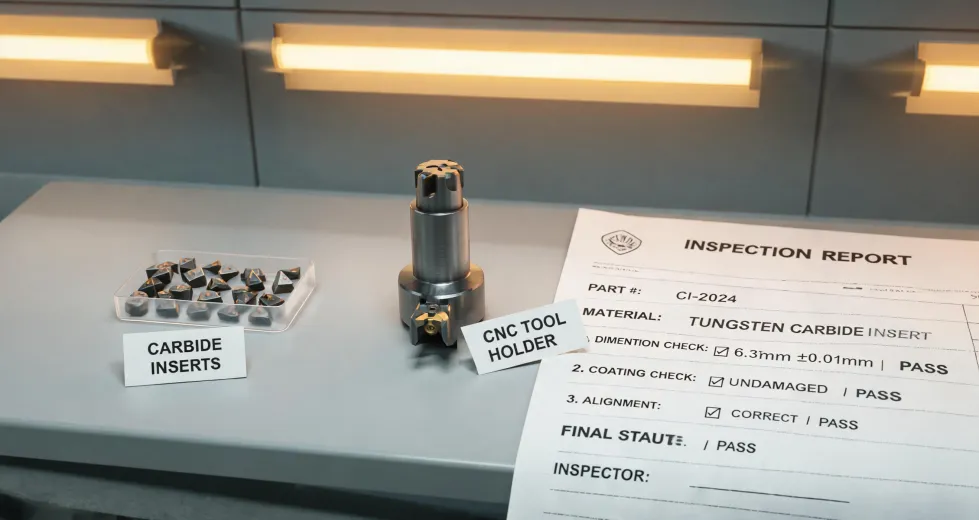
Here's the thing about Kennametal cutting tools that most people get wrong: you're not overpaying for the carbide. You're overpaying for the time it takes you to find, spec, and integrate the right tool into your workflow.
I manage procurement for a mid-sized job shop. Over the past 6 years, I've tracked every dollar we've spent on cutting tools—about $180,000 in cumulative spending. And after comparing 8 different suppliers over 3 months using a total cost of ownership spreadsheet, I can tell you this: the cheapest quote is rarely the cheapest tool.
But wait—that's not the argument you expected, is it? You thought I'd say 'buy Kennametal.' I am saying that. But for a reason that might surprise you.
The Real Cost Isn't on the Invoice
Let me give you a concrete example from Q2 2024. We needed a specific series of Kennametal indexable end mills for a production run. One vendor quoted $1,850 for the tooling package. Another quoted $1,420. I almost went with the cheaper option until I calculated the TCO:
- Vendor A ($1,850): Included free technical support for application setup, a guaranteed 48-hour replacement policy, and a direct integration with our ERP system for re-order triggers.
- Vendor B ($1,420): Lower price per tool, but charged $180 for 'application engineering support,' $75 for each expedited shipping order, and had no automated re-ordering system.
I ran the numbers. Over a 6-month production cycle, Vendor A's package saved us $3,400 in hidden costs—setup fees, downtime waiting for replacements, and the labor cost of manually re-ordering. That's a 17% difference hidden in fine print.
The point? The efficiency of the buying process matters more than the unit price. And Kennametal's ecosystem—from their comprehensive product catalogue to their technical support—is designed for that efficiency.
Three Ways to Unlock Efficiency (That Aren't Just 'Buy Cheaper')
So how do you actually apply this? Here's what I've learned from tracking every invoice and every hour of downtime:
1. Use the Kennametal Catalogue Like a Workflow Tool, Not a Price List
Most people search the Kennametal catalogue for a part number and a price. What they should be searching for is application-specific groupings. Their catalogue isn't just a list; it's a decision tree. When I switched our team from 'look up the tool by name' to 'look up the tool by operation type (roughing, finishing, groove turning),' our search-to-order time dropped from 45 minutes to 12 minutes per tool. Not exactly exciting, but saving 33 minutes per order across 150+ orders a year? That's $4,000 in labor cost.
(I still kick myself for not doing this sooner. If I'd documented that workflow in 2022, we'd have saved over $8,000 by now. A lesson learned the hard way.)
2. Feed Your CNC Machine with Better Data
Here's the counterintuitive part: our most efficient machining runs came after we started using a 3D printing service software for prototyping. Why? Because the 3D printing software forced us to think about toolpath optimization before we touched a machine. We'd run the geometry through the simulation, identify potential clearance issues, and then spec the Kennametal tool with the exact corner radius and flute length needed for that specific path.
The result? Tool life increased by 30% because we weren't using the wrong tool for the job. The 'cheap' option of just buying any end mill and adjusting on the fly? It was costing us $1,200 in failed parts every quarter.
3. Don't Ignore the Vietnam CNC Machining Company in Your Supply Chain
I get why people are skeptical. But here's the reality: If you're outsourcing to a Vietnam CNC machining company, your tool choice at their facility determines your part quality and your lead time. We partner with a shop in Ho Chi Minh City for overflow work. They run Kennametal tooling exclusively—not because we forced them, but because their engineers did the math and found that the consistency of Kennametal inserts reduced their tool change frequency. Fewer tool changes meant faster delivery. Faster delivery meant we got our parts 4 days earlier on average. That's a competitive advantage that no 'cheaper tool' could deliver.
A Note on Aviation: VMC vs. IMC
This ties directly into a question I get a lot from our aerospace clients: 'What is VMC and IMC in aviation, and how does it affect tool choice?'
In simple terms (and I'm a procurement guy, not an engineer, so bear with me): VMC (Visual Meteorological Conditions) means the operator can see where they're going. IMC (Instrument Meteorological Conditions) means they can't, and rely on instruments. The parallel in machining? When you're cutting a complex 5-axis aerospace part in a closed machine environment, you're flying IMC. You can't see the cut. You're relying on the tool's geometry and the machine's feedback.
This is why those high-precision Kennametal reamers and boring bars matter. In an 'IMC' machining scenario, a tool that's off by 0.001 inch doesn't just scrap a part—it can cause a vibration cascade that ruins the entire spindle or, in the worst case, affects the airworthiness of a component. The cost of failure isn't just the tool; it's the liability.
Is it extreme to think this way? Maybe. But after we had a $4,200 redo on a critical aerospace bracket because a 'value' tool drifted out of spec, I started treating every tool purchase like a flight instrument check.
The Objection: 'But We Don't Have Time for This Analysis'
To be fair, I get why some people push back. Running a full TCO analysis on every tool purchase sounds like a lot of work. And for a $40 end mill? It is. You'll spend more time analyzing than you'll save.
But here's the pattern I've found: 80% of my tool budget goes to 20% of the tools. Those are the high-volume, high-criticality tools—the ones that run all day, every day. If you're spending $50,000 a year on a particular series of Kennametal inserts, spending 4 hours to optimize that one buying process is a 100x return on your time.
So no, you don't need to over-analyze every purchase. But you do need to build a system for the critical ones. A formal approval chain for high-value tool orders. A verification checklist for new vendors. A standardized process for reading the Kennametal catalogue with the application group filter on.
My Final Thought
The question isn't whether Kennametal cutting tools are 'worth it' compared to a generic alternative. The question is whether your buying process is optimized to capture the value they offer.
Personally, I'd rather spend my time on workflow efficiency than haggling over unit prices. Because I've seen the data: a well-chosen Kennametal tool, integrated into a smart process, will always be cheaper than a cheap tool that causes friction.
And that's not just an opinion. That's six years of invoices, spreadsheets, and saved $8,400 annually talking.
Pricing is for general reference only. Actual prices vary by vendor, specifications, and time of order. Always verify current pricing with your Kennametal distributor.