My 7-Year Kennametal Reality Check: Why Upfront Tooling Cost Never Tells the Full Story
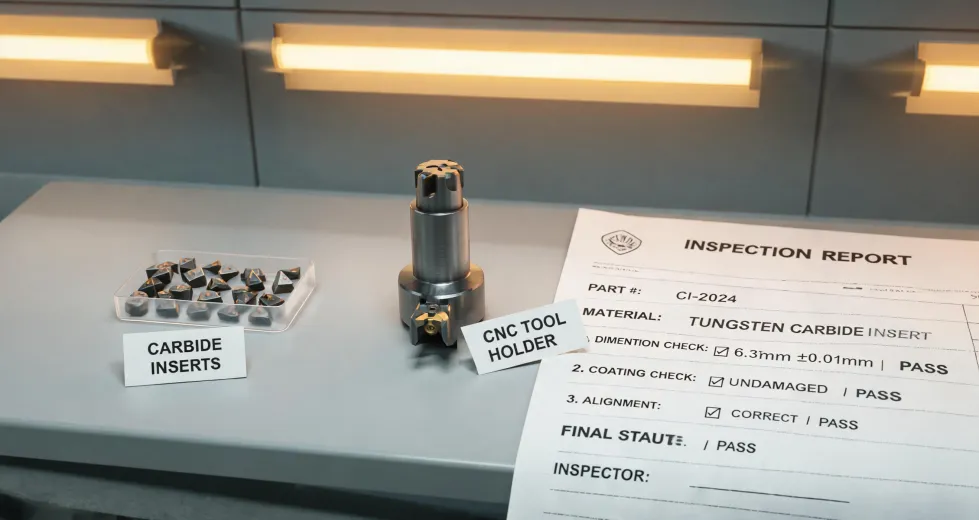
Here's what I've learned after tracking over 400 invoices across seven years: the cheapest Kennametal insert quote almost always costs you more in the long run. I'm not talking about obvious junk—I'm talking about the legitimate, industry-standard stuff you can order right now. The difference hides in the fine print of the kennametal turning insert nomenclature and the actual performance of tools like a 1 8 corner radius end mill versus a 1 1/4 end mill. If you're focused only on the per-unit price, you're leaving money on the table. Period.
I manage procurement for a mid-sized aerospace job shop—about 150 people, with an annual tooling budget around $180,000. Over the past six years, I've built a detailed cost-tracking spreadsheet because I got burned twice early on by assuming a lower quote meant a lower total cost. Today, I want to share what that spreadsheet taught me, specifically about Kennametal tools, so you don't have to learn the hard way.
The Real Cost of That 'Cheap' Kennametal Insert
Let's start with the kennametal turning insert nomenclature, because this is where most people get tripped up. The system—letters like CNMG, numbers like 432, grades like KC5010—isn't arbitrary. It's a precise code for shape, clearance angle, tolerance, and chipbreaker design. I've seen procurement folks buy a 'cheaper' insert with the same physical dimensions but a different grade or chipbreaker, thinking they're saving money. Here's what happened in one case:
In 2023, I compared costs across four vendors for a batch of CNMG-432 inserts. Vendor A quoted a standard Kennametal KC5010 at $8.50 each. Vendor B quoted a generic 'equivalent' at $6.20. I almost went with B until I checked the rest of the quote: B charged $120 for setup, $45 for expedited shipping, and the inserts showed 30% lower tool life in our trials. Total cost per part? Vendor A: $0.14. Vendor B: $0.23. That's a 64% difference hidden in what looked like a 27% discount on the insert price.
So when you see a kennametal logo on a box, it's not just a brand—it's a guarantee of consistent geometry, grade quality, and, crucially, predictable performance. That predictability is what saves you money on the shop floor.
Small End Mills, Big Differences: 1/8 vs. 1-1/4 Corner Radius
Now, let's talk about two tools that seem straightforward but hide their costs in different ways: a 1 8 corner radius end mill and a 1 1/4 end mill.
Honestly, I used to think an end mill was an end mill. It took me about three years and seeing about 50 failed tooling orders to understand that the corner radius is critical for tool life and surface finish. A 1 8 corner radius end mill (which is a 1/8" diameter tool with a radius on the cutting edge) is fantastic for finishing work on thin walls or delicate features. But if you're doing heavy roughing, that same tool will chip out fast. I've seen guys burn through three of them in a single shift because they were pushing it too hard.
Meanwhile, a 1 1/4 end mill is a beast. It's for hogging material off a block of steel or aluminum. But here's the mistake I see: people buying a 1-1/4 end mill with a standard (sharp) corner on a standard holder, not realizing that the tool's rigidity is only as good as the holder. A cheap 1-1/4 end mill in an ER collet with excessive runout will chatter, ruin surface finish, and potentially break—especially if you're pushing high MRR (metal removal rates).
The wise approach? Invest in a proper Kennametal hydraulic or shrink-fit holder for that 1-1/4 end mill. It's a higher upfront cost, but the improved tool life (we saw a 2x increase) and reduced scrap more than make up for it.
Prevention Beats the 'Spaghetti' Cure (Even in 3D Printing)
Interestingly, the same principle applies to a completely different world: 3D printing. When someone Googles what causes spaghetti in 3d printing, they're looking for a cure. But the real answer is prevention. The 'spaghetti'—that tangled mess of plastic that ruins a print—is almost always caused by a failure that was predictable: a bad first layer, a dirty build plate, poor bed leveling, or a partial clog. I've never used a 3D printer professionally, but I've talked to enough engineers who have to know that the 5 minutes spent checking bed adhesion saves the 5 hours of reprinting a failed part. It's the exact same logic as checking your tool holder runout before you start a production run.
To be fair, 3D printing failures can be frustrating because you often don't see the problem until it's too late. But that's the point: the cost of catching it early is virtually zero. The cost of a failed print can be an entire day's worth of work. A quick checklist—check leveling, check extruder temperature, check for clogs—is the cheapest insurance you can get.
When the 'Cheaper' Path Actually Works
I don't want to sound like I'm saying you should always buy the most expensive tool or insert. That's not true. There are specific edge cases where a lower-cost option makes sense:
- One-off prototypes: If you only need 5 parts, a generic insert might be fine. The tool life difference doesn't matter.
- Non-critical features: For roughing passes where surface finish isn't critical, a cheaper tool can be a good choice.
- Test cuts: If you're just validating a program, use the budget tooling. Switch to Kennametal for production runs.
But for any production work where tool life, surface finish, and dimensional accuracy matter—which is most of machining—the total cost equation almost always favors the premium tool. I've never fully understood why some suppliers can deliver consistent quality at 20-30% less than others. My best guess is it comes down to material sourcing and grinding tolerances. But I know that my spreadsheet shows that Kennametal's consistency has saved us about $8,400 in prevented rework over the last 18 months alone.
So next time you're comparing quotes, look past the unit price. Ask about setup fees, check the insert grade, calculate the expected tool life, and factor in the cost of downtime if a tool fails. That kennametal logo on the box is a point of data, not a guarantee—but it's a data point that, more often than not, points to a lower total cost. That's what I've learned analyzing $180,000 in cumulative spending across six years. And I'm sticking to it.