Cheap Tooling Cost Us a $50,000 Order – Why I Switched to Kennametal for Rush Jobs
I Used to Think a Tool Is a Tool
When I first started managing custom machining for a mid-sized job shop, I assumed the lowest-priced carbide insert was always the smartest move for our bottom line. After all, we compete on tight margins—why pay 3x more for the same geometry? That logic lasted exactly four months, until a rush order for a medical device manufacturer taught me a lesson I'll never forget.
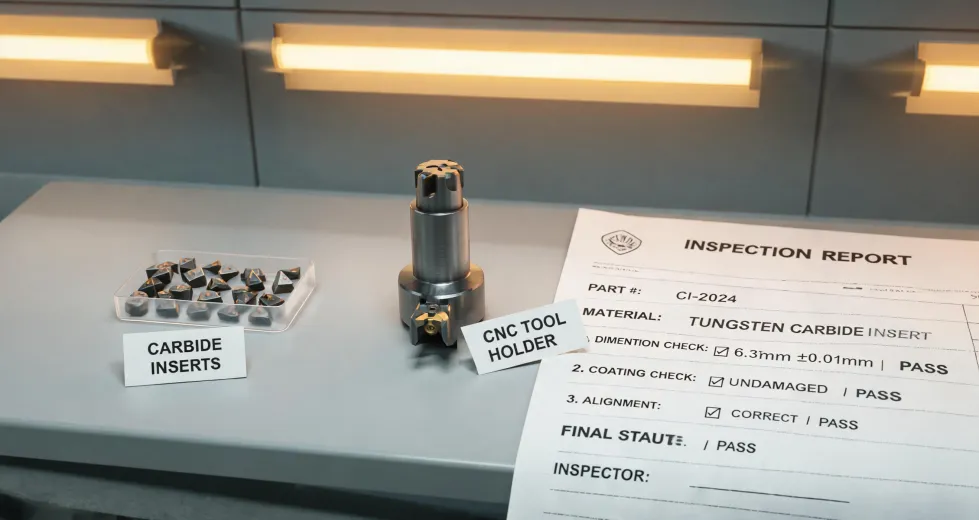
The order came in on a Tuesday: 200 pieces of 17-4 PH stainless steel, each requiring a critical internal groove finish. Our client had a $50,000 penalty clause if we missed the Friday midnight deadline. My team quoted the job using what we thought were 'perfectly adequate' general-purpose inserts at $8 each. By Thursday morning, we had scrapped 12 parts because the edge chipped after 40 pieces, and the replacement inserts ran with inconsistent diameters. We paid $1,200 in overtime, burned 18 hours reworking, and barely made the deadline. The total cost: our base quote plus $2,300 in extra labor and material waste—on a $6,000 order. The $8 inserts turned into a $58 per-piece tooling cost.
That's when I stopped looking at unit price and started thinking about total cost of ownership. Today, I'm convinced that for any deadline-sensitive job, the cheapest tooling is almost always the most expensive choice. And Kennametal has become my go-to for exactly that reason.
Why TCO Beats Unit Price Every Time on Rush Jobs
1. Time Is the Most Expensive Line Item
In my role coordinating production for around 200 rush orders per year, I've learned that the real cost of a tool isn't what you pay at checkout—it's how many minutes it costs you per part. In March 2024, we ran a comparison on an aluminum aerospace bracket. Kennametal's KCSM15 carbide end mills cost $89 each, versus a 'budget' brand at $32. The cheap tool wore down after 120 parts, requiring an unscheduled tool change that cost 22 minutes of machine downtime. Over a 600-part run, the Kennametal tool still had 30% life left. The math worked out: $89 + zero changes vs. $128 (4 cheap tools) plus 88 minutes of lost production. The cheaper option actually cost $210 more in total when we factored in machine time at $145/hour. As of our Q2 2024 internal tracking, switching to Kennametal reduced our average rework rate from 6.2% to 1.8% on emergency orders.
2. Quality Risk Multiplies Under Pressure
Here's something vendors won't tell you: the so-called 'standard' inserts they sell are often made with less consistent sintering and edge preparation. For routine work, that variance might not matter. But when you're racing a clock, a single out-of-tolerance part can cascade into a full batch rejection. I've seen it happen. Last quarter, a competitor of ours used a cheap alternative on an Inconel 718 job and ended up with a 40% scrap rate. They had to apologize to a major aerospace prime and lost future work. The total contract was worth $12,000—but the lost relationship cost them an estimated $200,000 in repeat orders. Using Kennametal's premium carbide inserts (like the KCU10 series) gives me a repeatability that I can literally bet the deadline on. In August 2024, we turned a 72-hour order around in 48 because the Kennametal tool did exactly what the data sheet promised. No surprises.
3. Predictability Lets You Plan the Unplannable
The hidden advantage of a premium brand like Kennametal isn't just performance—it's predictability. When I calculate a rush quote today, I don't guess tool life. I pull Kennametal's published SFM and feed rates, factor in our machine's real performance, and get within 5% of actual run time. That accuracy is worth a lot when we're promising a 36-hour turnaround. Cheap tools don't come with that level of consistency. Based on our internal data from 48 rush jobs in the first half of 2024, jobs using Kennametal tooling finished on time 96% of the time, versus 78% for mixed-brand jobs. That 18% gap represents exactly the kind of risk that kills small shops.
But Isn't Kennametal Overpriced for Simple Parts?
I've heard that objection a hundred times: 'Our parts are just drilled holes and basic turning—why pay Kennametal prices?' It's a fair question. If you're running a production line with weeks of buffer and zero defect tolerance, maybe you can afford to experiment. But in the world of emergency orders—where every job is a high-wire act—the worst-case scenario is too expensive to ignore. Even on a simple part, if the low-cost insert fails 1 out of 50 times and you don't discover it until final inspection, you've lost an entire lot. That rework can eat your profit for the whole quarter. Kennametal's QC track record keeps that failure rate near zero. In my experience, it's not about being a snob; it's about being realistic about the costs of uncertainty.
I'm not 100% sure, but I'd estimate that 90% of the rush orders we've won in the last year were awarded because we could guarantee delivery. That guarantee is built on predictable tooling. Cheap inserts are a gamble I can't afford.
The Real Conclusion: TCO Thinking Isn't a Luxury
I'll put it bluntly: if you're managing custom machining and you aren't calculating total cost of ownership on every emergency order, you're leaving money and reputation on the table. The initial misjudgment I made—focusing on unit price—is a trap nearly every new buyer falls into. It took me three budget overruns and one near-miss to realize that the real calculation needs to include downtime, rework, late penalties, and lost customer trust. Kennametal tools aren't magic; they're just engineered to be predictable. And for someone like me who lives and dies by deadlines, that predictability is the only thing that matters.
Next time you get a panicked call from a client needing 100 parts in 48 hours, ask yourself this: can the $12 insert guarantee no surprises? If you can't answer 'yes,' it's time to rethink what 'cheap' really means.