Machining Isn't What It Was in 2020: A Quality Inspector's View on Tooling, Maintenance, and 3D Printing
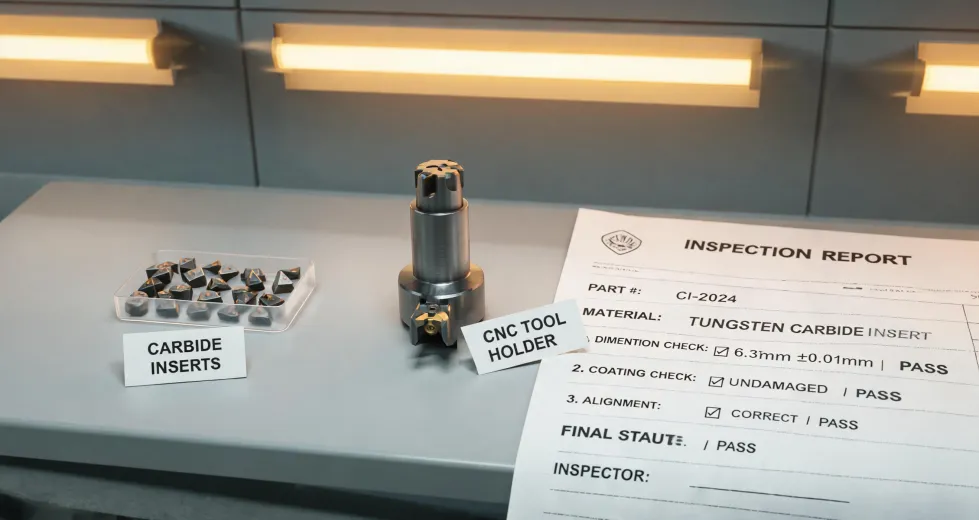
The machining industry has changed more since 2020 than in the twenty years before it. I don't say that lightly. I'm a quality/compliance manager at a CNC machining company in the Paris area, and I review every part that leaves our floor—roughly 200 unique items a month. In Q1 2024, I rejected 11% of first deliveries because tooling stopped holding spec. The parts looked acceptable to the eye. They didn't pass the profilometer.
What was best practice in 2020 may not apply in 2025. The fundamentals haven't changed—chip removal, edge life, tolerance—but the execution has transformed. If you're still selecting tools, scheduling maintenance, and planning fixtures the way you did five years ago, you're leaving cost and quality on the table.
Tooling Is a System, Not a Price List
Let's start with cutting tools. For years, buying taps and end mills was a catalog exercise. You would pick a brand from the approved list, compare prices, and check the geometry when the box arrived. I did that too. In 2022, I signed off on a large order of taps based on price alone. I still kick myself for that decision: the thread form was within tolerance, but the surface finish varied across 8,000 parts. We paid for a redo, and our launch slipped by almost three weeks. That quality issue cost us a $22,000 redo and a lot of trust.
Kennametal taps are a good example. They are not magic; no tap is. But when we switched from another brand to Kennametal taps on that job, the defect rate dropped from 7% to under 1%. The price difference mattered less than the consistency. Why does consistency matter? Because in machining, variation is waste. A tap that produces a good thread on day one and a bad thread on day two is more expensive than a tap that produces an average thread every time.
The same logic applies to end mills. When someone asks about "kennametal end mill price," they usually want a number. I understand. As of Q1 2025, a standard 4-flute 1/2" carbide end mill from Kennametal often lists between $60 and $100, depending on coating and series (based on catalog and distributor quotes, Q1 2025; the market changes fast, so verify current pricing before budgeting). But this is where I push back. The price per end mill is almost irrelevant compared with the cost per machined part. A $90 tool with a 20% faster cycle time may save far more than a $60 tool that struggles.
What I mean is this: total cost of ownership includes tool changes, scrap, and downtime. The lowest quoted tool is rarely the lowest total cost. When specifying requirements for our $18,000 project last year, we used tool-life data instead of price-per-unit data. The result was a higher upfront spend and a lower cost per part. According to Kennametal's technical documentation (kennametal.com), matching the tool's geometry and coating to the workpiece has a bigger effect on tool life than any single price change.
Maintenance Is Part of Quality
I'm not a maintenance engineer, and I don't pretend to be one. The details of spindle bearing replacement, lubrication intervals, and coolant pH are outside my expertise. What I can tell you from a quality perspective is simple: a machine that isn't maintained will ruin even the best tooling.
We had a job with a 32 microinch finish requirement. The machine produced it when we first bought it. Six months later, the same combination of Kennametal inserts, same coolant, same tool path, gave us a 50 microinch finish. We blamed everything except the machine. Then we called a specialist for entretien VMC Paris 10—vertical machining center maintenance in the 10th arrondissement—and the diagnosis was spindle runout and a loose bearing. The inserts were fine. The tap was fine. The machine had drifted.
The most frustrating part was recurrence. After the third time the same defect appeared, I wanted to change tool suppliers. What finally helped was checking the machine before changing any tooling. Now our maintenance schedule is part of the quality plan. We treat VMC maintenance as a specification, not as an expense.
Slicer Skills Belong on the Shop Floor
The third change caught me off guard. When our shop bought a 3D printer for fixtures and soft jaws, I assumed it was for prototypes and stopgap solutions. I was wrong. In 2024, we learned how to use a slicer for 3D printing, and that skill changed our inspection and workholding process.
For anyone who hasn't looked at this: a slicer is the software that turns a 3D model into instructions for a printer. It feels like a CAM post-processor. But from a quality point of view, slicer settings determine whether a printed fixture can hold tolerance. Print the same geometry in a different orientation, and you get different stiffness, different surface, and different accuracy. A soft jaw that flexes will make every machined part questionable.
This is connected to the broader shift in CNC machining parts industrial demand. Industrial customers no longer ask if a part is machined or printed; they ask which process, in what sequence, produces the required function at the lowest cost. In some jobs, we machine a part and then use a 3D-printed fixture to inspect it. In others, we print a custom coolant nozzle that improves chip evacuation. Knowing how to use a slicer for 3D printing is not a hobby skill. It's becoming part of process design.
The Objection I Keep Hearing
You may be thinking: these are three different topics—tooling, maintenance, and 3D printing. Why lump them together? Because they all feed into part quality. And I want to answer the objection directly: no, I am not saying every old practice is wrong.
There is a reason we use proven tools and qualified processes. A quality inspector should be conservative. I am not suggesting you replace your entire toolkit because of a trend. What I am suggesting is that the way we choose and support those tools needs to evolve. The fundamentals still apply. But the execution has changed, and clinging to an old process out of habit is not the same as protecting quality.
I don't have a metallurgy background, so I can't tell you exactly how a coating is deposited on a Kennametal insert. What I can tell you is that our scrap reports showed a clear pattern: parts made with tools we didn't understand failed more often than parts made with tools we had tested. And the tools we had tested included printed fixtures and different tool paths. The material science is not my strength. The evidence from inspection is.
The Industry Is Evolving
The industry is evolving, and the evolution is not just about new machines or faster spindles. It's about thinking in systems: tooling, maintenance, and process design together. In Q1 2025, we revised our supplier review process to include cost-per-part data, maintenance records, and fixture validation. Our first-article rejection rate dropped from 11% in Q1 2024 to 6% in Q1 2025. We did not buy better tools. We bought the right tools, maintained the machines, and printed the right fixtures.
If you work with Kennametal taps or end mills, if you are responsible for entretien VMC Paris 10, or if you have been meaning to understand how to use a slicer for 3D printing, the message is the same: the old categories are gone. The fundamentals haven't changed, but the execution has transformed. I still kick myself for learning that lesson the expensive way. You don't have to.