Laser Cutting vs CNC Milling: The Real Machining Problem Is Never the Tool
-
I Get Called When the Deadline Is Already Broken
-
The First Mistake: Starting With a Process Comparison
-
Why a Kennametal Supplier Asks So Many Questions
-
What a VMC Daytona 190 Actually Taught Me
-
Kennametal Additive Manufacturing: The Unconventional Solution
-
The Real Cost of Choosing Cheap
-
The Counterintuitive Truth About Rush Orders
-
So What Actually Works?
I Get Called When the Deadline Is Already Broken
In my role coordinating rush machining orders for manufacturers, I've handled 200+ emergency jobs in the last decade. That doesn't mean we never miss. It means I've learned to ask the second question before the first one is answered.
In March 2024, a client called at 9:30 at night because a bottle cap injection molding machine had stopped. The mold was down, and the replacement insert was a six-day job. They needed it in 36 hours. The line shutdown was going to cost about $12,000 an hour. That job changed the way I think about tooling, machines, and the difference between speed and certainty.
The First Mistake: Starting With a Process Comparison
When I'm triaging a rush order, the first question people often ask is “laser cutting vs CNC milling?” It sounds like a practical question. But it's usually a symptom of a deeper issue: the part isn't defined well enough.
Laser cutting and CNC milling both remove material, but they don't work the same way. Laser cutting is a thermal process. It's fast on flat sheet metal, handles 2D profiles beautifully, and makes holes without tooling. CNC milling is mechanical. It's the only one of the two that can produce a 3D cavity, a precise slot, a bore with a real tolerance, or a surface finish that matters. If a rush order starts with “which process?” the actual problem is that the design is still at the “what do we need?” stage.
Why a Kennametal Supplier Asks So Many Questions
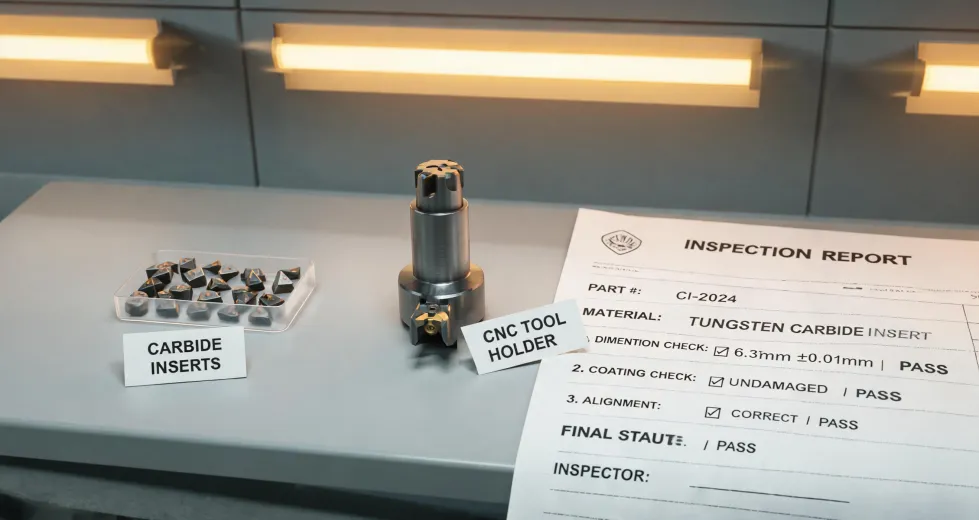
Once the process is settled, the conversation moves to tooling. Buyers often ask for Kennametal by name, and for good reason. But a tool brand won't fix a process problem. It's a crucial part of the system—not the whole system.
The first time I talked to a real Kennametal supplier, I expected a price—or rather, I expected a catalog. Instead, they asked about spindle taper, coolant pressure, workholding, and how much radial engagement I was planning. In my first year, I made the classic specification error: assumed “standard” meant the same thing to every shop. It doesn't. The same insert that works at one shop can fail at another because the toolholder or coolant delivery is different.
Why does this matter? Because the cheapest tool is the one that doesn't cause a disruption. A competent Kennametal supplier will ask questions until the setup is stable. That process is frustrating when you're in a hurry, but it's exactly when you need it most.
What a VMC Daytona 190 Actually Taught Me
We run a VMC Daytona 190 on our floor. It's a workhorse: a solid 3-axis vertical machining center with no drama. But I've watched people treat it like a universal solution to every shaping problem. It isn't.
If a job needs a deep pocket in pre-hardened tool steel, the VMC Daytona 190 can do it—if someone plans the tool path properly. If it needs a surface finish better than 32 Ra, the machine will do it—if the tool, speed, and finishing pass are right. The machine amplifies preparation. It doesn't replace it.
That's the counterintuitive part. People think a better machine or a better-branded insert will save a poorly planned job. It won't. The machine and the tool are the last place where the outcome is decided. The first place is the plan.
Kennametal Additive Manufacturing: The Unconventional Solution
When a discontinued toolholder threatened to kill a project, I thought we were done. Then a Kennametal supplier mentioned Kennametal additive manufacturing. It wasn't the first option that came to mind, but for complex tool bodies and wear parts that are difficult to machine from solid, AM makes sense.
We sent a model, they built the near-net-shape body, and we finished the critical surfaces on the VMC Daytona 190. The part wasn't cheap, but it was available in days, not months. That's the thing about advanced manufacturing: it's not always the lowest-cost route, but it can be the only route that fits the timeline.
Kennametal additive manufacturing isn't the right answer for every job. It's the right answer when geometry, lead time, and material waste make conventional cutting impractical. Knowing the difference is part of the job.
The Real Cost of Choosing Cheap
I'll give you a real example. A shop saved around $200 by ordering a “compatible” insert instead of the Kennametal one recommended for that material. The insert chipped, the part scrapped, and the rework ate an entire day. After overnight freight and lost machine hours, that decision cost close to $1,500. That's the classic penny-wise problem: the cost of buying cheap isn't the purchase price. It's the failure cost.
The most frustrating part of this work is seeing the same mistake repeat. You'd think a written spec would prevent misinterpretation. But one print can be read five different ways. I can't count how many times I've asked for a tolerance clarification and watched a deadline collapse. The delay wasn't the machine or the tool. It was the ambiguity.
The Counterintuitive Truth About Rush Orders
People think rush orders cost more because they're harder. Actually, they cost more because they're unpredictable. Speed isn't the core issue; uncertainty is. When a supplier has to interrupt a planned schedule, reset a fixture, or interpret a vague print, the cost climbs fast.
I have mixed feelings about rush fees. On one hand, they can feel like a penalty for someone else's planning gap. On the other hand, I've seen how a rush order wrecks a shop's flow—pulling a machine off a paying job, changing setups, expediting material. The premium starts to make sense.
So What Actually Works?
The answer is boring but true: solve the process before you need it.
- Define the part before comparing laser cutting vs CNC milling. Know your material, geometry, quantity, and critical tolerances.
- Talk to a Kennametal supplier about tooling strategy early, not while the clock is running.
- Build a buffer. In custom machining, 48 hours of buffer can turn an emergency into a normal job.
- Use advanced manufacturing where it makes sense. Kennametal additive manufacturing won't replace your VMC Daytona 190, but it can solve components that no machine can cut in time.
An informed customer asks better questions and makes faster decisions. That's why I'd rather spend ten minutes explaining the difference between laser cutting and CNC milling than deal with mismatched expectations later. Because in the end, the late part isn't late because the brand wasn't good enough. It's late because the process wasn't stable. And no single insert can fix that.