Kennametal Tooling FAQs: Carbide Inserts, Aluminum End Mills, and Machining Reality Checks
-
Are Kennametal carbide inserts worth it for a small shop?
-
Are Kennametal aluminum end mills worth the extra cost?
-
What should I check when buying China CNC engraving end mill bits?
-
What is micro injection molding—and why does it matter to machinists?
-
Do I need a separate H beam laser cutting machine for structural steel?
-
What's the first thing you check when a tooling order arrives?
-
How do I get good service when my order is small?
I'm a quality and compliance manager at a custom machining company. I review every tooling order before it hits the shop floor—about 200+ unique items a year. In Q1 2024, I rejected 11% of first deliveries because something didn't match spec. Some were small fixes. A few cost us real time. As of January 2025, this is still my checklist.
Here are the questions I hear most from engineers and buyers, with the answers I give them. I'm not a tooling engineer or a plastics specialist, but I know what happens when the wrong tool gets into a spindle.
- Are Kennametal carbide inserts worth it for a small shop?
- Are Kennametal aluminum end mills worth the extra cost?
- What should I check when buying China CNC engraving end mill bits?
- What is micro injection molding—and why does it matter to machinists?
- Do I need a separate H beam laser cutting machine for structural steel?
- What's the first thing you check when a tooling order arrives?
- How do I get good service when my order is small?
Are Kennametal carbide inserts worth it for a small shop?
It depends on what you're running. If you're chasing repeatability, yes. Inserts are the interface between the setup and the part. If the corner radius is off by 0.01 mm, the finish is off. Kennametal controls that geometry tightly. According to Kennametal's published tolerance data, each insert geometry has defined limits. In our incoming checks, the parts match. That's not true of every insert I've measured.
Per ISO 13399, cutting tool data has a standard format for CAM integration. That only helps if the physical part matches the data. For a one-off job, a less expensive insert can get you through. But for a batch, the cost of an interrupted cut is higher than the insert price. We learned this the hard way (the redo cost us $22,000).
Are Kennametal aluminum end mills worth the extra cost?
For five parts, maybe not. For fifty parts, usually yes. Aluminum-specific end mills use polished flutes and higher rake angles so chips don't weld to the cutting edge. A generic end mill can cut aluminum, but it can also load up and leave a rough finish.
In Q1 2024, we swapped to Kennametal aluminum end mills for a 120-piece bracket order. Tool changes dropped from four to one. Surface finish went from borderline to customer-approved. That's a measured result, not a marketing claim.
Small shops often start with a cheaper tool. That's okay. Test one on a short run. If cycle time and finish meet spec, keep the cheaper option. If you're chasing productivity, the name-brand tool pays for itself quickly.
What should I check when buying China CNC engraving end mill bits?
Look, I'm not saying Chinese end mills are automatically bad. I'm saying cheap has two meanings: low price and low certainty. The risk isn't the country; it's the lack of traceability.
Ask for the substrate grade, coating type, flute count, and tolerance class. Then measure the shank diameter before you put it in a holder. In 2022, we didn't have a formal incoming inspection process for tools (should have set one up after the first close call). A batch of made-to-print engraving bits was 0.02 mm off. The operator blamed the tool, then the spindle, then the program. It was the tool. Now every order gets measured.
If you're a small shop buying budget bits to test a process, I understand. Just don't put a new bit into a production job without a test cut.
What is micro injection molding—and why does it matter to machinists?
Micro injection molding is a plastic molding process for very small parts. Think part weights under a gram and features measured in millimeters or microns. It's not CNC machining, but it overlaps with machining more than people expect.
The mold inserts often require micro machining. Tolerances on those inserts can be brutal. If a supplier says they can do both micro injection molding and CNC machining, ask to see their metrology plan. How will they measure the part? What's the CMM resolution? What's the tolerance on the mold steel?
I'm not a plastics engineer, so I can't guide you on polymer grades or gate design. From a quality perspective, I care about the same thing in both processes: consistency.
Do I need a separate H beam laser cutting machine for structural steel?
If your project is mostly H-beam structural steel with straight cuts, an H beam laser cutting machine can be the right call. It's a laser process, not mechanical cutting. I can't speak to the optics or beam parameters—that's outside my lane.
From a quality perspective, I care about two things: heat-affected zone and dimensional tolerance on the beam. Laser cutting can give a clean edge, but it's not automatically a substitute for machining. If you're combining laser-cut beam sections with machined mounting surfaces, make sure the same drawing tolerance applies to both.
We send laser cutting to a specialist and still inspect every mating face. The process name doesn't matter. The part does.
What's the first thing you check when a tooling order arrives?
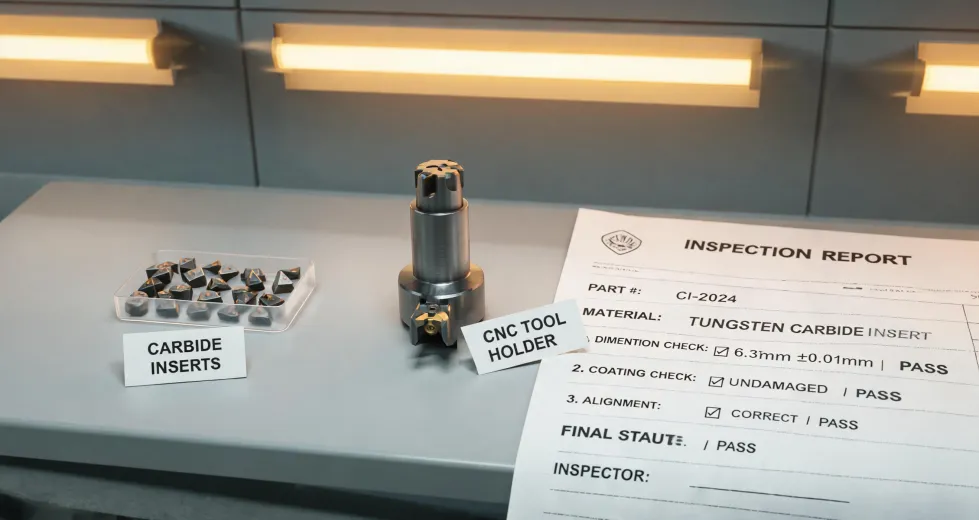
Shank diameter. Not brand logos. Not the box condition. Shank diameter first. If that number is wrong, the tool can spin but it won't run true. It sounds basic, but it catches problems before they become parts.
Then check insert corner radius, coating condition, and edge prep. I've been reviewing tooling for four years. The first time I skipped incoming inspection, we had an 8,000-unit order with visible chatter. I wanted to blame the CNC program. It was a random end mill with a shank 0.005 mm out.
That night shift cost us a customer phone call. Measure. It's not optional.
How do I get good service when my order is small?
Small orders don't have to be painful. As a job shop buyer, I know some suppliers treat a $200 quote like a favor. My rule: don't pitch a $20,000 job until you've tested a $200 job.
When I was starting out, the distributors who took my small orders seriously are the same ones I call for large orders today. Small doesn't mean unimportant—it means potential.
A good supplier, whether it's Kennametal or a regional distributor, knows that today's trial order can turn into next year's regular line. If they're rude about quantity, that's not a quality problem with the tool. It's a quality problem with the relationship.