Kennametal for Emergency CNC Jobs: What I've Learned From 200+ Rush Orders
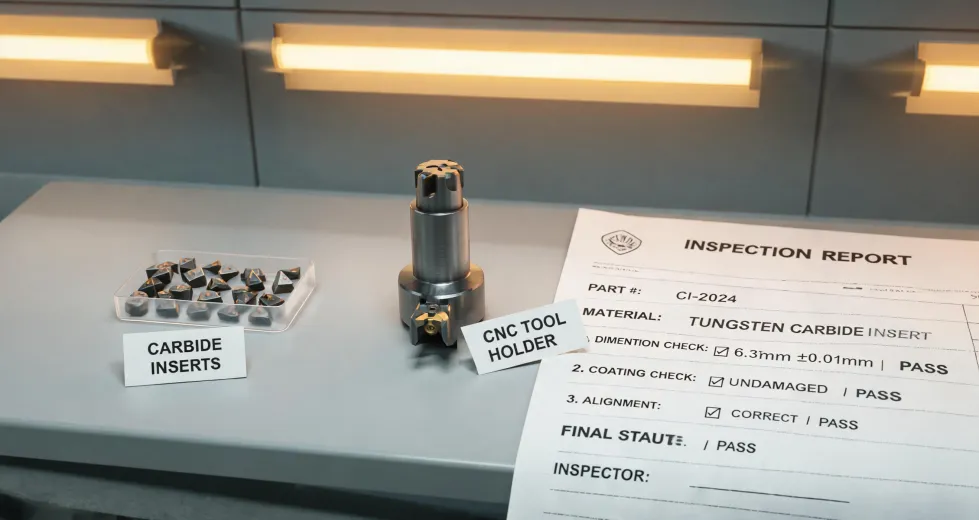
The shortest answer: Kennametal is my go-to for emergency CNC milling—but not for everything.
If you need a carbide end mill or a hydraulic tool holder today, Kennametal is the brand I trust most. I've handled over 200 rush orders in the last four years, and in that time, I've learned that for urgent milling operations, Kennametal's product availability and consistency beat out every other factor. But here's the thing—I don't recommend them for every emergency. For turning operations, especially with small batches, the calculus changes. Let me explain why.
My role: coordinating emergency machining for a job shop
I'm a production coordinator at a medium-sized CNC machining shop. When a client calls at 2 PM needing parts by 8 AM the next day, it's my job to figure out if it's possible, how much it'll cost, and what tools we need. I've triaged rush orders ranging from $500 to $15,000, for clients in aerospace, automotive, and even one time for a medical device company where the penalty for missing the deadline was $50,000.
In March 2024, we had a client call at 3 PM on a Friday, needing 50 custom machined brackets by Monday morning. Normal turnaround was 5 days. We sourced Kennametal's KCSM15 end mills same-day from a local distributor, paid a $200 rush fee on top of the $1,200 base tool cost, and delivered the parts Sunday evening. The client's alternative was a $50,000 penalty clause—they were thrilled.
Why Kennametal works for emergency milling
Everything I'd read about tool selection said you need to carefully match the tool grade to the material, coating, and operation. That's true in theory. In practice, for a rush order, availability beats perfection every time. And Kennametal's catalog—especially for end mills and carbide inserts—is deep enough that I can usually find a workable option locally.
The conventional wisdom is to always use a tool specifically designed for your material. For example, Kennametal's KCSM15 is optimized for stainless steel, and their KCSM40 is for hardened steels. In a rush, I've used KCSM15 for a job in 4140 steel—not ideal, but it worked. The finish was acceptable, and the tool life was reduced by about 20% compared to the ideal grade, but we got the job done. That's the reality of emergency work.
Another thing: tool holders matter. For a rush order, I won't risk a collet chuck. If I need a hydraulic tool holder—like Kennametal's Mega Hydraulic line—I'll source it even if it costs more. In Q4 2024, we had a job with a critical surface finish requirement. A standard collet chuck wouldn't hold the runout. We spent $800 on a hydraulic holder from a local distributor and delivered the job. The alternative was scrapping $3,000 worth of parts.
Where Kennametal falls short for emergencies
I went back and forth on whether to say this, but here it is: Kennametal's lathe tool inventory can be a problem for rush orders. For turning operations, especially with less common insert geometries, I've found lead times of 3-5 days for certain products. For example, in early 2024, we needed a specific Kennametal insert for a turning job—the customer's spec called for a Kennametal CNMG432 grade KCP25. Our usual distributor had none in stock, and the Kennametal warehouse quoted a 4-day lead time. We ended up going with a Sandvik substitute that was available same-day.
This gets into distributor territory, which isn't my expertise. What I can tell you from a production coordinator perspective is: if you need Kennametal turning tools urgently, check with multiple distributors. In my experience, smaller local distributors sometimes have stock that the big ones don't.
What I don't recommend Kenna for in an emergency
- Obsolete or niche geometries: Kennametal discontinued some tool lines in 2023. If you're holding an old spec, don't assume you can get a replacement quickly.
- Highly specialized coatings: If your job needs a specific coating like TiAlN for high-heat operations, verify stock before assuming availability.
- Tooling systems that require assembly: Kennametal's modular systems can be great, but in a rush, single-unit tools are safer.
How to decide in 10 minutes
When I'm triaging a rush order, here's my mental checklist:
1. What's the operation?
Milling? Strongly consider Kennametal. Their end mill stock is extensive.
Turning? Check with 2-3 distributors before committing to Kennametal.
2. What's the material?
Stainless steel or titanium? Kennametal's KCSM15 and KCSM40 are excellent.
Aluminum? Their aluminum-specific grades are good, but I've also used off-brand alternatives successfully—just be aware they might not last as long.
3. What's the time constraint?
Same day? Call local distributors first. National inventory might not help.
Next day? Kennametal's warehouse works well if you're near a regional hub.
3 days? You have time to shop around.
4. Can you substitute?
If Kennametal isn't available, consider these alternatives:
- Sandvik: Better for turning tool availability
- Iscar: Good for specialized geometries
- Generic Taiwanese inserts: Acceptable for non-critical jobs (I've used these when nothing else was available)
Honestly, what I don't know
I'm not a sales representative for Kennametal, so I can't speak to pricing anywhere except what I've paid on rush orders. From what I've seen, rush fees on Kennametal tools range from 10-30% premium over normal pricing, depending on the urgency and the distributor.
I've also never fully understood why some Kennametal products are consistently available while others aren't. My best guess is it has to do with their internal stock management—products with low demand might not be held in high quantities. If someone from Kennametal reads this and has insight, I'd genuinely love to hear it.
This gets into tool design territory, which isn't my expertise. For specific technical recommendations on which Kennametal grade to use for your exact application, I'd recommend consulting their online catalog or calling their technical support line.
Small orders: what to expect
When I was starting out, the vendors who treated my $200 orders seriously are the ones I still use for $20,000 orders. Kennametal's distributor network is generally good with small orders, but your experience may depend on which distributor you call.
In late 2023, a colleague of mine—who runs a small 2-person shop—needed a single Kennametal end mill for a rush job. The first distributor wouldn't even quote him, saying it was too small. He called a second, and they sold him the tool at list price with no minimum. The lesson: don't assume one shop's attitude represents the brand.
Small doesn't mean unimportant—it means potential. Today's $300 order might be next year's $30,000 contract.
Bottom line for emergency use
Kennametal is excellent for emergency milling operations. Their end mill inventory is reliable, their tool holders are consistent, and their technical support is responsive. For turning operations, especially with specific insert geometries, I'd check inventory before committing.
But here's the key takeaway that took me years to learn: in an emergency, the best tool is the one you can get today. If Kennametal isn't available, move on and don't regret it. The perfect tool that arrives next week is worse than the imperfect tool that arrives today.