I Thought Tool Holders Were Interchangeable. A Failed Shoulder Milling Run Changed That
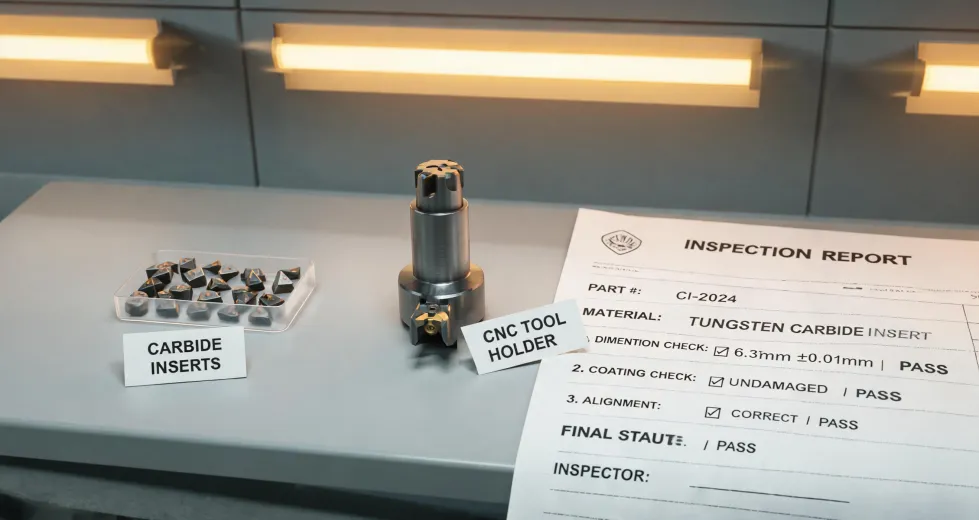
I Took Over Purchasing in 2020 — and Made a Dumb Assumption
When I took over purchasing for our 45-person machine shop in 2020, I made an assumption I'm now embarrassed to admit: a tool holder is a tool holder. It clamps the cutting tool, fits the spindle, end of story. So why spend three times as much on the Kennametal version when a marketplace listing is 40% cheaper?
I manage all cutting tool ordering for the shop — roughly $200,000 a year across seven or eight vendors. I report to both operations and finance, which means when the floor stops, I'm the one explaining to the VP what went wrong. In the beginning, I bought tool holders the same way I bought printer paper: lowest price, fastest delivery, done.
That's how a box of "Halligan" tool holders ended up in our tool crib. I'd never seen the brand at a trade show, and I couldn't find much documentation on it, but the price was hard to argue with. The machinists grumbled about them from day one. I ignored it. (Note to self: when three machinists grumble on day one, they're not being dramatic. They know the tools.)
The Shoulder Milling Run That Changed My Mind
The wake-up call came in March 2023. We landed a shoulder milling job — a few hundred stainless steel parts from a repeat aerospace customer. The job called for precise 90° shoulders and a good surface finish, the kind of work we normally run without breaking a sweat.
Mike set it up on the Haas VF-4 with a Kennametal shoulder milling cutter. For the first few parts, everything looked right. Then the first inspection report came back with chatter marked in three places. Two parts were already scrap by the time we caught it.
I remember Mike pulling the tool out of the holder and holding it up to the light. "The tool body is fine. The inserts are fine. This holder has runout you can feel at the flange," he said. "Runout like this kills shoulder milling."
I didn't even know what runout was. Not really.
That word sent me into a research spiral. Runout is how much the cutting tool wobbles off the true centerline when it's spinning. A small amount of runout is normal. A large amount means the flutes aren't cutting evenly — one flute takes a huge chip load while the next barely touches, the tool vibrates, and you get chatter marks instead of an even surface. On a shoulder milling operation, where the tool uses its periphery to cut that 90° edge, the holder is not a passive piece of steel. It's the foundation of the cut.
What the Kennametal Tool Holder Catalog Actually Taught Me
I wish I'd known that the Kennametal tool holder catalog is a technical manual, not a price list. I spent four evenings searching "kennametal shoulder milling" and reading through it before I felt like I understood anything. Here's what stuck:
Grip types aren't interchangeable
Side-lock holders push a set screw against the tool and are fine for heavy roughing. Collet chucks are more flexible across different tool diameters. Shrink-fit and hydraulic holders grip the tool with zero moving parts and keep runout extremely low. Kennametal's catalog specifies hydraulic holders with runout as tight as 0.003 mm — about 0.00012 inches. Compared with the loose marketplace holder we'd used on the shoulder job, that's a difference you can measure in surface finish.
Taper standards are not suggestions
Our spindles are CAT40, which follows the ASME B5.50 standard. BT40 looks almost identical but follows JIS B6339 and isn't interchangeable — one common mistake in shops that mix machining centers from different regions. HSK is another system entirely, defined by ISO 12164. When we bought the Halligan holders, I didn't check which "standard" they were really made to. That's on me.
The cutting tool and the holder work as a system
Our finishing work often uses a 4 flutes end mill ball nose, because four flutes balance the cutting load better than two or three and the ball profile lets us generate smooth contours. But the best end mill in the world won't hold a tolerance if it's clamped in a holder that can't hold center. The tool is only half the system. I also learned that Kennametal structures its catalog data in a way consistent with ISO 13399, so a purchasing person can transfer specs into our ERP without guessing at part numbers — that saved me hours when I finally rebuilt our tool crib BOM.
A Quick Detour Through 3D Printing Websites
While I was in research mode, another question kept landing in my inbox: "what are some 3d printing websites?" Mike had printed a drill jig prototype on a hobby printer, and we wanted to see if we could order better fixtures online. I tried a couple of services, and honestly, they're great for low-risk plastic parts — we still use one for split gauges and layout fixtures.
But I learned the same lesson there that I learned with tool holders: know the limit of the technology. A 3D-printed prototype is perfect for checking a design idea. It's not the right answer for a rotating interface that has to transfer several horsepower through a carbide edge. The people who claim 3D printing will replace conventional cutting tools are comparing a hobby framing nailer to a foundation drill.
That's also where I learned the broader point about specialty suppliers. I had a conversation with a Kennametal applications engineer about a different problem we were fighting, and he flat-out told me that for our specific application, another approach might serve us better. I asked him if that wasn't leaving money on the table. He said something like, "We don't have to be the best answer for every question. We just have to be the honest answer for most of them."
That honesty earned more trust than any product marketing I'd seen in five years of buying tooling.
What I'd Tell Another Buyer About to Save 40%
We replaced the Halligan holders — the ones that made the machinists grumble — and re-ran the shoulder milling job. The surface finish came out clean. The job shipped on time. We lost a few thousand dollars on scrap and two days of schedule, but honestly, it saved me from a much bigger problem down the road, because I was going to keep buying cheap holders forever until something worse failed.
I don't have hard data on how many job shops are still buying suspiciously cheap tool holders off marketplaces. What I can say anecdotally: after I posted about my mistake, a friend of mine forwarded me the exact same Halligan listing and asked if it was worth it. I told him he'd regret it. I hope he listened.
Now I buy tooling the way I should have from day one. I check the catalog for runout specs before I check the price. I verify the taper standard against what's actually on the spindle. And if a supplier tells me they can do everything perfectly, I move on to someone who can tell me what they actually specialize in.