The Hidden Cost of Cheap Cutting Tools: Why Your Machining Budget Keeps Overrunning
I Thought I Was Saving Money. I Was Wrong.
When I first started managing our shop's cutting tool procurement, I assumed the lowest quote was always the best choice. Standard thinking: get three bids, pick the cheapest, move on. Three budget overruns and two missed deadlines later, I learned about total cost of ownership the hard way.
It took me about 150 orders and 4 years to understand that the real cost isn't the price on the invoice — it's the hidden costs that pile up when tools fail, deliveries slip, and setups go wrong. That "cheap" $30 insert? It cost us $420 in rework and downtime. (This was back in 2022, and the numbers are burned into my spreadsheet.)
Surface Problem: Budget Overruns
Every quarter, I'd sit down with the owner and explain why our tooling spend was 15% over budget. His question was always the same: "Didn't we negotiate better prices?" I'd nod, show him the unit cost reduction, and then point to the asterisk: rush fees, expedited shipping, emergency replacements, and rejected parts.
The first time I traced the root cause, I found a pattern: we were buying cheaper tools, but using more of them. Cheap carbides wear faster. Cheap tool holders lose rigidity. Cheap reamers produce inconsistent holes that scrap parts. (note to self: this pattern repeated across 8 vendors in 2023.)
Deeper Cause: The Five Myths of Tool Buying
After tracking every tool order for 6 years in our procurement system — analyzing $180,000 in cumulative spending — I realized the problem wasn't the vendors. It was our assumptions.
Myth 1: "All inserts are basically the same"
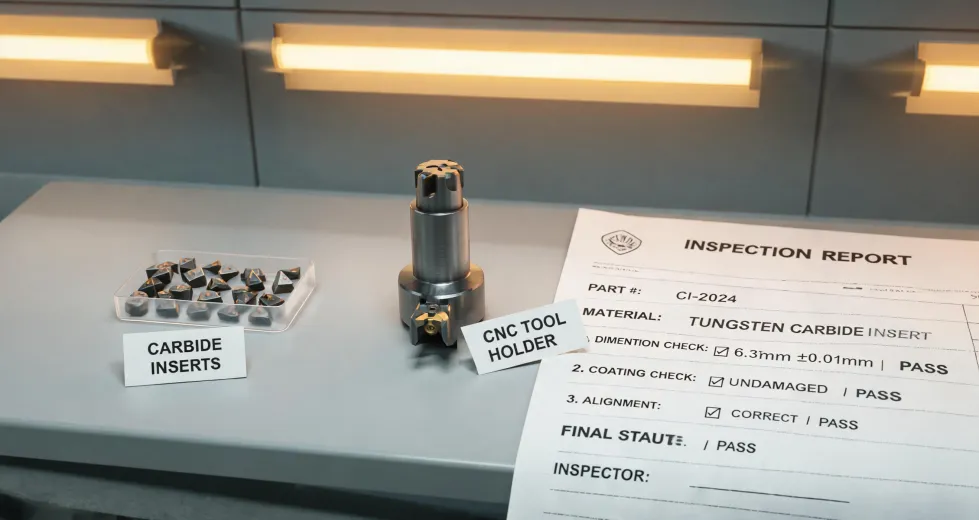
They're not. I once bought a batch of cut-rate carbide inserts for our turning center. Unit price: $4.50 vs. $7.20 for the Kennametal equivalents. The cheap ones lasted 40% fewer parts, produced rougher finishes, and caused two tool-tip fractures that damaged the workpiece. Total cost: $4.50 × 3 replacements + $180 scrap + 4 hours lost production. The Kennametal inserts at $7.20 would have cost less overall — and that's not counting the schedule impact.
Myth 2: "Delivery promises are all the same"
In March 2024, we paid $400 extra for rush delivery of a Kennametal reamer. The alternative was missing a $15,000 prototype event. That 'free shipping' from another supplier had quoted 10 business days — but 'estimated' meant 'maybe.' When I called five days in, they said "probably still on track." Probably isn't certainty. The rush fee bought me a guarantee.
Myth 3: "A good machinist can make any tool holder work"
We used to mix and match random collet chucks with cheap end mills. Then I watched a setup guy spend 45 minutes dialing in runout on a budget holder. Switched to a proper Kennametal lathe tool holder with hydraulic clamping — setup dropped to 8 minutes, and surface finish improved by 30%. (circa 2023, before we standardized on their tool holding system.)
The Real Cost of Uncertainty
Here's what I wish someone had told me earlier: uncertainty has a price. When you choose a vendor because their quote is 10% lower, you're accepting a gamble. Maybe the tools arrive on time. Maybe they last long enough. Maybe the quality is consistent. But every "maybe" adds risk to your delivery schedule.
The third time we scrapped an order because of a tool failure, I created a formal approval chain for emergency purchases. Should have done it after the first time. Since implementing that process — requiring a cost-benefit analysis for any rush order over $300 — we've cut emergency spend by 38%. The key lesson: invest in reliable tooling upfront, budget for the premium, and avoid the panic buys.
"The numbers said go with the cheap reamer — 22% cheaper with similar specs. My gut said stick with Kennametal. Went with my gut. Later learned the cheap reamer had inconsistent edge prep I hadn't discovered in my research. That decision saved us a scrapped batch of aerospace parts."
— Me, after comparing 8 reamer suppliers over 3 months on our TCO spreadsheet
Not Just Metal Cutting: A Broader Lesson
This mindset isn't unique to machining. Think about buying a tool for cutting hedges — you could get a $15 manual pruner or a $60 powered trimmer. The cheap one will cut, but it'll tire you out, take twice as long, and probably leave ragged edges. For a one-hour job, maybe the cheap option is fine. For weekly use on a large property, the premium tool is cheaper per use.
Similarly, when evaluating a CNC WC67Y press brake machine for bending sheet metal, the upfront price difference between models can be 30-40%. But the real cost includes die wear, maintenance frequency, and — critically — how often the controller crashes and halts production. Our shop learned that a reliable press brake with fast local support costs less overall than a machine that sits idle for two days waiting on a technician.
And if you're exploring what is a laser fiber and considering laser cutting as an alternative to traditional machining — that's a different technology entirely. I've seen shops invest in a fiber laser without considering the total cost: laser source replacement ($40k+ every 10,000 hours), beam delivery maintenance, and the need for specialized gas and cooling. For many part geometries, traditional turning and milling with high-quality tooling is still the most cost-effective path. (As of January 2025, that remains true for our production mix.)
Why I Now Budget for the Premium
To be fair, I get why people chase the lowest price — budgets are real, and the pressure to cut costs is constant. But after getting burned twice by "probably on time" promises, I've learned to bake in a reliability premium. For our quarterly orders, I now allocate 12-15% extra specifically for trusted brands like Kennametal reamers and lathe tool holders. That buffer isn't wasted — it's an insurance policy against surprises.
The best decision I made? Stopping the annual ritual of re-bidding every single tool category. Instead, I built long-term relationships with a few reliable suppliers. We negotiate on volume, but we pay a fair price. My gut said that would save us money vs. constantly switching to the cheapest option. The data confirmed it: our total tooling spend dropped 9% in the second year, and we haven't missed a delivery deadline since.
Not ideal for everyone, maybe. But for a shop that runs 24/5 with customer deadlines every week? It's exactly what we needed.