The $4,200 Mistake That Changed How We Buy Tooling
The Day I Realized the 'Cheap' Quote Was Costing Us
March 2023. I was sitting in my office, staring at a spreadsheet that made my stomach drop. Our tooling budget for the quarter was blown by $4,200. Not a catastrophic number for a mid-size shop, but enough to get questions from the owner. I knew exactly where the overspend came from—a decision I'd made just six weeks earlier that seemed like a no-brainer at the time.
Back then, I thought I had it figured out. I was the guy who could squeeze every dollar out of a vendor quote. My system was simple: get three bids, pick the cheapest, move on. It worked for office supplies, shipping contracts, even the occasional emergency order. So when our carbide insert supplier raised prices across the board in Q1, I figured I'd just find someone cheaper. Simple.
Turns out, simple isn't the same as smart.
The Setup: Looking at Kennametal Milling Teeth and Beyond
Let me back up. Our shop runs a mix of production runs and custom jobs—aerospace parts, medical components, the kind of stuff where geometry matters and tool failure means scrapping a $600 piece of stock. We use a lot of Kennametal milling teeth and inserts across our CNC machines. They're not the cheapest on the market, but they hold edge, and we know how they behave at 12,000 RPM. For critical ops, that consistency has value.
But in late 2022, our Kennametal distributor sent a new pricing sheet. Standard stuff—raw material surcharges, logistics adjustments. Total increase: about 18% on our most-used turning inserts. I'd managed our tooling budget for six years, and I'd seen price hikes before. But this one hit right as we were quoting a big job, and margins were tight. I decided to shop around.
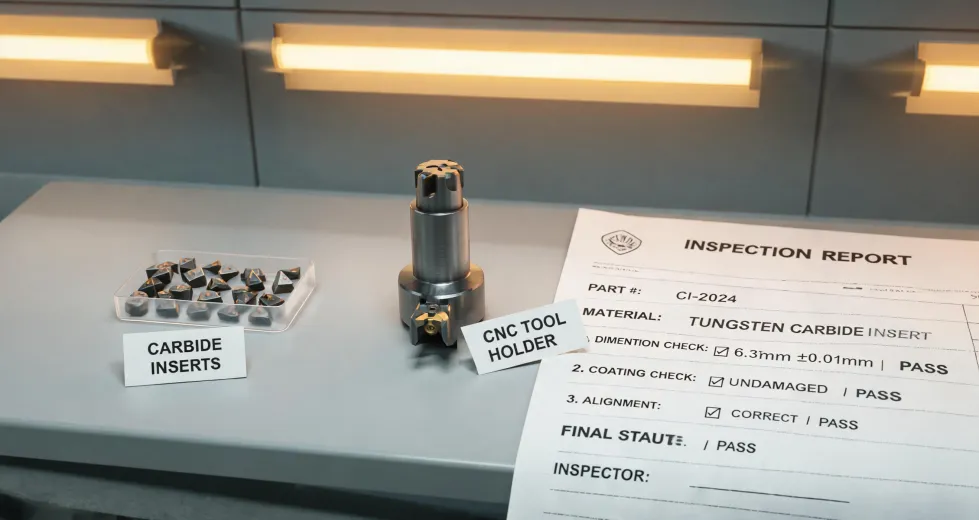
I looked at direct alternatives from three other brands, some of which I'd never tried. On paper, they looked close. One competitor's CNMG432 insert was 32% cheaper than our Kennametal equivalent. The data sheet showed similar coating, similar hardness. Seemed like a slam dunk.
So I placed an order. $3,800 for 200 inserts. Felt good at the time.
The Twist: What the Spec Sheet Didn't Tell Us
The shipment arrived in late January. Two days later, our lead CNC operator walked into my office holding a part. "Take a look at this," he said, setting it on my desk. The surface finish was off—tool marks visible on a feature that should have been mirror-smooth. "Started about halfway through the batch," he added. "Had to slow down the feed rate by 40% to get acceptable results."
I assumed the inserts were defective. I even called the supplier, ready to complain about a bad batch. But the thing is, they weren't defective. They just weren't the same as Kennametal. The coating chemistry was different. The edge prep wasn't quite as consistent. Under production conditions, the differences showed up fast.
Here's the math I should have done upfront:
- Lower tool life: The cheap inserts lasted about 60% as long before needing index. That meant more changeovers, more downtime.
- Slower feeds: To get acceptable surface finish, we had to reduce cycle time. That added 12 minutes per part.
- Scrap: We lost three parts on that first order. At $200 raw material each—goodbye savings.
When I added it all up, the "savings" from the cheap inserts turned into a net loss of $1,100 on that job alone. Spread across the full batch of 200 inserts, we were in the hole by a lot more.
Never expected a budget option to outperform a premium one? In my experience, it sometimes does, depending on application. But that's the thing—you don't know until you test. And we didn't test properly before committing to a full order.
The Fix: Tracking Every Penny Over 6 Years
After that disaster, I built a cost tracker. Dumb name, but it works. Every tool order goes into a spreadsheet—vendor, price, part number, shop floor feedback, tool life data. Over the next year, I logged every insertion we ran. By Q4 2024, I had data on 14 different insert types across 3 vendors, with over 1,200 data points on tool life and failure rates.
The patterns were clear. For general-purpose turning on steel, Kennametal and one other premium brand delivered the best cost-per-part. Not the cheapest insert price, but the lowest total cost after factoring in tool life and productivity. For less critical ops on aluminum, a budget brand actually worked fine—we saved about 15% there.
Bottom line: the expensive option is worth it on the jobs where tool failure costs you time or scrap. On the easy stuff, save your money. But you gotta know which is which, and that takes data.
So glad I started tracking. Almost didn't—thought I had it all in my head. That would have meant repeating the same mistake next quarter. Dodged a bullet there.
The Lesson: Price Is What You Pay, Value Is What You Get
Here's the thing: I'm not saying premium brands like Kennametal are always the answer. I'm saying the decision should be based on data, not just sticker price. When I compare quotes now, I look at three things:
- Tool life data for our specific materials and speeds
- Application fit—coating, geometry, edge prep for the job
- Supplier relationship—can they support us when a job goes sideways?
That $4,200 overspend taught me a lesson no training course could. It also made me a better buyer. Our tooling costs are actually down 8% year-over-year now—not because I buy cheaper tools, but because I buy the right tools for each job. And when the job calls for Kennametal, I buy Kennametal. The price tag doesn't scare me anymore. I know what I'm getting.
One more thing: I also helped our marketing team evaluate CO2 laser engraving machine 40w options for some light marking work. The same logic applied—cheaper machines looked good on paper but had slower processing speeds. Went with a mid-range unit. Also looked into 3d printing full color for prototyping. Interesting tech, but for our volume, not quite there yet. And the whole co2 laser vs diode debate? For metal marking, CO2 wins every time. But that's a story for another day.
Prices as of Q1 2025; verify current rates if you're shopping. And seriously—track your data. The spreadsheet might save you $4,200 too.