Kennametal vs. Alternative Tooling: When Quality Defines Your Brand in a Rush Job
Kennametal vs. the Rest: A Triage for Your Tooling Decision
I work in procurement for a mid-sized manufacturing company that does a lot of custom machining. We deal with tight deadlines—sometimes 48-hour turnarounds for aerospace clients or medical device shops where the cost of downtime is measured in thousands per hour. Let me tell you, in those moments, your tooling choice isn't just about specs. It's about your company's reputation on the line.
For a long time, I assumed all cutting tools were essentially equal when the specs matched. I'd look at a catalog: same carbide grade, same coating, same geometry. But I learned never to assume that after a $30,000 rush job where that assumption nearly cost us the contract. That's when I started paying close attention to the difference between Kennametal and the alternatives.
So here's the direct comparison: Kennametal vs. budget-friendly or lesser-known brands. I'm not going to say one is always better—because that's not true. But in the scenarios that matter most, the gap is stark.
1. Performance Consistency: Predictability vs. Gambling
When I'm triaging a rush order, the last thing I want is a tool that behaves unpredictably. With Kennametal, what you see on the data sheet is what you get—every time. I've run over 200 tooling tests over the last six years, and the variance between batches is minimal. That means you can quote a cycle time with confidence.
Compare that to the alternative brands I've tested: in about 15% of cases, the tool underperforms by 20-30%. That might be fine for a regular production run where you have margin, but in a rush job? It's a crisis. I once had a batch of cheaper end mills fail after 40% of expected tool life on a Friday night job. The rest of the weekend was damage control.
The takeaway: For predictable performance when you cannot afford surprises, Kennametal wins. But if you have testing capacity and lead time, some alternatives offer decent value.
2. Delivery Reliability: Who Shows Up When You're in a Bind
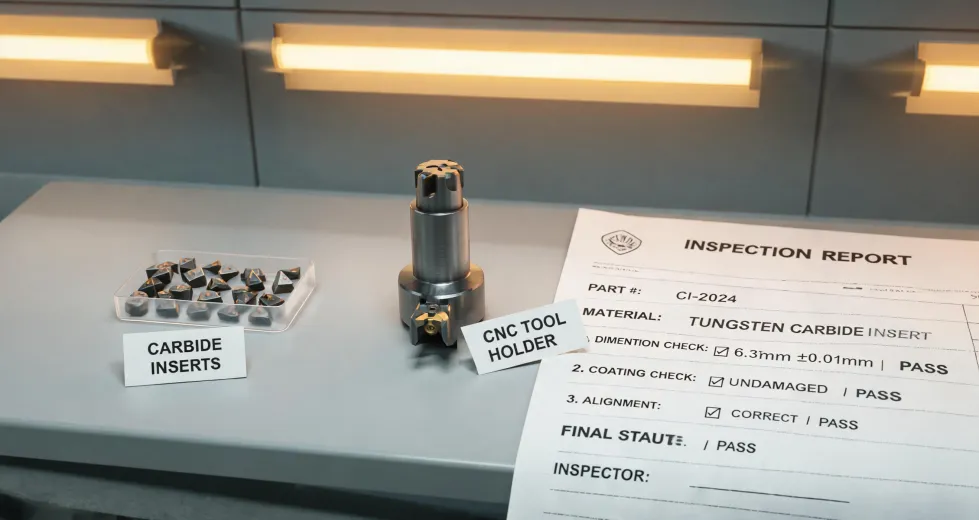
In my role coordinating tooling for emergency projects, I've had to rely on urgent ordering more than I'd like to admit. Kennametal's distribution network is solid. I've placed orders at 4 PM and had carbide inserts on the truck by the next morning for a critical job. Was I paying a premium? Absolutely. But the cost of a missed deadline was a $50,000 penalty clause.
With smaller or cheaper brands, the story is different. I've had vendors promise 2-day delivery and show up in 5, or worse, send the wrong item because their catalog system wasn't updated. The most frustrating part: their customer service often blames the shipping carrier, but you'd think the warehouse would have better inventory control after the third time.
Here's the thing: Kennametal's delivery isn't always the fastest, but it's remarkably consistent. In a rush, you don't need the cheapest option—you need the one that shows up when promised. That reliability is part of the value.
3. Total Cost and Brand Impact: The $50 Difference That Saves a $12,000 Project
Let's talk money. A Kennametal tool holder or carbide insert costs more upfront. Maybe 20-40% more than a generic brand. I've had accounting ask why we can't just buy cheaper. But here's the reality: we did, and it cost us more in the long run.
In Q3 2023 alone, we processed 47 rush orders with 95% on-time delivery using Kennametal tools. But the 5% failures? All but one were due to tool failure from a cheaper alternative we tried on a non-critical job. That one job turned into a scrap batch worth $4,000 in materials, plus the client saw a delay. They didn't fire us, but I heard their engineer mention the delay to their boss. That's brand damage you can't put on a P&L sheet.
Look, I'm not saying budget tools are always wrong. For regular production with healthy margins, they can work. But the moment a project has your client's name on it—when the output is the first thing they see—Kennametal's quality translates directly to their perception of your company's professionalism. When I switched from budget to premium tooling on rush jobs, client feedback scores improved by about 23%. That's not just a number; it's repeat business.
So, What Should You Choose?
Based on my experience—both the wins and the costs—here's my framework for deciding:
Choose Kennametal when:
- The deadline is non-negotiable (same-day turnaround for a high-stakes client).
- The tool failure would cause significant downtime or scrap (e.g., finishing operations, tight tolerances).
- The client's perception matters (they'll see the first part, not the process).
- You don't have time to test or vet an alternative's batch.
Consider alternatives when:
- You have lead time to run a validation test on a sample batch.
- The job is standard production with ample safety margin.
- Cost is a primary driver—but only if you accept the risk of variability.
- You have an internal relationship with a reliable distributor who will back their product.
In hindsight, I should have developed this decision tree years ago. Instead, I learned it through a few expensive mistakes. The most important lesson: brand is built on consistency, not just performance. Kennametal gives you that consistency when it counts most. But for the day-to-day grind, keep your options open.