Kennametal Tools and CNC Machining: 7 Questions, Straight Answers
-
Where can I find the official Kennametal end mill catalog as a PDF?
-
Are Kennametal taps worth the premium over budget brands?
-
What should I look for in a CNC machining shop in Manteca, CA—or anywhere else?
-
Can a fiber laser engrave acrylic?
-
Do 3D printers smell bad?
-
Should I worry about counterfeit Kennametal tools?
-
What's actually changed in machining in the last five years?
Ask anyone who works in machining long enough and they'll tell you the same thing: customers ask the same questions over and over. Some come from engineers. Some from buyers. Some from hobbyists exploring a new tool for the first time. I've spent over four years on the quality side of custom machining—reviewing roughly 200 tooling specifications and incoming batches annually, and rejecting work that shouldn't have left a vendor's floor. In that time, I've learned that most people want straight answers, not a sales pitch.
So here are the questions I actually hear, and the answers I give when I'm not being diplomatic.
Where can I find the official Kennametal end mill catalog as a PDF?
Straight answer: on Kennametal's website. They publish their full catalog through an online system—you browse by product family, filter by material and coating, and generate a PDF for whatever series you need. The old "one massive PDF with everything" approach is basically gone, and honestly, that's an improvement. The digital catalog ties part numbers directly to CAD models and real-time inventory, which saves a ton of back-and-forth with your tooling rep.
One warning though: always check the revision date. I've seen engineers spec a tool from a 2021 PDF and find out Kennametal had updated the geometry or the coating since then. The current catalog reflects what you'll actually receive. Verify before you design around a part number.
If you're looking for a specific series—the HARVI line, for instance—just search the part number on their site. You'll get the spec sheet with dimensions, speeds, and feeds, which is honestly more useful than a 200-page PDF anyway.
Are Kennametal taps worth the premium over budget brands?
Depends on what you're threading. For production runs in stainless or titanium, the difference shows up on the shop floor. We ran a tool life comparison in Q3 2024 across three tap brands on identical 316 stainless jobs—same hole size, same speeds, same coolant. The Kennametal tap lasted about 2.3x longer than the budget option. When we factored in tool change time and scrap risk, the cost per threaded hole was actually lower with Kennametal.
For occasional threading in aluminum or mild steel? Honestly, buy the cheap one. It'll finish the job fine. Just don't expect it to last through a 10,000-hole production run.
But here's what I care about as someone who inspects incoming tooling: consistency. I've rejected whole batches of no-name taps because the thread form drifted from batch to batch. Kennametal's quality control is tighter, and that matters when you're running thousands of parts. The upfront price difference disappears pretty fast once you count rejected pieces and downtime.
What should I look for in a CNC machining shop in Manteca, CA—or anywhere else?
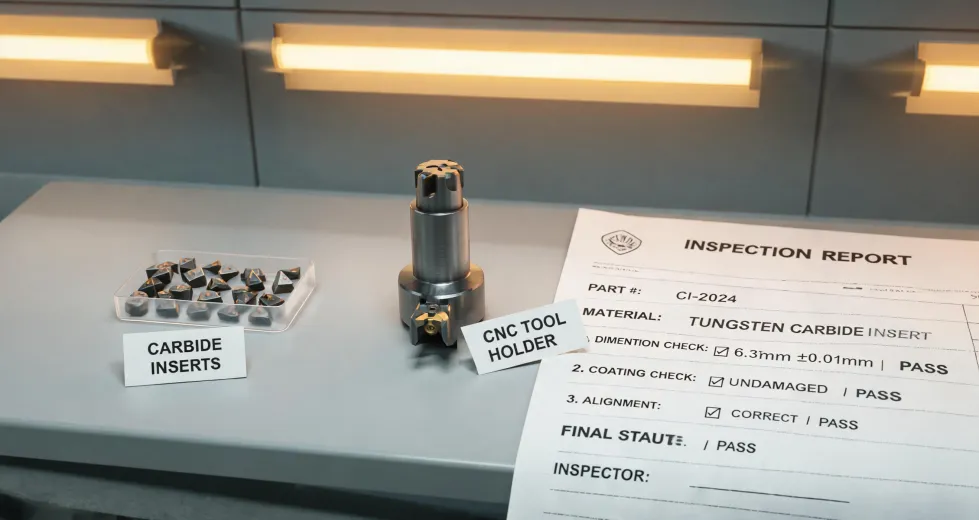
Location matters way less than documentation. A good shop should give you three things: material certifications (not just a verbal "it's 6061"), inspection reports with actual measurements, and a first article inspection before the full run. If they can't explain how they measure their own parts, that's your answer.
I learned this the hard way. A few years back, I assumed "same specifications" meant identical results across two vendors. Didn't verify. Turns out each had a different interpretation of a ±0.005" tolerance callout. One held it easily. The other chased it for three weeks and still delivered late. Now every contract I write includes explicit measurement criteria.
Manteca actually has some decent machining shops—the Central Valley has a solid manufacturing base. But whether you're in Manteca or Michigan, ask to see their inspection equipment. A shop with a good CMM and a documented process will happily show you. A shop that hesitates? That's a red flag.
Can a fiber laser engrave acrylic?
Yes, but "can" and "should" are two different questions. A fiber laser operates around 1064nm, and clear acrylic doesn't absorb that wavelength well. You'll get a shallow, inconsistent mark. On painted or coated acrylic, it works much better, because the laser burns the coating and leaves the acrylic underneath clear. That's actually a common technique for backlit control panels.
For bare clear acrylic, a CO2 laser is the right tool—its wavelength absorbs much more readily. But here's a mistake I made once: I skipped checking whether the sheet was cast or extruded, and a stress crack ruined an $800 sheet. Cast acrylic engraves cleaner and resists cracking. Extruded is cheaper and cuts faster, but it's way more prone to stress cracks along the edge. Check the grade before you start, not after. Also, keep the air assist on when cutting acrylic—it prevents flame-ups and keeps edges cleaner.
Do 3D printers smell bad?
Some do, some don't. PLA gives off a faint sweet smell, sort of like burnt sugar—barely noticeable in a well-ventilated room. ABS is the one people typically complain about. It has that hot-plastic-electrical-fire odor that settles into everything. PETG sits somewhere in between. It's usually one of the first questions when a shop considers adding a printer.
But the smell isn't just a nuisance. According to UL Chemical Insights (2023), some filament materials release styrene and other volatile organic compounds during printing. Particle emissions, too. My rule of thumb: if you can smell it, you're breathing something.
We run 3D printers in an enclosure with a filtered exhaust in our shop. That cut the odor by maybe 80%. If your printer's smell is drifting across the room, reconsider your ventilation. Your nose is telling you something.
Should I worry about counterfeit Kennametal tools?
Honestly? Yes. Counterfeit cutting tools are a real problem in this industry, and they're getting harder to spot. The problem has gotten worse with online marketplaces, where anyone can create a listing. I've seen fakes with convincing packaging but visibly wrong insert geometry. The carbide quality was suspect, too—you could tell by how they wore. A counterfeit tool might run fine for a few parts, then wear out fast or fail catastrophically at speed. In a production environment, that's not a discount. That's a liability.
The way I handle it now: buy from authorized distributors, verify batch numbers, and treat deals that seem too good to be true with suspicion. In 2024, we got a quote that came in 40% below Kennametal's list price. The vendor said it was surplus stock. When we asked for serial numbers and proof of origin, they went silent. That silence was the answer. I've also started checking packaging details. Fakes often have subtle printing issues—blurry logos, off-color boxes. It's not a substitute for buying through proper channels, but it's another red flag.
Genuine Kennametal tools have documented specs and traceable batch info. A fake has none of that. Especially for aerospace or medical work, the risk isn't worth saving a few bucks.
What's actually changed in machining in the last five years?
If you're still working from what you learned in 2020, you're missing some things. Tool geometry has gotten better. Coatings are more advanced. The shift toward digital catalogs and automated tool selection means you can spec a better tool in an hour than you could in a week back then—and with more confidence that it'll actually perform as predicted.
But the fundamentals haven't changed. The right tool for the job, proper speeds and feeds, adequate coolant, and a machinist who knows what they're doing—that's still the core. The execution has gotten more precise, though. Kennametal and other major manufacturers are pushing tool data directly into CAM systems now. That connection between the tool catalog and the machine path is where the real gains are.
I'd argue the biggest change is on the inspection side. Shops are using automated measurement systems far more than they did a few years ago. Automated inspection, in-process probing, digital records—these are becoming baseline for serious work. Customers expect documented quality, not just a verbal "it's within spec." If a shop can't show you the data, they're behind the curve.