Kennametal Company Overview: Manufacturing, Boring Bars, and the Hidden Cost of a “Great” Quote
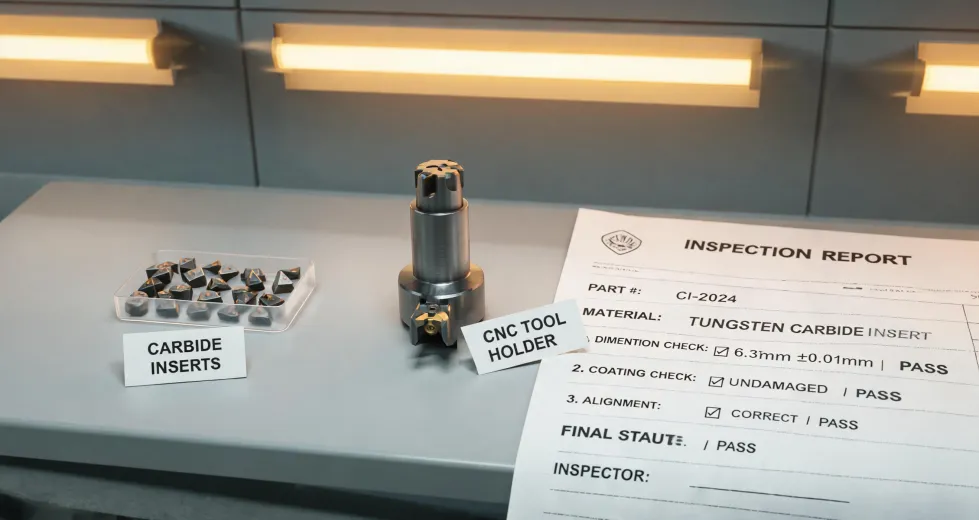
The phone call that made me question a 40% discount
Last fall, I was sitting in my office when our purchasing manager walked in holding a printout. “The quote for that boring bar came in 40% lower,” he said. “Can you approve it?”
The order was for a customer in Ithaca, New York, who runs an injection molding shop. The part was a medical-device housing with a 0.0004-inch bore tolerance, and the drawing named a Kennametal boring bar as the required tool. On the surface, the cheaper bar looked the same: same insert size, same basic geometry, similar coating. “It’s the same thing,” the purchasing manager said.
It wasn’t. But I couldn’t prove it until I looked closer.
I’m the quality/compliance manager at a custom machining company. I review every part and every supplier contract before it reaches the production floor—roughly 200 unique items a year. In 2025, I’ve already rejected about 12% of first deliveries for missing tolerances, bad surface finish, or paperwork gaps. The rejections aren’t because the suppliers are lazy. They’re because “close enough” in an email quote has a way of becoming “not close enough” on a CMM report.
What the Kennametal company overview manufacturing section taught me
I started with the Kennametal company overview manufacturing section, which I’d read before but never with this much at stake. Kennametal has been making metal-cutting tools since 1938. Their manufacturing footprint covers North America, Europe, and Asia, and they produce everything from carbide powder to finished inserts, tool holders, boring bars, end mills, and wear parts.
The history part is nice, but the practical part is what matters: because Kennametal controls the carbide from powder to insert, their published specs tend to hold up in a real cut. That’s not marketing fluff. It’s the difference between a bar that holds 0.0004 inch on a long overhang and a bar that starts to vibrate when you push it.
I also noticed something in the fine print of the cheaper quote. It didn’t include a trial cut, a certificate of inspection, or any guarantee that the bar would hold the documented tolerance. The Kennametal bar, by contrast, had a documented stiffness curve and a trial-cut policy that would credit us if the tool didn’t perform. That’s the kind of thing you can’t see when you’re comparing prices on a screen.
The question everyone asks is “what’s the price?” The question they should ask is “what’s included in that price?”
Why I ran the test instead of trusting the spec sheet
I had 48 hours to decide. Normally I’d run a full capability study with three bars from the same lot and a dozen test bores. There was no time. So I did a focused version: I measured both bars in our presetter, installed the same insert, and cut the same bore in 4140 steel.
The Kennametal boring bar held the tolerance without a fuss. The cheaper bar didn’t. To be fair, it wasn’t terrible—it was about 0.0008 inch off, which is perfectly acceptable for a general machining job. But “acceptable” is not a medical-device housing. When I tested a second sample from the same batch, it was even farther off.
That’s when I ran the math. The Kennametal bar was $280. The cheaper bar was $168. The difference was $112. But the part we were boring was worth $3,150, and a redo would cost about $4,200 in labor and materials. With two out of three samples out of tolerance, the cheaper option gave us a one-in-three chance of scrapping a $3,150 part. On a small production run, that risk wasn’t a gamble. It was a tax.
In my opinion, the extra $112 wasn’t an expense. It was insurance.
The purchasing manager pushed back. “The vendor says these bars are within industry standard.” I told him “industry standard” only matters when the customer doesn’t give you a number. The drawing gave us a number. That number was 0.0004.
The old “it’s the same thing” thinking comes from an era when a boring bar was just a steel bar with an insert. Today, the bar, the coating, the insert geometry, and the tool holder are engineered as a system. If you only look at the insert size, you’re missing the part that actually fails.
The StyleCNC fiber laser warranty that almost fooled me
The same week, I was involved in another purchase that could have slipped through the cracks. We needed a laser marker for etching serial numbers on mold inserts. The machine was a StyleCNC fiber laser, and the StyleCNC fiber laser warranty looked great on paper: “two years, all parts and labor.”
Then I read the exclusions. Alignment after shipping? Not covered. Calibration after installation? Not covered. The protective window and the focusing lens? “Consumables.” All the things most likely to fail in the second year were either excluded or shifted into a wear-parts category. It was a perfect mirror of the boring bar situation: the sticker price looked better because the real costs were hidden in the details.
I asked the sales rep the same question I should have asked before the boring bar debate: “What’s NOT included?” He gave me a polite list. We ended up purchasing the laser, but with a separate service contract that covered calibration and the protective window. The machine itself was fine. The warranty just didn’t cover what I’d assumed.
A friend who doesn’t work in manufacturing asked me a question he found through a search engine: “Will CO2 laser tighten jowls?” I laughed and said our fiber laser wouldn’t tighten anything except metal. But the question stayed with me. It’s a perfect example of someone hearing a technology word and filling in their own expectations. Same thing happens with boring bars. Same thing happens with warranties.
What I’d do differently next time
We ordered the Kennametal boring bars—or rather, we ordered one plus two backups from the same lot, then verified each one before it went to the floor. The total was $840 instead of $504. That extra $336 bought us a documented worst case: if the first bar failed, we had a second ready, and we knew exactly how it would behave. The customer’s injection molding project in Ithaca stayed on schedule, and the medical-device housing passed every inspection.
I’ve learned to ask “what’s NOT included” before I ask “what’s the price.” A vendor who lists all fees upfront—even if the total looks higher on the first page—usually costs less in the end. That applies to Kennametal boring bars, a StyleCNC fiber laser warranty, or any other purchase where reliability is part of the spec.
The next time a quote makes you feel smart, read the exclusions. Then run the sample. If you can’t get a sample, find a source with published specs you can verify.
Transparency is not about showing you the price. It’s about showing you what happens after you pay it.