Jarvis Cutting Tools vs Kennametal Comparison: A Procurement Manager's TCO Breakdown (2025)
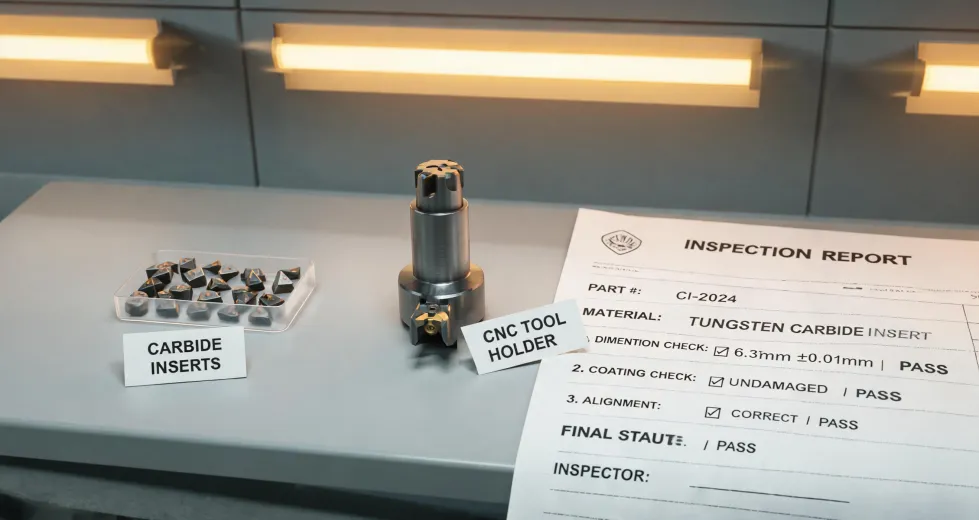
After six years of managing our shop's cutting tool budget—and tracking every invoice in a TCO spreadsheet—I standardized roughly 80% of our milling and turning tooling on Kennametal. The reason isn't brand loyalty. It's cost per good part. Across high-wear operations, Kennametal came in 11–18% lower than Jarvis Cutting Tools once tool life, documentation, and surface finish capability were included.
If you're comparing Jarvis Cutting Tools vs Kennametal, start with your dominant workpiece material and the actual operation you're running, not the price per insert. In many low-volume situations, Jarvis is perfectly workable. In production, Kennametal usually wins on total cost.
This isn't a sponsored recommendation. I'm the procurement manager at a 90-person contract machine shop. We run 15 CNCs—mostly 3- and 4-axis mills, plus 8 CNC lathes—and I manage roughly $180,000 a year in cutting tool spend. I've been doing this for six years. When I audited our 2023 spending, I found that 22% of our budget overruns came from rework and premature edge failure, not from the base price of tools. That's when I built a TCO model with columns for base price, shipping, expected tool life, setup time, test cut time, scrap risk, and documented finish capability.
I don't have hard data on Jarvis's internal quality rates. What I can say anecdotally is that we saw more variation in edge life with value-priced inserts. Some edges lasted as long as Kennametal; others failed 30% early. Not ideal, but workable if you're willing to check every part. I wish I had tracked tool changes per job more carefully from the start; the variation itself is a cost.
I went back and forth between Jarvis and Kennametal for our finishing inserts for two weeks. Jarvis's quote was roughly 30% cheaper. Kennametal's application engineer came in, looked at our 6061 parts, and suggested a wiper geometry I hadn't considered. That wiper insert let us hit Ra 1.6 without a separate finishing pass. The 30% price gap disappeared after the first day of cycle-time savings.
Kennametal vs Jarvis: What Actually Mattered
For 1/2-in, 4-flute carbide end mills in 4140 prehard, I compared six tools from each brand. Under identical feeds and speeds, Kennametal averaged about 42 minutes of cutting before measurable flank wear; Jarvis averaged 34 minutes. Kennametal cost about 8% more per tool but removed roughly 19% more metal before needing a change. That's a per-part cost swing, not a wash.
Turning inserts followed a similar pattern: Kennametal's finishing insert lasted roughly 20% more passes before chipping. The finish was also more consistent. For low-volume jobs, I wouldn't care. For a production shift, that consistency determines whether you meet the delivery date.
We also tested a value-priced high-feed end mill because the ticket price was $80 lower per tool. It failed on the twelfth part, scrapping a $420 workpiece and adding $180 in machine time. The cheap option wasn't cheaper; it was a $695 redo. A lesson learned the hard way.
CNC Machining Surface Finish Specifications
One of the most overlooked variables in tool selection is finish. CNC machining surface finish specifications aren't just 'smooth.' They're defined by standards like ISO 1302 and ASME B46.1, with parameters like Ra and Rz. If your drawing says Ra 3.2, an inspector will measure it. If it says 32 RMS, that's technically a different parameter—related, but not identical. I've seen more than one quote fail because somebody treated RMS and Ra as the same thing.
In practice, Kennametal's wiper insert geometry has been the difference between hitting Ra 1.6 on aluminum and needing a second pass. Jarvis's equivalent geometry worked, but we had to drop the feed by about 20%, which added cycle time. That's the kind of detail that doesn't show up in the per-insert price but shows up in the monthly cost report.
The Kennametal Milling Catalog PDF Is Underrated
If you're still calling a rep for speeds and feeds, download the current Kennametal milling catalog PDF. It's organized by material group, operation, and insert shape, and the footnotes are practical. The surprise wasn't the price difference between Kennametal and Jarvis. It was how much hidden value came with Kennametal's documentation. That sounds kinda counterintuitive—a catalog saving money?—but it does. Jarvis doesn't publish the same level of geometry data, so we had to run test cuts to build our own parameter tables. In a job shop, that's a setup cost that doesn't appear on the invoice.
Beyond Subtractive: Laser Cutting and 3D Printing
Cutting tools don't exist in a vacuum. In Q2 2024, we sent a batch of thin-walled brackets to a 3D laser cutting service for pre-production prototypes. It wasn't a replacement for milling, but it changed how we quoted the job: laser-cut blanks reduced material waste by about 15%, and the stress-free edges gave us less tool deflection. That let us use a standard Kennametal end mill instead of a specialty long-reach tool, which made the finish easier to hold.
And yes—if you're wondering, are there different types of 3D printers? FDM, SLA, SLS, DMLS, binder jetting—each handles different materials and tolerances. We use FDM for fixtures and a service bureau for metal prototypes. Printed fixtures don't make cutting tools obsolete; they make setups more consistent, and that consistency shows up in surface finish and tool life. It's not either/or.
What was best practice in 2020 may not apply in 2025. I used to think tool selection was all about brand reputation. Now I think it's about data—speeds, feeds, finish capability, and total cost. The fundamentals haven't changed: you still need stable edge geometry and correct speeds. But the execution has transformed.
When I'd Choose Jarvis Over Kennametal
I don't want to make this sound one-sided. Jarvis makes solid tools. If you're a small shop doing low-volume, non-repetitive work, the lower entry price can beat Kennametal on total cost. With one or two parts per order, you'll never see the 11–18% per-part benefit from longer tool life. And if you're not running production shifts, the documentation and test-cut savings matter less.
But if you're in aerospace, medical, or any regulated industry, the equation flips. Traceability, application engineering support, and published data make Kennametal easier to qualify. That's worth a real premium.
(Should mention: we still use Jarvis for some low-risk tooling like deburring tools and standard drill bits. Standardizing on Kennametal doesn't mean exclusive loyalty. It means spending the premium where it pays.)
One more caveat: I can only speak to our context—90-person shop, 3- and 4-axis milling, 5-axis on a good day, and a lot of 6061 aluminum, 4140, and stainless. If you're in high-volume production with automated tool management, the calculus might be different. Your mileage may vary.