Cheap Cutting Tools Are the Most Expensive Thing a Shop Can Buy
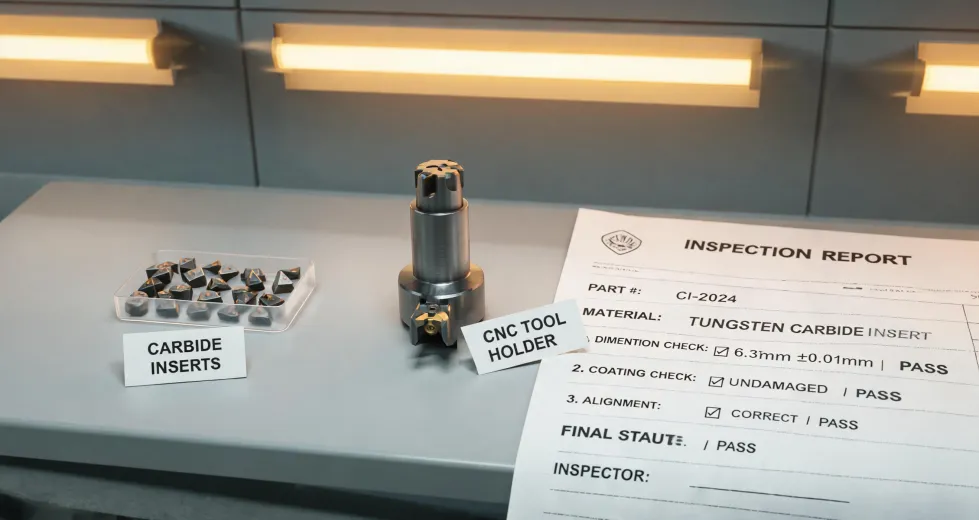
Here's the opinion I've earned over the last six years of watching invoices and scrap reports pile up: going cheap on tooling is one of the most expensive decisions a machine shop can make. Not because budget tools always fail. Because when they fail, they fail in the one place that matters most—the finished part your customer is holding. And what a customer sees when they hold that part is your brand.
I'm a procurement manager at a mid-sized custom manufacturing shop. I've managed our tooling budget (roughly $30,000 annually) for six years, negotiated with more vendors than I can count, and documented every order in a cost tracking system I built out of sheer frustration with vague spreadsheets. I've compared quotes from 8+ tooling suppliers, and I've had to explain budget overruns to ownership more times than I'd like. This article isn't a sales pitch for premium anything. It's what the data showed me after I stopped looking at unit prices and started looking at the total cost of a machined part.
The TCO math that changed my mind
Back in 2023, I compared cutting tool costs across four vendors for our CNC lathe lineup. Vendor A quoted $8.40 per insert for a carbide grade they claimed was directly equivalent to our usual Kennametal lathe tools at $14.75. On 400 inserts a year, the projected savings were $2,540. That's a real number. I almost switched us over right there.
Good thing I didn't finalize it before checking the actual cost per part. After three months of trial runs, the difference was stark:
- Insert edge life: 22 minutes average vs. 31 minutes for the Kennametal grade
- Scrap rate: 3.1% vs. 0.8%
- Tool change interruptions: 14 extra per month
When I ran the full numbers in October of that year, the budget inserts ended up costing us about $7,100 more annually once I factored in rework, downtime, and scrapped material. The surface finish was the hidden culprit. The cheap inserts broke down earlier, and the last few minutes of their life left visible tool marks on parts that were supposed to be identical to everything else we shipped. Not ideal, not terrible. But enough that a customer could tell.
And that's the part the spreadsheets didn't initially capture. In our line of work, tool marks are the difference between a part that looks professionally machined and one that looks like it came from someone's garage. I was standing next to our quality inspector when he pulled out a loupe on a supposedly finished batch. He didn't say a word—he didn't need to. The look on his face was the review I needed. (Honestly, it was embarrassing. I'd been so focused on the price per insert that I'd missed the actual purpose of the purchase.)
Reamers taught me the same lesson, again
You'd think I'd have learned after the insert debacle. I didn't. Two years ago, I assumed "same dimensions, same material grade, same flute count" meant a budget reamer was interchangeable with our usual Kennametal reamers. I didn't verify that assumption on the shop floor. Turned out I was wrong.
We bought a half-price reamer set when our Kennametal reamers were due for renewal. On paper, they looked like the same tool. In practice, the holes started running 0.0005–0.001" oversized after the first 60 parts—not far enough out of tolerance to fail inspection, but close enough to the edge that our QA flagged every batch. We spent a week trying to figure out whether it was the reamers, the coolant concentration, or the spindle. It was the reamers. When we put the Kennametal reamers back in, the drift disappeared.
I'm not a metallurgist, so I can't tell you the exact material science behind it. My best guess is the cheap reamers had a slightly different grind geometry that wore unevenly. What I can tell you from a procurement perspective is this: I cost us a week of QA hours and a client who now asks for inspection reports twice as often. That's the hidden cost nobody quotes.
The same pattern shows up outside metal cutting
Once you see this pattern, you see it everywhere. It's almost a rule of procurement: every tool is a quality statement, whether it makes chips or not.
A few months ago, the fabrication team asked me about buying a laser cutter for trees—clearing branches, engraving wood signage, that kind of work. I started researching and immediately hit the classic question: why is CO2 laser so expensive? I used to ask that myself. Then I sat in a cost review and realized the expensive part isn't the laser tube—it's the optics, the beam stability, and the engineering that keeps the cut edge clean instead of charred. The cheap units looked like a bargain until you factored in failed cuts and the time to redo them.
Same thing happened with prototyping materials. We tried a budget clear 3D printer resin because the transparent finish was all we needed. The prints came out cloudy, the surface felt tacky, and we tossed about a third of them. The client's comment was the real price: "This looks... homemade." That comment hurt more than the money, because it was a direct hit on our brand.
But isn't "premium" just a word?
To be fair, budget tools have their place. If you're doing one-off roughing work on internal fixtures, the cheap insert is fine. I still buy budget where it doesn't meet a customer's eyes. That said, this isn't about brand loyalty—it's about where the risk lands. When the customer will see the result, buying on price alone is a brand decision disguised as a cost decision.
And that's not just my opinion. Per FTC advertising guidelines (ftc.gov), claims you make about your product need to be substantiated. If we tell a customer we do "precision machining," the surface finish and tolerance need to back that up. If a tool leaves tool marks, the claim starts to sound hollow—no matter what our brochure says.
My bottom line
Quality isn't a marketing department's job. It's decided on the shop floor, one cut at a time, long before the client ever sees the part. The chips, the finish, the tolerances—they speak first, and they either confirm your brand promise or quietly contradict it.
I still look for savings everywhere I can. But for anything with a customer's name attached, I stick with Kennametal—their lathe tools and reamers specifically. Not because I'm loyal to a logo. Because I did the math over six years and $180,000 in tracked spend, and the math says quality perception is the cheapest insurance a shop can buy.